
What Should A 12 V Battery Read

Unmasking the Mystery: What Should Your 12V Battery Really Be Saying?
Ah, the humble 12V battery! It's the silent hero, the unsung powerhouse behind so many of our favorite gadgets and adventures. From starting your trusty car to powering your epic camping trip, it’s constantly working its magic.
But have you ever wondered what this amazing little power pack is actually thinking? What’s its secret language? Today, we’re going to peek behind the curtain and discover what a healthy 12V battery should be reading!
The "Happy Camper" Zone: Fully Charged and Ready to Roll!
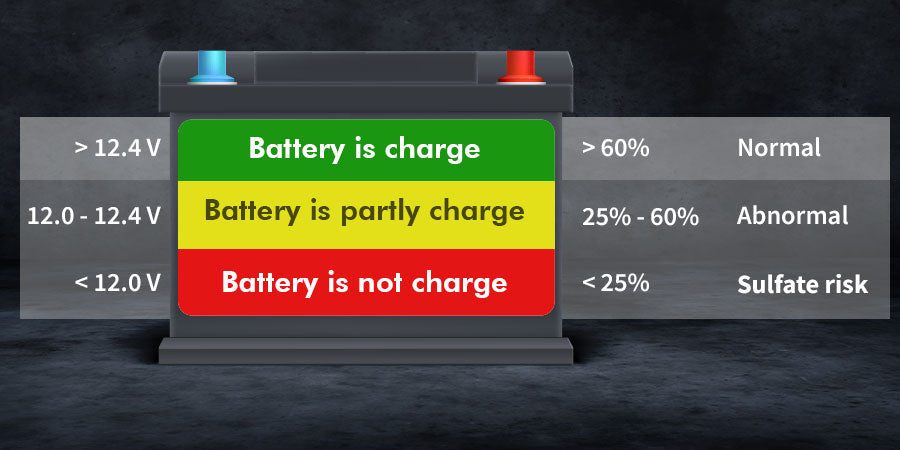
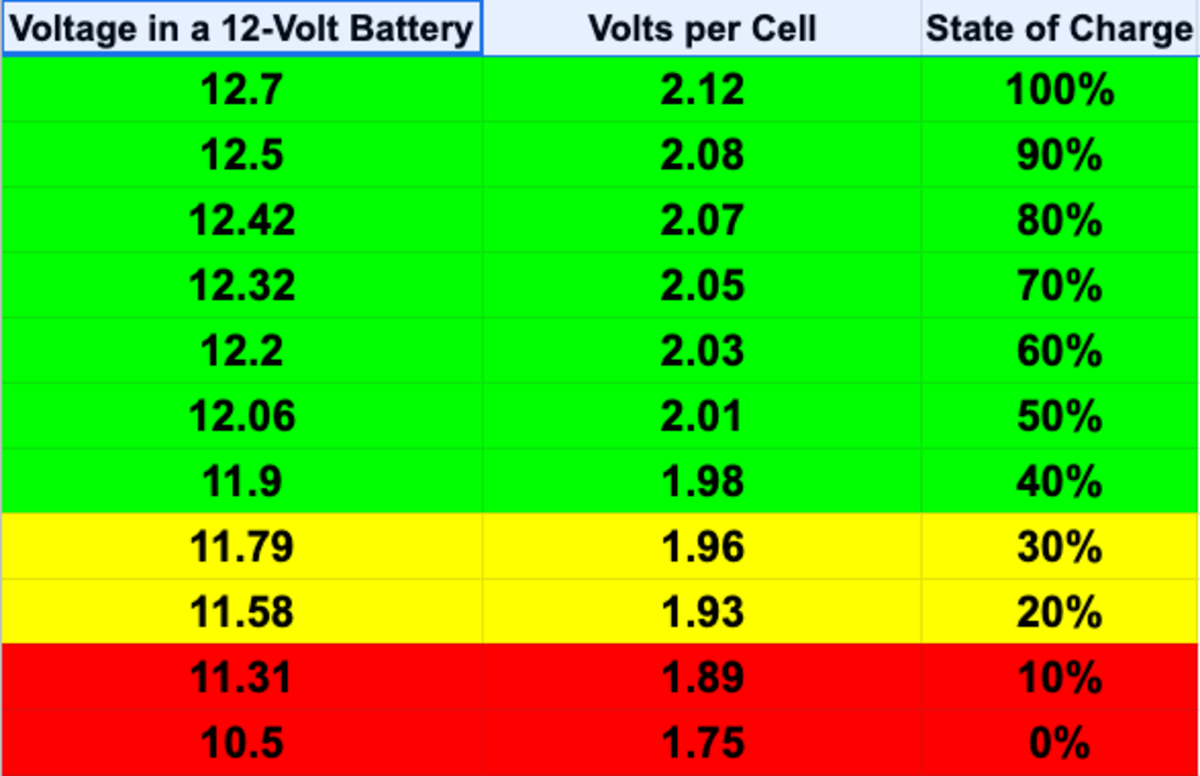
Imagine your battery as a super energetic toddler, fully fueled after a delicious breakfast. When it's totally, utterly, magnificently charged, a 12V battery should proudly announce a reading somewhere between 12.6 to 12.8 Volts.
Must Read
This is its happy place, its peak performance podium! If your multimeter, your trusty little electrical decoder ring, shows a number in this range when the battery isn't doing any heavy lifting, give yourself a high-five!
That reading means your battery is brim-full of potential, bubbling with readiness. It’s poised to fire up your engine or keep your cooler light glowing all night long. This is the sweet spot, the gold standard!
Remember: A fully charged 12V battery, at rest, usually sits comfortably between 12.6V and 12.8V.
The "Just Woke Up" Zone: A Little Low, But Still Kicking
Sometimes, your battery might be a bit like you on a Monday morning – functional, but not exactly jumping for joy. If your reading dips just below the perfect range, say between 12.4 and 12.6 Volts, it’s a sign.
It means your battery is about 75% charged, feeling a little less peppy. It might still start your car, but it’s giving you a gentle nudge, a polite whisper: "Hey, I could use a little boost, please!"
Think of it as having three-quarters of a tank of gas. You can still drive, but you're probably thinking about your next pit stop. This is often the case if you've been using accessories with the engine off.

The "Needs a Nap, STAT!" Zone: Getting Sleepy
Now, if your battery starts reading in the lower 12-Volt range, say 12.0 to 12.4 Volts, we're entering the territory of a very sleepy friend. This battery is definitely feeling the drain, down to about 25-50% charge.
It might groan and complain when you try to start your vehicle, or your lights might look dimmer than usual. This is where you might hear that classic, sad, slow crank of an engine trying its best but struggling.
Ignoring this zone is like ignoring a toddler rubbing their eyes and yawning. Disaster is brewing! Get that charger hooked up, pronto, or you might find yourself stranded faster than you can say "jump start."
The "Flat-Out Exhausted" Zone: Oh Dear, We Have a Problem
When your 12V battery plunges below 12.0 Volts, especially into the 11.8 Volts and lower club, it's pretty much throwing in the towel. This is the equivalent of a marathon runner hitting the dreaded "wall" and collapsing.
At this point, your battery is seriously discharged, perhaps even below 25%. Your car probably won't start, your RV lights will be dimmer than a firefly in a snowstorm, and your boat's radio will be silent.
Leaving a battery in this extremely low state for too long is a big no-no. It can actually cause permanent damage, meaning even a valiant charging effort might not bring it back to its former glory. It's like trying to revive a very, very old, forgotten banana peel.

What About When It's Charging? It's Like a Feast!
Okay, so we've talked about a battery at rest. But what if it's currently being charged? Well, that's a whole different ball game! Imagine your battery at a massive, all-you-can-eat buffet.
When your car engine is running, the alternator is busily pumping juice into your battery. You'll see readings jump up significantly, often between 13.8 and 14.4 Volts. This is perfectly normal and a sign of a healthy charging system.
Similarly, if you have it hooked up to a dedicated battery charger, the voltage will climb into this higher range. It's gulping down power, getting ready to be a happy camper once again. Don't panic if you see these higher numbers; it means the system is working!
Your Secret Decoder Ring: The Multimeter
How do you unlock these secret voltage messages? With a simple, affordable tool called a multimeter! It's like a magical translator for electricity.
Just set it to the DC Voltage (V=) setting, touch the red probe to the positive (+) terminal of your battery and the black probe to the negative (-) terminal. And just like that, the battery's tale is told!
It’s a super empowering feeling to check your own battery. You’ll feel like a true power detective, ready to solve any energy mystery that comes your way!
The "When to Worry" Whistle
While we love a good mystery, some battery readings are clear shouts for attention. If your battery consistently reads below 12.4V after being fully charged and sitting for a few hours, it's starting to show its age.
If it ever dips below 11.8V, especially after a simple attempt to start an engine, it's likely headed for the great battery recycling center in the sky. It's okay, all heroes eventually retire!
An aging battery might still give you those 12.6V readings, but it won't hold them for long, like a leaky bucket. It drains faster, struggles more, and generally becomes less reliable than a weatherman predicting sunshine.
Different Batteries, Same Language
Whether it’s the beefy battery under your car's hood, the deep-cycle power bank for your RV, or the marine battery keeping your boat afloat, they all speak the same voltage language. The principles remain consistent.
However, RV and marine batteries, often designed for "deep cycles," are built to handle deeper discharges better than a car's starting battery. Still, keeping them above that 12.6V mark when fully charged is always the goal for longevity.
So next time you're wondering about the lifeblood of your motorized companion or portable power station, grab that multimeter. You're now equipped with the knowledge to understand what your 12V battery is really trying to tell you.
The "Temperature Tantrum" Factor
Oh, and one more thing: batteries are a bit like us, they have strong opinions about the weather! In freezing cold temperatures, your battery's voltage might appear slightly lower, and its ability to deliver power significantly reduced.
A battery that reads a healthy 12.6V in a warm garage might show 12.4V on a frosty winter morning. It's not necessarily dying, just feeling a bit sluggish, like trying to run through molasses.
Similarly, extreme heat can also stress a battery, though it won't typically show a drastically different voltage reading unless it's being overcharged. Think of it as a diva: it performs best in a comfortable, temperate environment!
The Grand Finale: Empower Yourself!
So there you have it! The secret life of your 12V battery, decoded and demystified. No more guessing games, no more "will it or won't it" moments.
You now possess the power to understand its moods, its needs, and its glorious capabilities. Go forth, check those voltages, and keep your adventures fully powered and absolutely thrilling!
Understanding your battery's language is a superpower, ensuring smooth sailing, quick starts, and lights that never dim on your fabulous journey. Happy voltage checking!