
What Occurs In Both Fusion And Fission Reactions
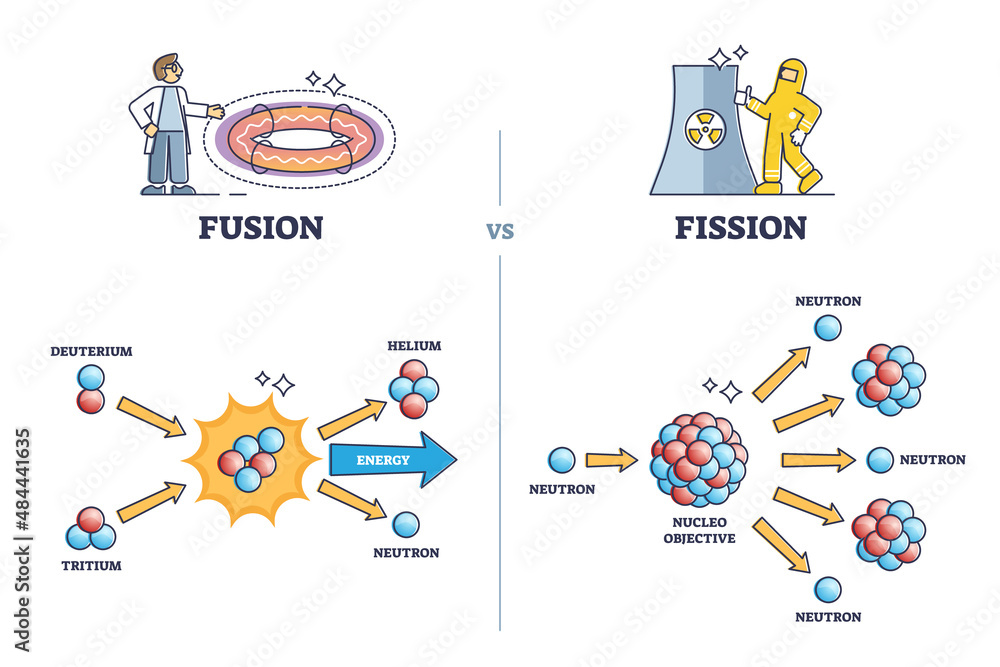
Ever heard of fusion and fission? They sound like futuristic dance moves, right? Well, they're not exactly that. But they are pretty darn cool. They're both ways to unlock the immense power hidden inside atoms. Think of them as the atomic world's version of dynamite! Want to know the secret both fusion and fission share? Buckle up! It's gonna be a blast (pun intended!).
Breaking and Building: Two Sides of the Same Atomic Coin
Okay, so what's the connection between these two atomic powerhouses? At their core, both fusion and fission are all about messing with the nucleus of an atom. The nucleus is the tiny, dense center, like the pit of a peach. It's made up of protons and neutrons – the real heavy hitters of the atomic world.
Both processes are nuclear reactions. This means they involve changes to the atom's nucleus, and these changes release enormous amounts of energy. We're talking enough energy to power cities, or, you know, make a really, really big boom.
Must Read
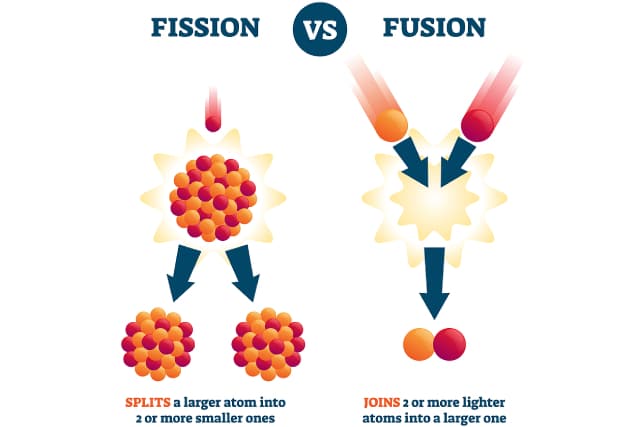
Think of it like this: imagine Legos. With fission, you're taking a big Lego creation and breaking it apart. With fusion, you're taking a bunch of smaller Legos and sticking them together to make something bigger. In both cases, you’re changing the configuration of those Legos. That reconfiguration? It releases energy.
Mass-to-Energy Magic Trick!
Here's the mind-blowing part: Both fusion and fission rely on a crazy concept: mass-energy equivalence. Remember Einstein and his famous equation, E=mc²? This is where it gets real! This equation basically says that mass and energy are interchangeable.

In both fusion and fission, the total mass of the "ingredients" before the reaction is slightly more than the total mass of the "products" after the reaction. Where did that missing mass go? Poof! It turned into energy! That's the energy we can harness – the energy that makes these reactions so powerful.
Imagine you have ten cookies. You break them into crumbs or stick them together to make one giant cookie. Either way, after you’re done, the mass of the crumbs or the giant cookie will be slightly less than the mass of the ten original cookies. That tiny bit of “missing” cookie has become energy. (Okay, not exactly, but it's the same principle!).
Chain Reactions: When Things Get Really Interesting
Another exciting thing both reactions share? They can lead to a chain reaction. This happens when the products of one reaction trigger more reactions. Think of it like setting off a line of dominoes. One falls, and then another, and another, until the whole line is down.
In fission, the splitting of a heavy atom releases neutrons. These neutrons can then collide with other heavy atoms, causing them to split too, and so on. This is how nuclear power plants work (controlled chain reaction) and how atomic bombs work (uncontrolled chain reaction).
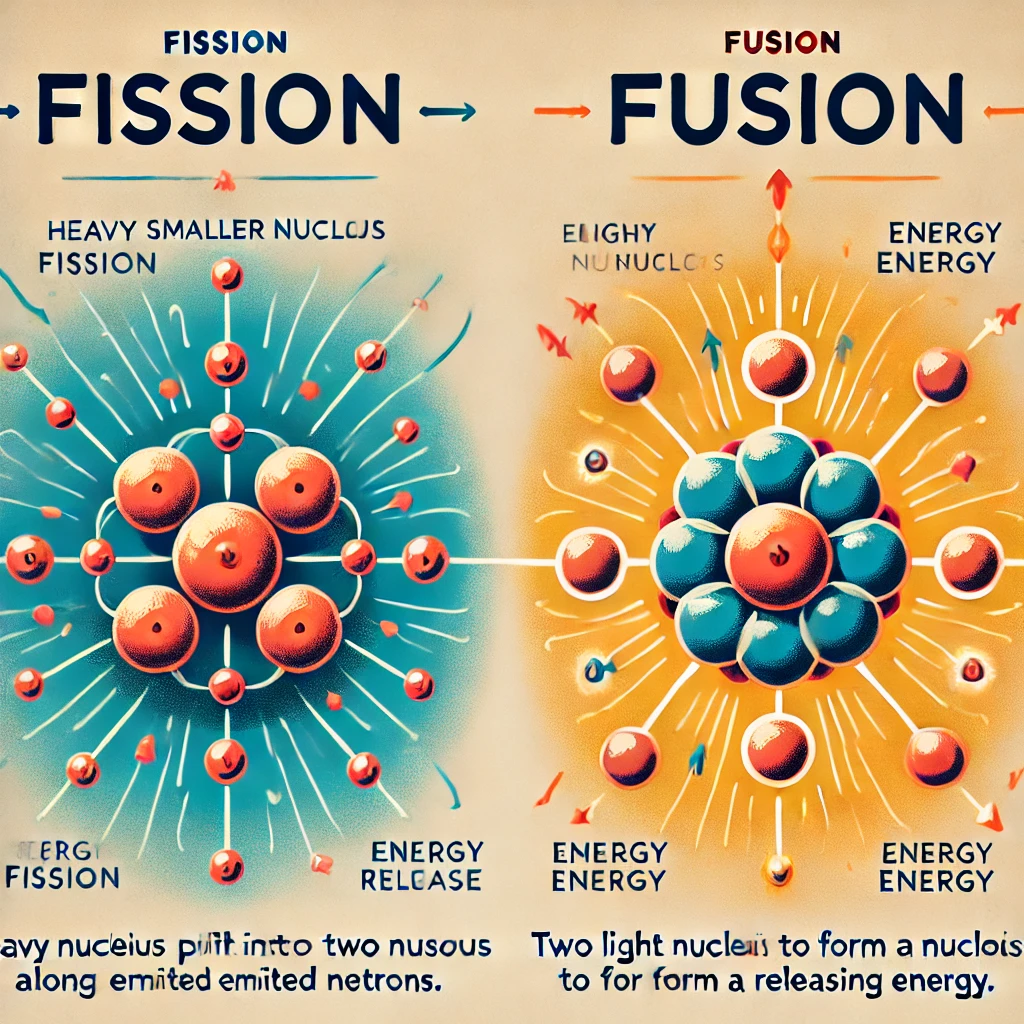
While fusion doesn’t involve neutrons triggering more fusion directly in the same way, scientists are working on ways to create self-sustaining fusion reactions. This means creating conditions where the heat and energy produced by one fusion reaction are enough to trigger more fusion reactions. It's a tougher challenge, but the potential payoff is huge!
So, What's the Big Deal?
Why should you care about all this atomic mumbo-jumbo? Because fusion and fission represent incredibly powerful sources of energy. They offer the potential for clean, sustainable power and can help us understand the very fabric of the universe.

Fission is already used in nuclear power plants to generate electricity. While it has its challenges (like dealing with nuclear waste), it's a well-established technology.
Fusion, on the other hand, is still mostly in the research and development phase. But scientists are working hard to create fusion reactors that can harness the power of the stars here on Earth. Imagine a world powered by virtually limitless, clean energy! That's the promise of fusion.
Both fusion and fission are based on the same fundamental principles of nuclear physics. They both involve changes to the nucleus of an atom, they both convert mass into energy, and they both can lead to chain reactions. So, next time you hear about these reactions, remember that they're not just complicated science – they're exciting ways to unlock the power of the universe! And who knows, maybe you'll be the one to make the next big breakthrough!