
What Is Wind And What Causes It
Ever stepped outside and had your meticulously styled hair instantly transform into a wild, untamed nest? Or felt that sudden, invigorating push that almost sends your coffee flying? Yeah, that’s wind. It’s one of those things we experience every single day, but rarely stop to think, “Hey, what exactly is this invisible force messing with my umbrella?”
Well, get ready for a peek behind the curtain, because wind, my friends, is less about a mischievous spirit and more about a cosmic game of musical chairs.
So, What Is Wind, Anyway?
At its core, wind is just air on the move. Imagine all the tiny, invisible air molecules around you – nitrogen, oxygen, argon, a bit of carbon dioxide – like a bustling crowd at a really chill party. They’re all just milling about, bumping into each other, generally minding their own business. But then, something happens, and suddenly, they all decide to rush in one direction. That collective rush? That's wind.
Must Read
Think of it like this: if air molecules were tiny, invisible concert-goers, and they all simultaneously decided to rush the stage to see their favorite band, that’s your wind. It’s not one single big gust, but billions and billions of microscopic particles working together, pushing and shoving.
What Gets Those Air Molecules Moving?
Ah, now for the juicy bit! What causes this grand migration of microscopic partygoers? The answer, in true dramatic fashion, starts with our biggest star: the Sun.

It All Starts With the Sun (and Uneven Heating)
The Earth is a pretty big place, and the Sun doesn't exactly shine on it like a perfectly even tanning lamp. Some parts get a lot more direct sunlight (hello, equator!), while others get less (hey there, poles!) or just heat up differently due to landmasses versus oceans.
Imagine you're baking a cake. If one side of the oven is hotter than the other, things aren't going to cook evenly, right? Same principle with our planet. The Sun heats up different parts of the Earth at different rates, and this is where the magic (or rather, the science) happens.
The Dance of Hot and Cold Air (Pressure Makes Perfect)
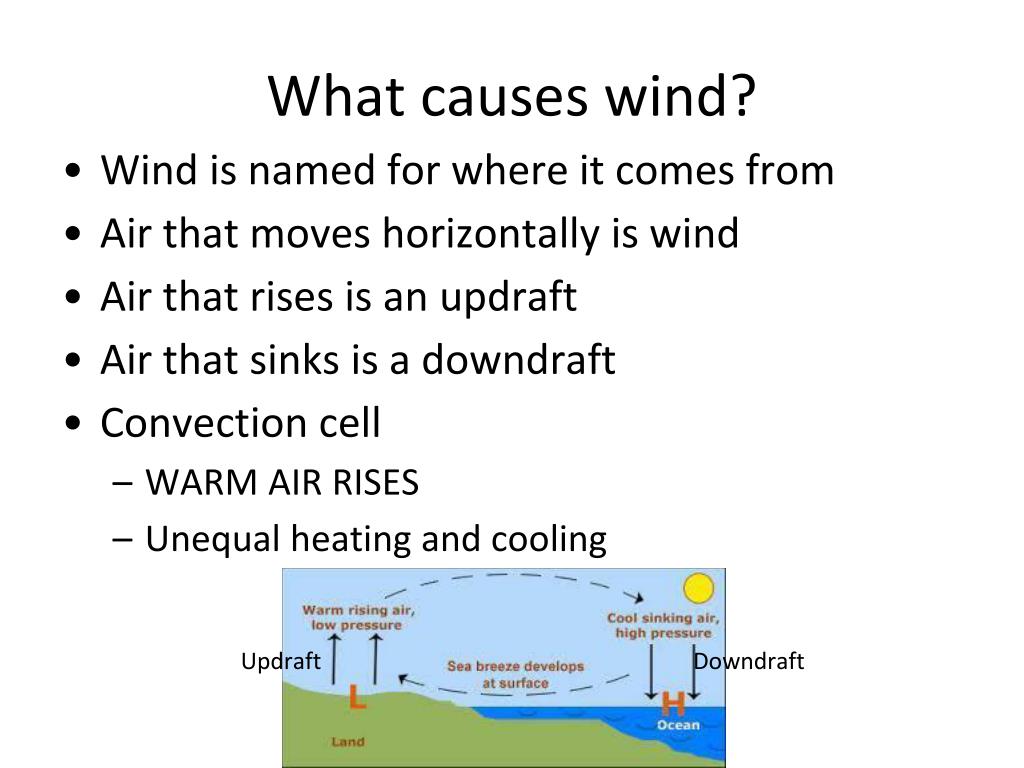
When air gets warm, its molecules get excited. They start bouncing around faster, spreading out, and becoming less dense. Think of a hot air balloon – the air inside is heated, becomes lighter than the cooler air outside, and poof! It rises.

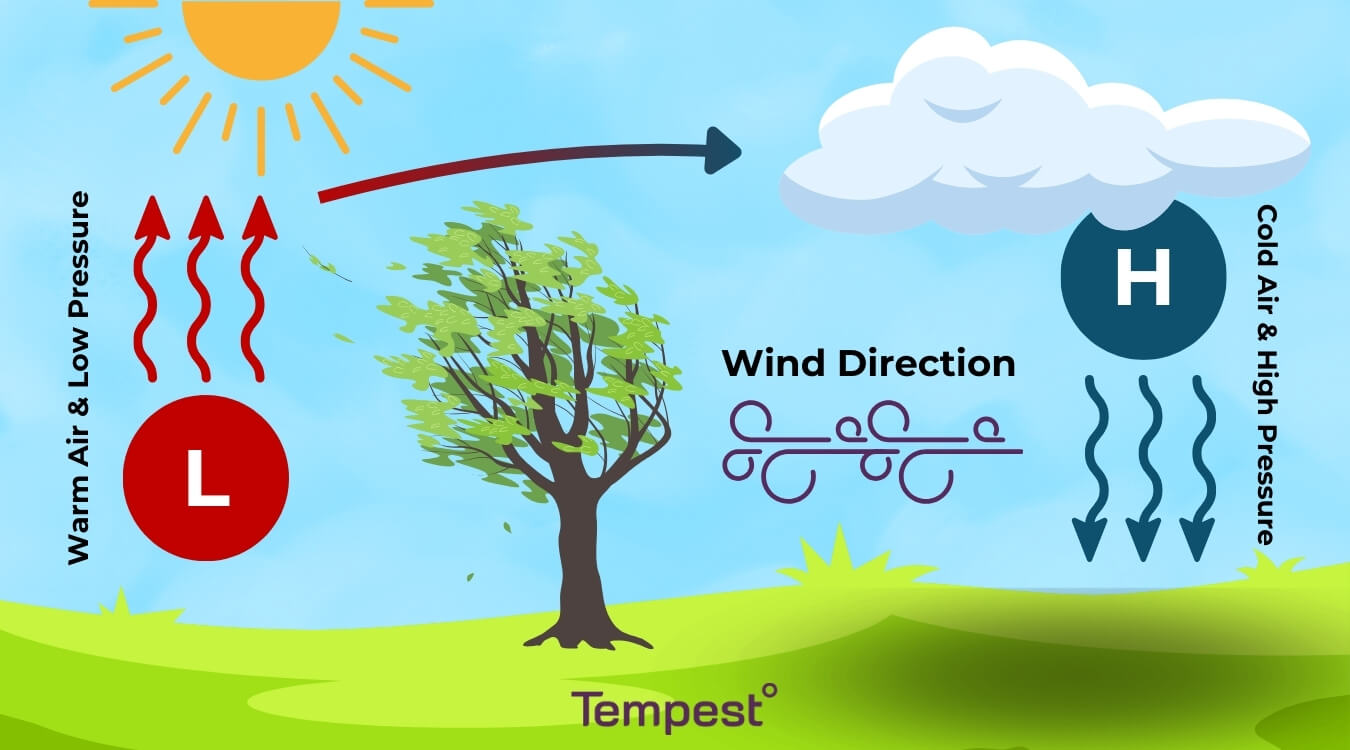
So, where the Earth is hot, the air warms up, expands, and rises. This creates an area of lower air pressure at the surface, because there are fewer air molecules hanging around. It’s like a room suddenly emptying out – less pressure on the walls.
Conversely, where the Earth is cooler, the air molecules chill out. They slow down, huddle closer together, and become denser. This heavier, cooler air sinks, creating an area of higher air pressure. This is like a crowded elevator – lots of pressure!

And here’s the kicker, the fundamental rule of atmospheric engagement: nature absolutely abhors a pressure imbalance. Air, like a nosy neighbor, always wants to move from an area of high pressure to an area of low pressure. It's trying to balance things out, like an invisible cosmic justice warrior.
That movement of air from high pressure to low pressure? That’s your wind! It’s literally the air molecules rushing in to fill the "empty" space left by the rising warm air. It’s the Earth’s giant, invisible air conditioning system, constantly trying to equalize the heat.
Everyday Wind: From Gentle Breezes to Hair-Raising Gusts
This pressure difference doesn't just happen on a global scale, creating trade winds and jet streams. Oh no, it happens all the time, right in your backyard!
Ever noticed a nice breeze coming off the ocean on a hot day? That’s a classic example. The land heats up faster than the water, creating lower pressure over land. The cooler, higher-pressure air over the ocean rushes in to replace it – hello, refreshing sea breeze! At night, the roles often reverse, giving you a land breeze. It's like the Earth just can't make up its mind.
Or what about that sudden, unexpected gust that nearly rips your umbrella inside out? Chances are, a localized pocket of high-pressure air just bumped into a low-pressure zone nearby. It’s like two different queues suddenly merging – chaos ensues for a moment!
So, the next time the wind tousles your hair, pushes your swing, or makes your kite dance in the sky, remember this: it’s not some random force. It’s the Sun heating things up, air molecules doing their hot-and-cold dance, and Mother Nature striving for balance. It’s the world breathing, exhaling invisible air with a force that can be a gentle whisper or a mighty roar. And sometimes, it just wants to steal your hat.