What Is Used For Nuclear Energy
Ever found yourself staring at a light switch, flicking it on, and not giving a second thought to where that beautiful glow actually comes from? We all do it! But if you've ever wondered about the mysterious world of nuclear energy, you might picture giant, intimidating cooling towers or complex scientific equations. Well, grab a cuppa, because we're about to demystify what's used to make nuclear energy, and I promise, it's not as alien as it sounds. Think of it less like rocket science and more like a really, really high-tech way to boil water.
The Main Ingredient: Uranium, the Finicky Fuel
Alright, let's kick things off with the star of our show: uranium. Now, uranium isn't just any old rock you dig up in the garden. It's a special kind of heavy metal, a bit like that one friend who's super introverted but, when they finally let loose, throws the best parties. In its natural state, uranium is mostly made up of something called Uranium-238, which is pretty stable and, frankly, a bit boring for our energy purposes. The real party animal we're after is Uranium-235. It's rare, picky, and it's the one that knows how to split.
Imagine Uranium-235 as a super-charged, incredibly delicate potato. If you just gently nudge it in the right way, it doesn't just roll, it bursts open with a surprising amount of energy. That "nudge" usually comes from a tiny, invisible particle called a neutron. When a neutron hits a Uranium-235 atom, that atom splits in a process called fission. And guess what? When it splits, it releases more neutrons, which then go off and hit other Uranium-235 atoms, and suddenly, you've got a chain reaction! It’s like setting up a line of dominoes, but each domino exploding and launching three more dominoes.
Must Read
The Special Delivery System: Fuel Rods
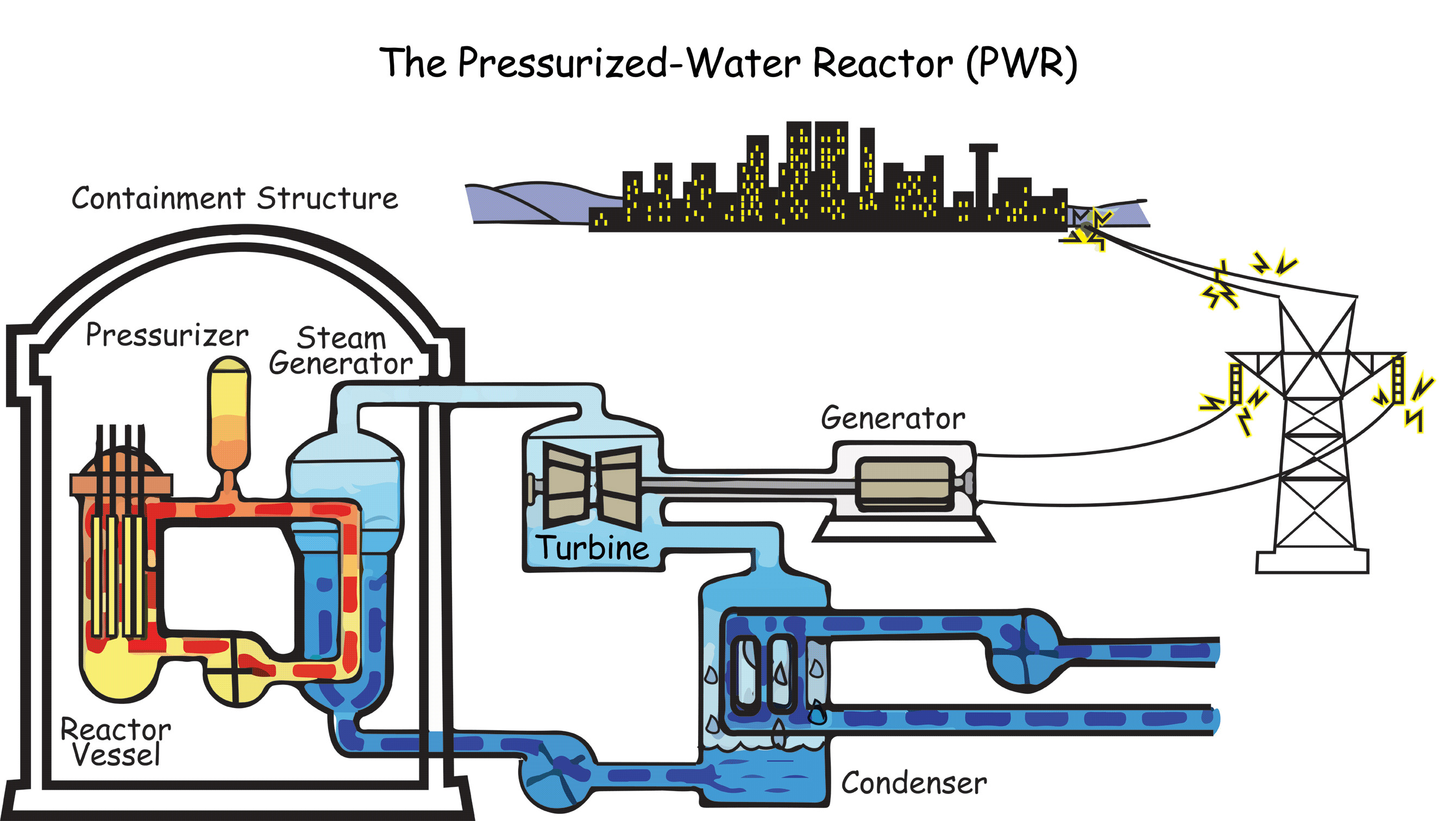
We can't just have loose uranium atoms floating around, causing atomic chaos. So, we package our precious Uranium-235. It's processed into little ceramic pellets, roughly the size of your fingertip, and then these pellets are stacked into long, thin tubes made of a special metal alloy. These tubes are called fuel rods. Think of them as the meticulously prepared energy bars for our nuclear reactor. Hundreds of these fuel rods are then bundled together to form what's called a fuel assembly, which is essentially a power-packed skyscraper for atoms.

The Traffic Cops: Control Rods
Now, a runaway chain reaction would be, shall we say, suboptimal. We need to keep things under control, like a really good DJ at a party who knows when to pump up the jams and when to bring it down a notch. That's where control rods come in. These rods are usually made of materials like boron or cadmium, which are absolute sponges for neutrons. When things start getting too wild in the reactor core, the control rods are lowered in, absorbing those extra neutrons and slowing down the fission process. Want more power? Pull them out a bit. Too much power? Push them in. They're the ultimate brake pedal for the atomic engine.
The Chill-Out Zone & Messenger: Water
Every superhero needs a sidekick, and for our nuclear reactions, that sidekick is often water. Water in a nuclear reactor plays a dual role. First, it acts as a moderator. Remember how we said neutrons "nudge" the uranium? Well, sometimes those neutrons are just too fast, like a teenager on too much sugar. The water slows them down, making them just the right speed to cause fission in Uranium-235. Without this moderation, the chain reaction would sputter out. It’s like trying to gently tap a nail with a sledgehammer; you need something lighter to get the job done right.
Secondly, water is the ultimate coolant. All that atomic splitting generates a tremendous amount of heat – imagine boiling a kettle, but on an industrial scale. This heat needs to go somewhere, and the water absorbs it, preventing the reactor from overheating. The superheated water then creates steam, and that steam is what actually drives the turbines, which spin the generators, which finally make your lights turn on! So, really, nuclear power is just a super fancy way of boiling water to make steam, all thanks to that special potato, Uranium-235, and its tiny neutron friends.
The Big Picture: A Controlled Atomic Kettle
So, there you have it! What's used for nuclear energy boils down to a few key players: Uranium-235, which is our energy-releasing special ingredient; fuel rods to package it neatly; control rods to keep the fission party from getting out of hand; and good old water to act as both a bouncer (slowing down neutrons) and a giant radiator (absorbing heat). It's a marvel of engineering, transforming the energy locked inside tiny atoms into the comfortable hum of your fridge and the bright glow of your screen. Who knew atomic power could be so down-to-earth?