What Is Toughness Of A Material
Ever wondered why some things shatter on impact while others merely dent or bend? Why your smartphone screen might crack from a small drop, but a car bumper can absorb a much bigger hit? The secret often lies in a fascinating material property called toughness. It’s not just an engineering term; understanding toughness helps us appreciate why things are designed the way they are, making our world safer, more durable, and quite frankly, a lot more interesting!
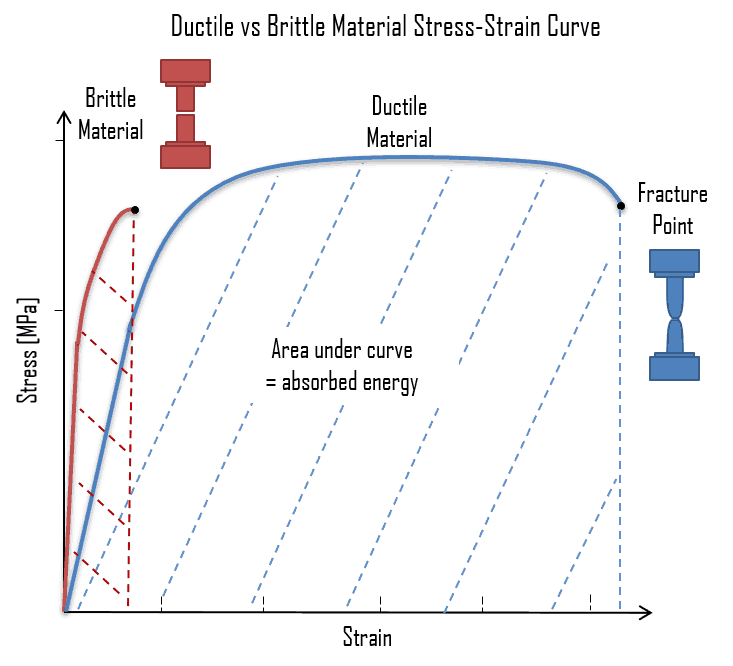
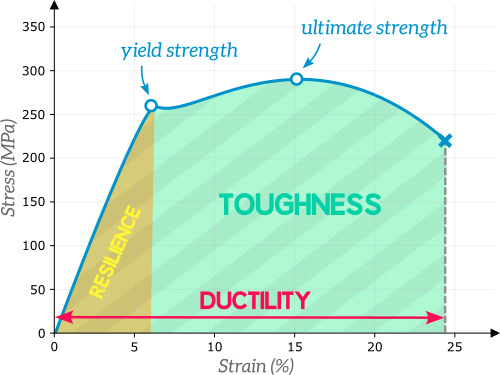
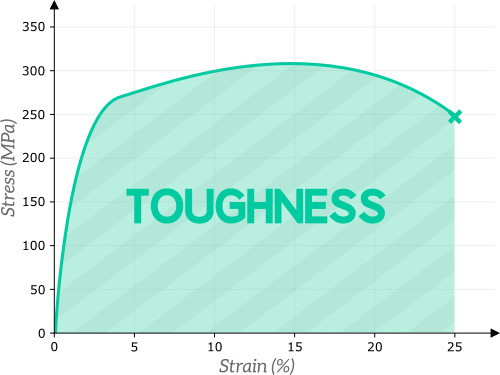
So, what exactly is toughness? Imagine a material as a tiny, resilient boxer. When it gets hit (or, in engineering terms, when it experiences a load or impact), a tough material doesn’t just give up. Instead, it absorbs the punch, bending and deforming, using up that energy before finally breaking. In scientific terms, toughness is a material's ability to absorb energy and deform plastically before fracturing.
This is where it gets really cool, because toughness isn't the same as being merely strong or hard. A diamond, for instance, is incredibly hard (it resists scratching beautifully) and quite strong, but it's not particularly tough; hit it just right, and it will cleave along its planes. Cast iron is strong, but often brittle, meaning it can take a lot of force but will shatter without much deformation once its limit is reached. A truly tough material, however, needs both good strength (to resist initial forces) and good ductility (the ability to deform or stretch without breaking).
Must Read
Think of it like this: a tough material has a "give" to it. Instead of an immediate, catastrophic failure, it deforms, spreading the stress and absorbing the impact energy over a larger area or longer time. This deformation is its way of screaming, "Hey, I'm taking a hit here, but I'm trying to hold together!"
Why do we care about this "superpower" of materials? The benefits are all around us, often unnoticed but crucial for our safety and convenience:
- Safety First: Car manufacturers rely heavily on tough materials for crumple zones and chassis components. These parts are designed to deform during a collision, absorbing the crash energy and keeping it away from the passengers. Helmets, safety glass, and even the materials in airplane wings are chosen for their ability to withstand sudden impacts without instant failure.
- Durability You Can Trust: From the tools in your garage to the pipelines carrying essential resources, tough materials ensure longevity. They can endure repeated stresses, knocks, and bumps without succumbing to fatigue or sudden fracture, making products last longer and perform reliably.
- Innovation and Progress: Engineers and scientists are constantly developing new materials with enhanced toughness for specific applications. This drives progress in fields like aerospace (lighter, more resilient aircraft), sports equipment (safer gear), and medical implants (biocompatible materials that can withstand the body's stresses).
So, the next time you see something bounce instead of break, or notice how a car panel crumples just right in a collision, take a moment to appreciate the unsung hero behind it: material toughness. It’s a fundamental property that turns everyday items into marvels of engineering, ensuring our world is a little safer, a lot more robust, and always ready to take a punch!