
What Is The Source Of Energy For A Hurricane
Ever watched a hurricane on TV? It's kind of mesmerizing, right? These swirling giants seem to appear out of nowhere. But where do they get all that power?
The Sun: Hurricane's Secret Weapon
Believe it or not, it all starts with the sun! Our big, fiery friend in the sky. The sun's energy warms the ocean waters, especially near the equator.
Think of it like charging a giant battery. This warm water is like a super-charged battery for hurricanes. That's where the magic begins!
Must Read
Warm Water: The Fuel Tank
Hurricanes are basically heat engines. They are very complex and fascinating! They need warm water, at least 80°F (26.5°C), to get going and keep going.
This warm water provides the energy and moisture a hurricane craves. It's like the hurricane's favorite food! And it needs a lot of it.
The deeper the warm water goes, the better. A shallow layer of warm water won't cut it. The hurricane would churn up the water and cool it down too quickly, starving itself.
Evaporation: Turning Water into Power
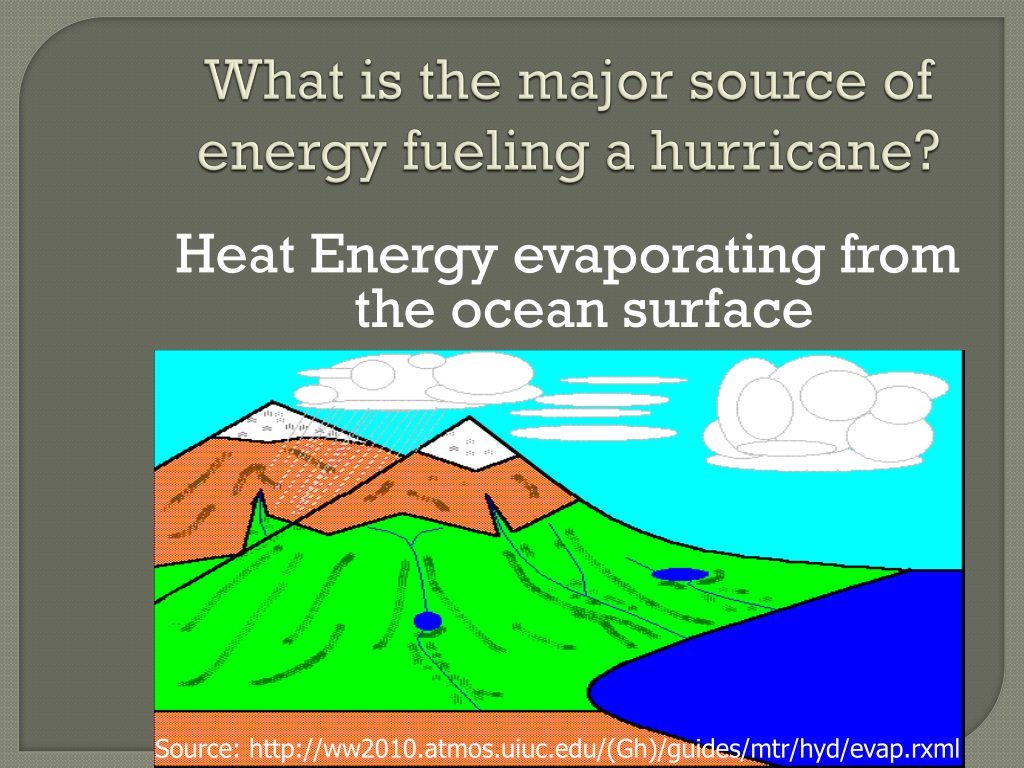
So, the sun warms the water. What's next? This warm water evaporates, turning into water vapor. It's the same process that happens when you boil water in a kettle, only on a massive scale.
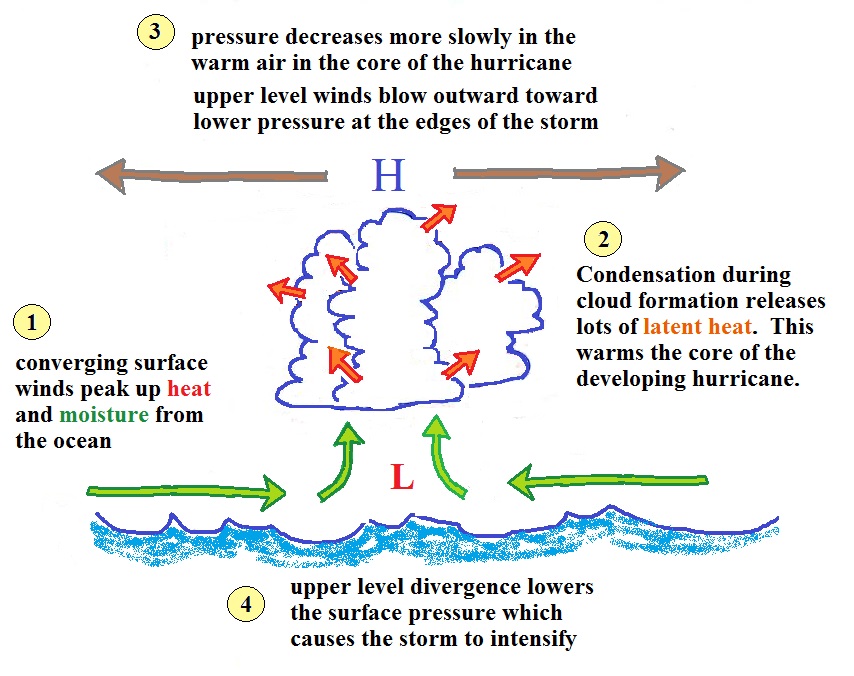
This water vapor rises into the atmosphere. As it rises, it cools and condenses back into liquid water, forming clouds. And that condensation releases heat!
This released heat is latent heat, and it's the real energy boost for the hurricane. It fuels the hurricane's engine. Imagine that! Changing from liquid to gas, back to liquid, unleashes incredible power!

A Low-Pressure Party
Now, you need a little something called low pressure. Hurricanes love low-pressure areas. These are like atmospheric vacuum cleaners, sucking in air from surrounding areas.
Air rushes in to fill the low-pressure void. And because of the Earth's rotation (the Coriolis effect), that air starts to spin. Think of water swirling down a drain – but much, much bigger.
The lower the pressure, the stronger the winds. This creates a feedback loop. More warm, moist air rises, more condensation occurs, and more heat is released. The lower the pressure gets, the faster winds whip around the center of the storm.
The Eye of the Storm: A Curious Calm
At the very center of the hurricane is the eye. The eye is an area of surprisingly calm and clear weather. It's a strange oasis in the middle of a raging storm!
The eye forms because the air sinking in the center of the hurricane suppresses cloud formation. It is like a serene center of all the chaos!
But don't be fooled by the calm! The most intense winds and rain are found in the eyewall. The eyewall is the ring of thunderstorms surrounding the eye.
Putting It All Together: Hurricane Recipe
So, what's the recipe for a hurricane? Take one part warm ocean water, add a dash of low pressure, and stir in the Earth's rotation. Then, let it simmer for a while.
Once it reaches a certain intensity, with sustained winds of 74 mph (119 km/h), it officially becomes a hurricane. From there, it can grow into a monster!
It's incredible how these simple ingredients can combine to create such a powerful force of nature. It is something scientists are always trying to learn more about.
Why Study Hurricanes?
Understanding hurricanes is super important. By knowing how they form and how they behave, we can better predict their paths and intensity. This helps us prepare and protect communities in their paths.
The better we understand them, the better we can prepare. It also helps us improve building codes, evacuation plans, and early warning systems.
Plus, studying hurricanes helps us understand the Earth's climate system. Hurricanes are an integral part of the planet's weather patterns. It is very essential to understand that.

Beyond the Science: The Sheer Awe
Beyond the science, there's something awe-inspiring about hurricanes. Their size, their power, their sheer destructive potential – it's all a little humbling.
They remind us of the power of nature. And the importance of respecting that power. Watching a hurricane on satellite imagery can be incredibly captivating. It is the best nature can show.
They also remind us of our own vulnerability. We are just tiny specks in the face of such a force. It's a good reminder to appreciate the beauty and fragility of our planet.
So, Next Time You See a Hurricane...
Next time you see a hurricane on the news, remember where it gets its energy. From the sun, warm water, and the Earth's spin. It's a complex interplay of factors that creates these incredible storms.
Think about the journey of that water vapor. Rising from the ocean, condensing into clouds, and releasing heat. It's a mini-cycle right inside the mega-cycle.
And maybe you'll even feel a little bit of awe. For the sheer power of nature. It is so great that nothing can compare to it!
Dive Deeper: Explore the Science
Want to learn more about hurricanes? There are tons of great resources online! Check out the National Hurricane Center (NHC) website. You can learn more about hurricane tracking, forecasting, and safety tips.
Or explore documentaries about hurricanes. There are some amazing videos. These can show you firsthand the power of these storms.
You might even consider a career in meteorology! If you're fascinated by weather, this is a great field to explore. You can help predict and prepare for future hurricanes.
A Final Thought
Hurricanes are powerful and potentially dangerous storms. But they are also fascinating natural phenomena. The science behind them is amazing. It is important to understand it.
By understanding how they work, we can better protect ourselves. And appreciate the incredible power and complexity of nature. Respect Mother Nature!
So, the next time you see a hurricane, remember the sun. The warm water. The swirling winds. The science and the sheer awe. It's a reminder of the forces that shape our world.