
What Is The Right Temperature For Humans
Alright, settle in, grab your beverage of choice – hot or cold, we’ll get to why that matters in a minute – because we need to talk about something profoundly universal, deeply personal, and yet utterly confounding: temperature. Specifically, what is the right temperature for us fragile, squishy bags of water and dreams we call human beings?
You know the feeling. One minute you're basking in what feels like divine warmth, the next you're convinced you're on a polar expedition, or worse, spontaneously combusting. Our bodies are like the ultimate, high-maintenance supercomputers, constantly battling the elements to stay in a perfect, Goldilocks-approved zone.
The Myth of the Magic Number: 98.6°F (or 37°C for our Metric Mates)
For decades, we’ve been fed this idea that 98.6 degrees Fahrenheit is the holy grail of human temperature. Say it with me: "Ninety-eight point six." It's practically tattooed on our collective consciousness. But here’s a shocking truth bomb for you: it's not a universal constant! It's more like a polite suggestion, an average dreamt up way back in the 19th century by a German doctor who probably just took a lot of readings and said, "Eh, close enough!"
Must Read
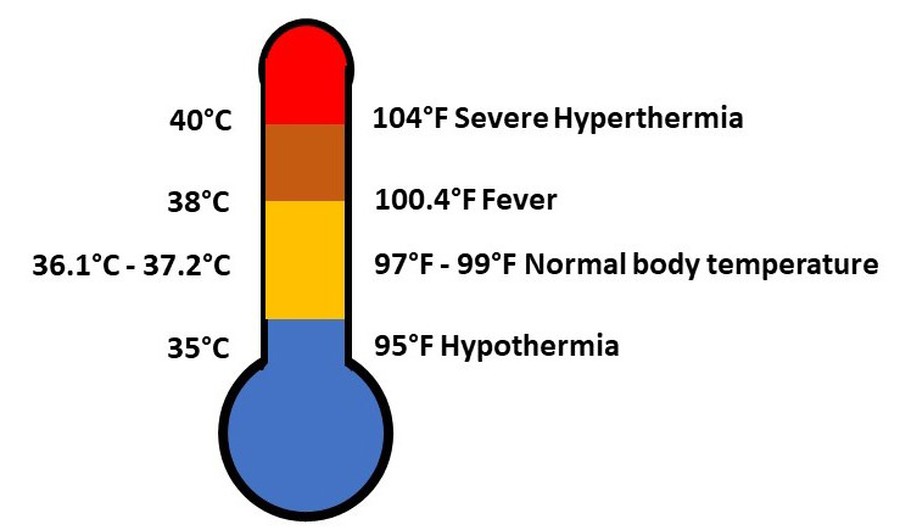
Think about it. Are you always exactly 98.6°F? Probably not. You might be a cool kid at 97.5°, or a simmering human volcano at 99°. The truth is, a healthy range for most adults actually hovers between about 97°F (36.1°C) and 99°F (37.2°C). So, if your thermometer gives you a slightly different reading, don't panic and draft your will just yet. You're probably just being uniquely you.
Our internal temperature even dips when we sleep – because apparently, even our internal thermostats need a nap – and it can fluctuate wildly depending on our activity level, what we just ate (spicy food, anyone?), and even the time of day. Your body is basically a tiny, complicated thermostat with a mind of its own.

Why Your Body Is Such a Diva About Its Temp
So, why all the fuss? Why can't we just be perfectly fine at, say, 80 degrees or 110? Well, because our bodies are built with an exquisite, if somewhat demanding, biological machinery. Every single process, from digesting your breakfast burrito to thinking deep thoughts about why socks disappear in the dryer, relies on things called enzymes.
And let me tell you, enzymes are the ultimate divas. They only perform their vital chemical reactions within a very specific temperature window. Too hot, and they start to unravel like a cheap sweater (we call that denaturation, fancy, right?). Too cold, and they slow down to a glacial pace, effectively going on strike. Either way, your body grinds to a halt. It’s like trying to run a five-star restaurant where the ovens are either molten lava or frozen solid. Nothing good happens.

The Great External Battle: Hot vs. Cold
We spend our entire lives trying to help our internal furnace maintain its perfect working conditions. When it's too hot outside, our bodies spring into action like a tiny, sweating superhero. Our blood vessels widen (flushing!), and we start to sweat. A lot. That sweat then evaporates off your skin, taking heat with it, like a miniature, organic air conditioner. It’s brilliant! Unless you're on a first date, then it's just awkward.
But push it too far, and you start veering into heat exhaustion and, eventually, the far more sinister heatstroke, where your body just throws up its hands and says, "I quit!" That’s why hydration and common sense are your best friends in a heatwave.
On the flip side, when the temperature drops, your body becomes a shivering, goosebump-laden marvel of self-preservation. Those tiny muscle contractions we call shivering are your body's attempt to generate heat through rapid movement, like an involuntary, very chilly dance party. And those goosebumps? They're a leftover from our furrier ancestors, trying to fluff up non-existent hair to trap insulating air. Cute, but mostly useless now.

Get too cold, and you risk hypothermia, where your core temperature drops to dangerous levels. Your brain gets fuzzy, your movements become clumsy, and suddenly, that cold indifference to wearing a coat doesn't seem so cool anymore.
Your Personal Thermostat: It's Complicated
What's comfortable is a whole other ballgame. Ever notice how some people are wrapped in blankets in July while others are wearing shorts in December? That's because our perception of external temperature is wildly subjective. Factors like age, body fat, metabolism, activity level, and even hormones play a huge role.
![The Perfect Temperature [infographic] - VHL | Infographic, Infographic](https://i.pinimg.com/originals/c4/c4/d9/c4c4d955f4bfa637a13e2da3bf7ccf7f.jpg)
Babies and the elderly, for example, have a harder time regulating their temperature, making them more vulnerable. Women often report feeling colder than men, a phenomenon that has sparked countless "thermostat wars" in offices and homes worldwide. (Spoiler alert: no one ever truly wins the thermostat war.)
Even your own body temperature fluctuates throughout the day, following your circadian rhythm. It's usually lowest in the early morning and highest in the late afternoon. So, that afternoon slump might not just be a sugar crash; your internal furnace could be burning a bit hotter!
Ultimately, there's no single "right" temperature for every human being at every moment. Our bodies are masterful at adapting, constantly striving to maintain that internal equilibrium regardless of whether you're sweltering on a beach or building a snowman. It's a delicate dance, a biological ballet that keeps us alive and kicking. So next time you adjust the AC or snuggle under a blanket, give a little nod to your incredible internal thermostat. It's working overtime to keep you perfectly poised, not too hot, not too cold, but just right. Mostly.