
What Is The Lcm Of 8 12 And 15
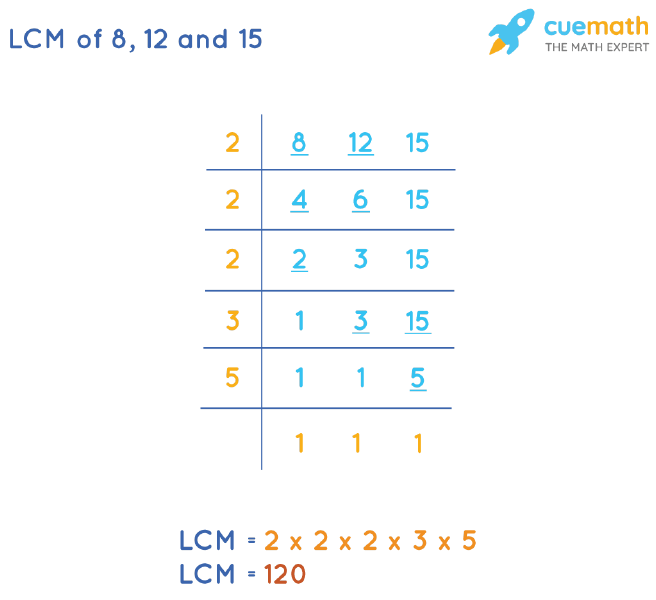
Alright folks, gather 'round! Let's talk about something wonderfully useful and surprisingly fun: the LCM of 8, 12, and 15. What in the world is an LCM, you ask? Well, buckle up, because we're about to find out!
LCM: The "Least Common Multiple" Adventure!
LCM stands for Least Common Multiple. Think of it like this: imagine you're planning the ultimate pizza party. You've got three friends: let's call them Amy, Bob, and Carol. Amy arrives every 8 minutes with a new topping, Bob graces us with his presence and a perfectly ripe tomato every 12 minutes, and Carol, bless her heart, brings a sprinkle of magical cheese dust every 15 minutes. You want to know when all three of them will magically appear at the same time with their culinary contributions. That, my friends, is where the LCM swoops in to save the day!
The LCM is the smallest number that all our starting numbers (8, 12, and 15 in this case) can divide into evenly. It's like finding the smallest common ground where all these numbers can hang out without leaving any remainders feeling left out. Think of it as a harmonious meeting point for numbers!
Must Read
Finding the LCM: Our Superhero Strategy!
Okay, so how do we actually find this mystical LCM? Fear not! We've got a strategy that's easier than ordering that pizza in the first place.
Step 1: Prime Factorization Power! We break down each number into its prime factors – those numbers that are only divisible by 1 and themselves. It's like taking apart a Lego castle to see which individual bricks make it up.
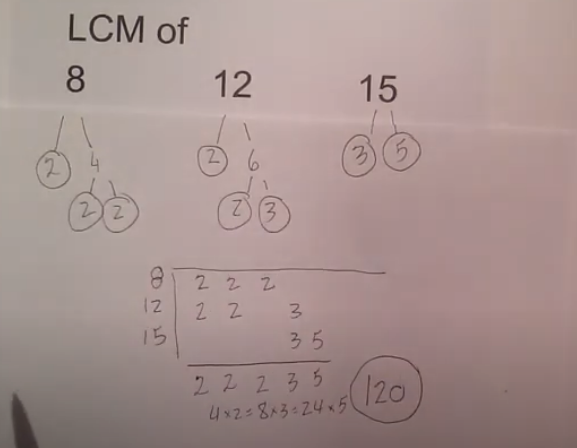
- 8 = 2 x 2 x 2 (or 23)
- 12 = 2 x 2 x 3 (or 22 x 3)
- 15 = 3 x 5
Step 2: Assemble the Avengers! Now, we gather all the prime factors, but here's the trick: we only take the highest power of each prime factor that appears in any of our original numbers. We want to make sure we have enough of each factor to build each original number, but we don't want to overdo it.
Looking at our prime factorizations, we have the following prime factors to consider: 2, 3, and 5.

- The highest power of 2 is 23 (from the number 8).
- The highest power of 3 is 31 (from the numbers 12 and 15).
- The highest power of 5 is 51 (from the number 15).
Step 3: Multiply and Conquer! We multiply these highest powers together:
23 x 31 x 51 = 8 x 3 x 5 = 120
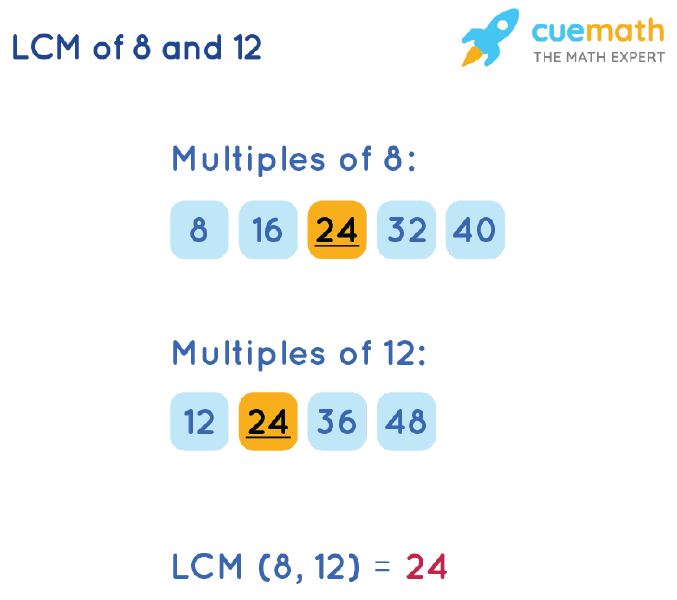
Boom! The LCM of 8, 12, and 15 is 120. That wasn't so scary, was it?
The Pizza Party Epiphany!
So, back to our pizza party. Amy arrives with toppings every 8 minutes, Bob with tomatoes every 12 minutes, and Carol with cheese dust every 15 minutes. According to our calculations, all three of them will arrive at the same time, ready to contribute to pizza perfection, after 120 minutes – that's two whole hours! Imagine the delicious possibilities!
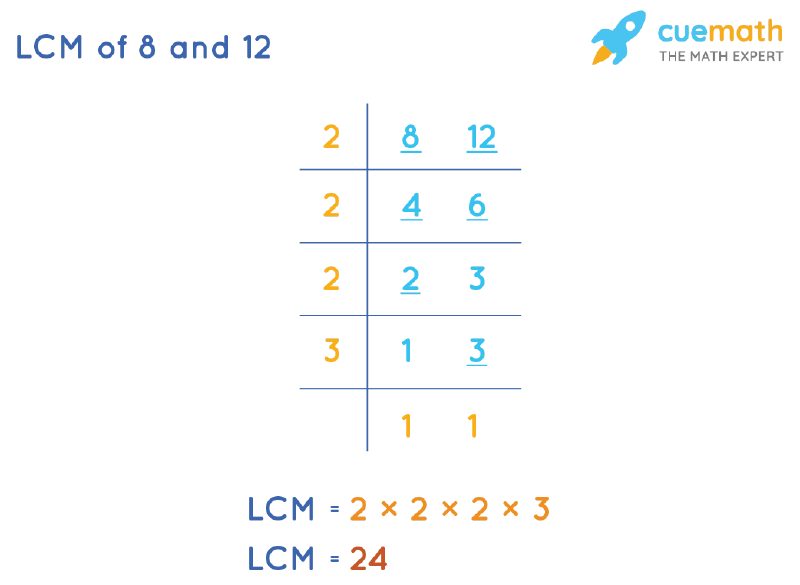
Another example: Let's say you're training for a marathon. You run every 8 days, your friend cycles every 12 days, and another friend swims every 15 days. The LCM of 8, 12 and 15 being 120 means that you'll all be training together on the same day every 120 days. Group training for the win!
"The LCM is your friend, not your foe! Embrace its power!" - Some Wise Mathematician (Probably)
Think of the LCM as the ultimate scheduling superpower! It's useful for everything from planning events to understanding repeating patterns. It helps you find that sweet spot where things align, like the planets in the solar system during a rare celestial event. Okay, maybe that's a slight exaggeration, but you get the idea!
So, the next time someone asks you, "What's the LCM of 8, 12, and 15?" you can confidently answer, "It's 120! And it's way more exciting than it sounds!" Now go forth and LCM with confidence!