What Is The Hold Button On A Thermostat
Ah, the humble thermostat. It sits there, often unassuming, yet it holds the power to transform our homes from sweltering saunas to cozy cocoons, or from frosty igloos to refreshing oases. We love it for the sheer comfort and control it offers, allowing us to dial in our ideal climate with a few taps. It’s the unsung hero of many a perfect movie night, a restful sleep, or a productive workday, keeping us at just the right temperature without us even having to think about it. Most of the time, our thermostats run on carefully crafted schedules, silently doing their job to optimize comfort and energy use. But what happens when life throws a curveball?
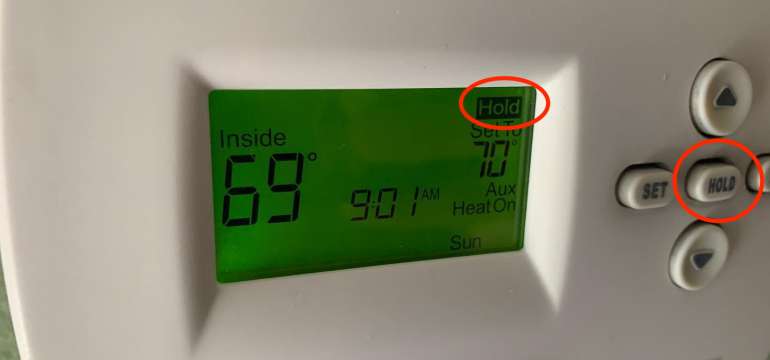
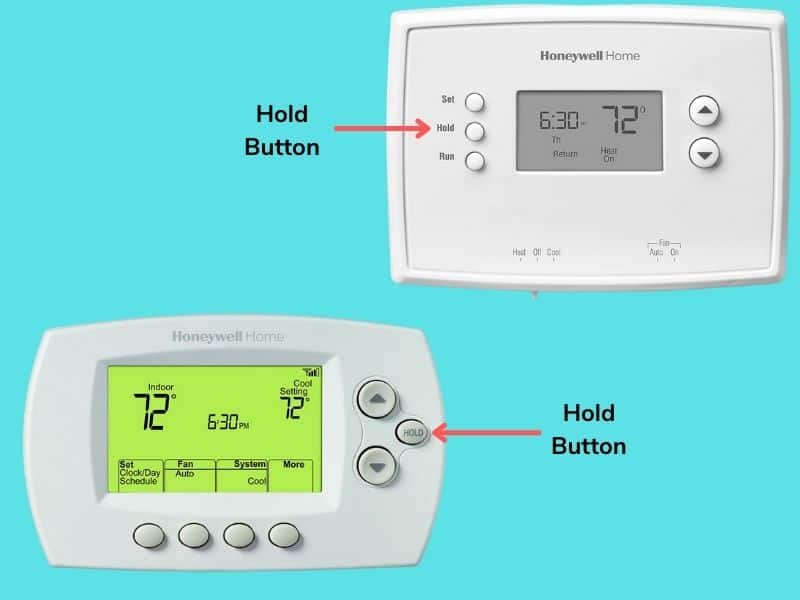
Enter the mysterious, often overlooked, but incredibly powerful feature: the Hold button. It might be labeled "Hold," "Temporary Hold," "Permanent Hold," or even just a little lock icon, but its purpose is universally brilliant. Think of it as your thermostat’s emergency override, a pause button for its regular routine. While your thermostat’s schedule is like a well-rehearsed symphony, the hold button is when you decide to suddenly drop the beat and play your own solo. It’s there for those moments when your carefully planned climate control needs a spontaneous intervention.
The primary benefit of the hold button is its sheer flexibility. Life isn't always predictable, and neither are our home's temperature needs. The hold button serves as a convenient temporary adjustment that doesn't force you to reprogram your entire week. It’s about instant control, giving you the power to adapt to immediate circumstances without committing to long-term changes. This simple function saves you time and hassle, making it a surprisingly impactful feature for everyday living.
Must Read
So, what kind of situations call for this magic button? Plenty! Imagine you’re heading out for a spontaneous long weekend trip. Instead of letting your AC blast an empty house for three days, you hit Hold and set it to a more economical temperature, saving energy and money. Or perhaps you’re hosting a lively party, and all those extra bodies are heating up the room faster than usual. A quick press of the hold button allows you to drop the temperature a few degrees to keep everyone comfortable, without messing up tomorrow’s schedule.

Another common scenario: you’re sick at home, snuggled under a blanket, and suddenly the house feels too chilly, even though the schedule says it should be warmer. Instead of waiting for the next programmed change, you can activate the hold function to maintain your desired temperature until you feel better. Or, maybe you’ve opened all the windows on a beautiful spring day, and you don’t want the heating or cooling kicking in unnecessarily; a temporary hold prevents wasteful operation until you close them again.
To enjoy the hold button more effectively, here are a few practical tips. First, know your thermostat. Some models have a "Temporary Hold" that reverts to the schedule after a set period (or the next scheduled change), while others offer a "Permanent Hold" that stays put until you manually release it. Understanding this distinction is crucial to avoid coming home to a sweltering house or a surprisingly high energy bill.
Second, use it judiciously. While it’s fantastic for temporary changes, if you find yourself constantly using the hold button for the same reason every week, it might be time to actually adjust your regular schedule. The hold button is best for anomalies, not for regular patterns you’ve overlooked in your programming.
Finally, remember to release the hold when its purpose is served, especially if it's a permanent hold. Modern smart thermostats often make this easier by allowing you to control it remotely or reminding you, but with older models, it’s all on you. A well-used hold button can be your best friend, offering an immediate sense of control and comfort when your daily routine takes an unexpected turn. It’s a small button, but it delivers big peace of mind!