
What Is The Equivalent Wattage For Led Bulbs
Remember those old incandescent light bulbs? The ones that got so hot you could practically fry an egg on them? (Please don't actually try that!) We were all so used to judging their brightness by their wattage – 60 watts for a decent reading light, 100 watts for a room that felt like daylight. It was simple, comforting, almost nostalgic. Like knowing your grandma's secret recipe always called for two sticks of butter.
Then along came LEDs, those energy-sipping superheroes of the lighting world. And suddenly, everything we thought we knew about light bulbs went… well, a little dim. We stared at the packaging, bewildered. What does 8 watts mean when I’m used to thinking in 60s?
It's like switching from measuring distance in miles to measuring it in kilometers. You know it's still distance, just…different. Except with LEDs, it's not about distance, it's about lumens. Lumens are the real MVPs here. They're the measurement of brightness, the actual amount of light the bulb emits.
Must Read
So, How Do You Compare?
Okay, let's ditch the technical jargon and get down to the fun part. Imagine you're throwing a party, and you need to replace the disco ball light (because, let's face it, everyone needs a disco ball light). Your old incandescent was a 60-watt bulb, casting a groovy glow on the dance floor. Now you're staring at an LED claiming to be "equivalent."
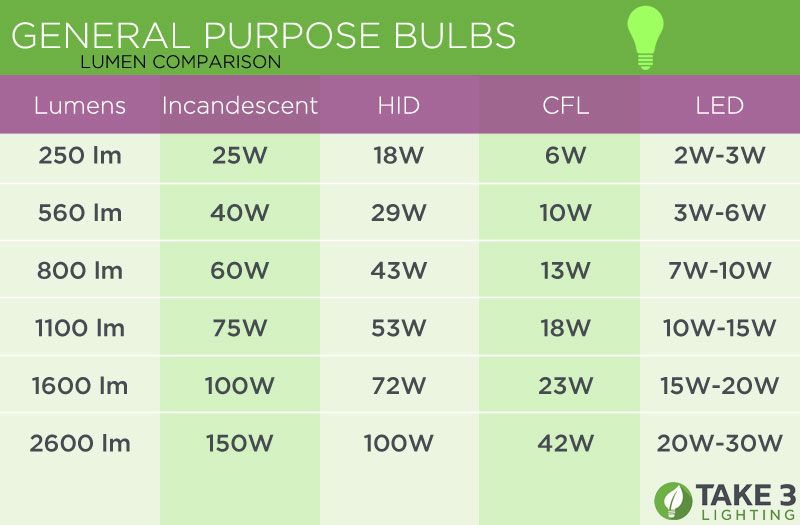
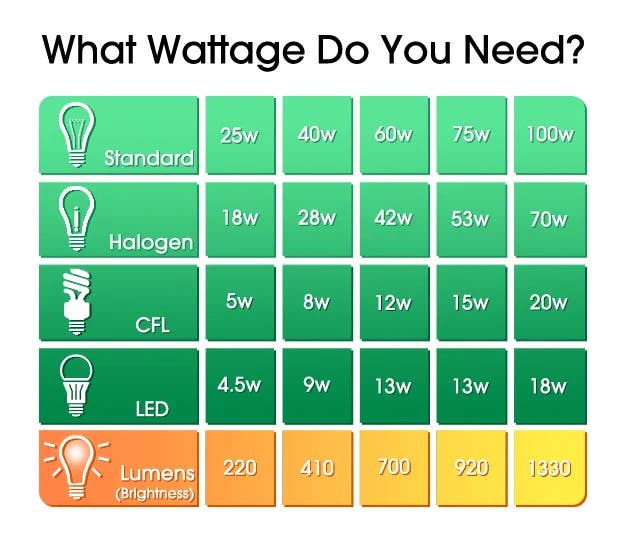
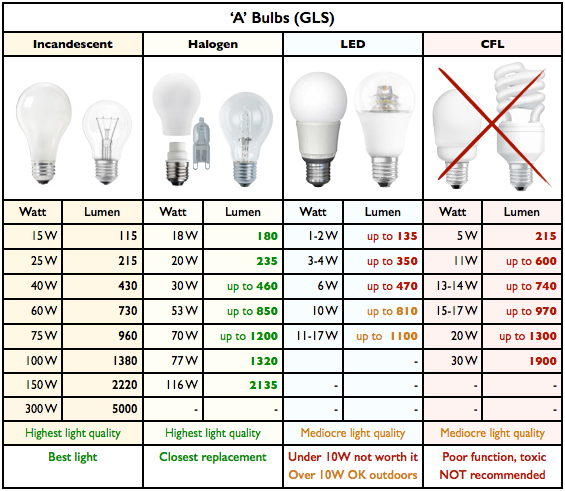
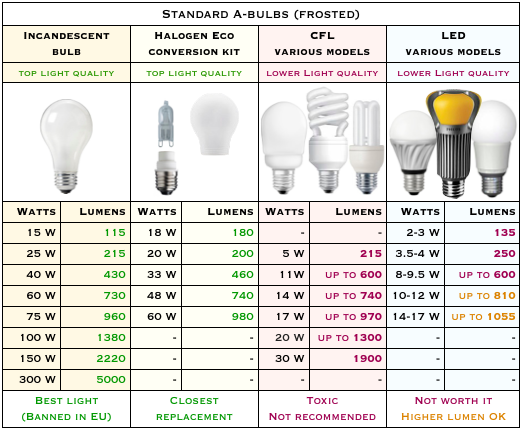
Here's the (semi) secret decoder ring: A 60-watt incandescent bulb typically puts out around 800 lumens. So, you're looking for an LED bulb that also boasts around 800 lumens. It might only use 8-12 watts. See? That’s a huge energy saving!

Think of it this way: watts are like how much effort the bulb is putting in (the energy it consumes), and lumens are like how much it's actually accomplishing (the brightness it produces). LEDs are just way more efficient at turning effort into accomplishment.
The Great Lumen Guessing Game
Now, before you start ripping out all your old bulbs, there's a tiny bit more to consider. LED brightness can feel a little different than incandescent. Some people find LEDs feel harsher, even with the same lumen output. It's like the difference between a sunny summer day and a bright, crisp winter morning. Both bright, but somehow different.
So, if you're replacing a bulb in your cozy reading nook, you might want to err on the side of slightly fewer lumens. You can always experiment! Lighting is a deeply personal thing, like choosing the perfect shade of avocado green for your kitchen (a design choice we're not judging, promise!).
Beyond Brightness: Color Temperature
And while we're at it, let's talk about another magical thing called color temperature, measured in Kelvin (K). Don't run away! It’s not as scary as it sounds. Think of it as the mood lighting selector.
Lower Kelvin numbers (around 2700-3000K) produce a warm, yellowish light, reminiscent of a sunset or a crackling fireplace. Perfect for creating a relaxing ambiance. Higher Kelvin numbers (4000K and above) give off a cooler, bluer light, closer to daylight. Ideal for task lighting where you need to focus, like in your home office or that lab where you’re inventing edible glitter.
So, when you're choosing your LEDs, consider not just the lumens, but also the Kelvin. Do you want a cozy cave or a bright, productive workspace?
The LED Revolution: A Brighter Future
In the end, the whole LED wattage thing is just a bit of a learning curve. It’s about letting go of old habits and embracing a brighter, more energy-efficient future. It’s like switching from dial-up internet to fiber optic – sure, it took a little getting used to, but who would ever go back?
So, next time you're staring at an LED bulb, remember: lumens are your friend. Embrace the Kelvin scale. And remember that even though watts aren't the be-all and end-all anymore, you're doing your part to save energy and maybe even prevent the polar bears from having to learn to surf on melting icebergs. And that, my friends, is something to light up about!
And if all else fails, just remember the wise words of Thomas Edison (probably): "More lumens is generally better."