
What Is The Difference Of A Hurricane And Typhoon

Okay, so you've probably heard about some crazy weather happening somewhere in the world, right? Maybe you’ve seen the news footage of palm trees bending double like they’re doing some extreme limbo, or maybe your friend in Florida just canceled their beach trip. And terms like “hurricane” and “typhoon” get thrown around like confetti. But what's the actual deal? Are they, like, weather twins separated at birth? Well, kinda.
Think of it this way: imagine your favorite band. They might have different names in different countries. Let's say they're called "The Roaring Raccoons" in the US, but in Japan, they're known as "Thunderpaw Titans." Same band, different branding, right? That's basically what we're talking about with hurricanes and typhoons.
Same Storm, Different Ocean, Different Name
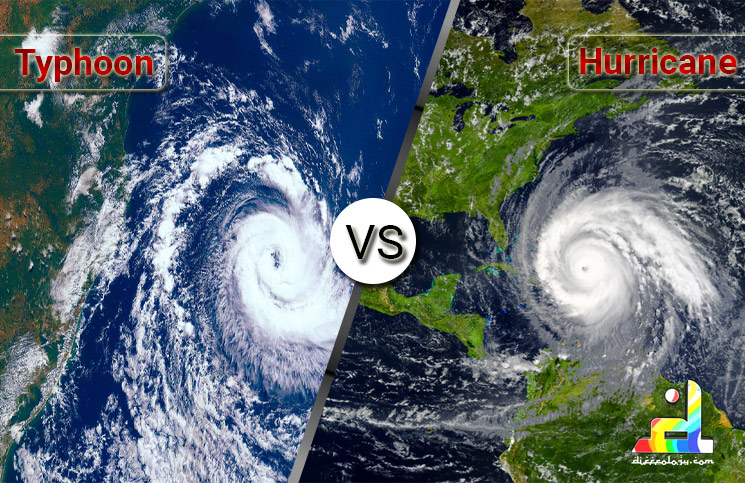
At their core, a hurricane and a typhoon are the exact same type of storm: a tropical cyclone. It's a swirling, spiraling, low-pressure system that sucks up warm, moist air from the ocean. This warm air rises, cools, and forms thunderstorms. Add in the Earth's rotation (thanks, Coriolis effect!), and you get a swirling vortex of wind and rain that can wreak some serious havoc. But the name we use depends on where this swirling vortex decides to party.
Must Read
So, where does the name change happen?
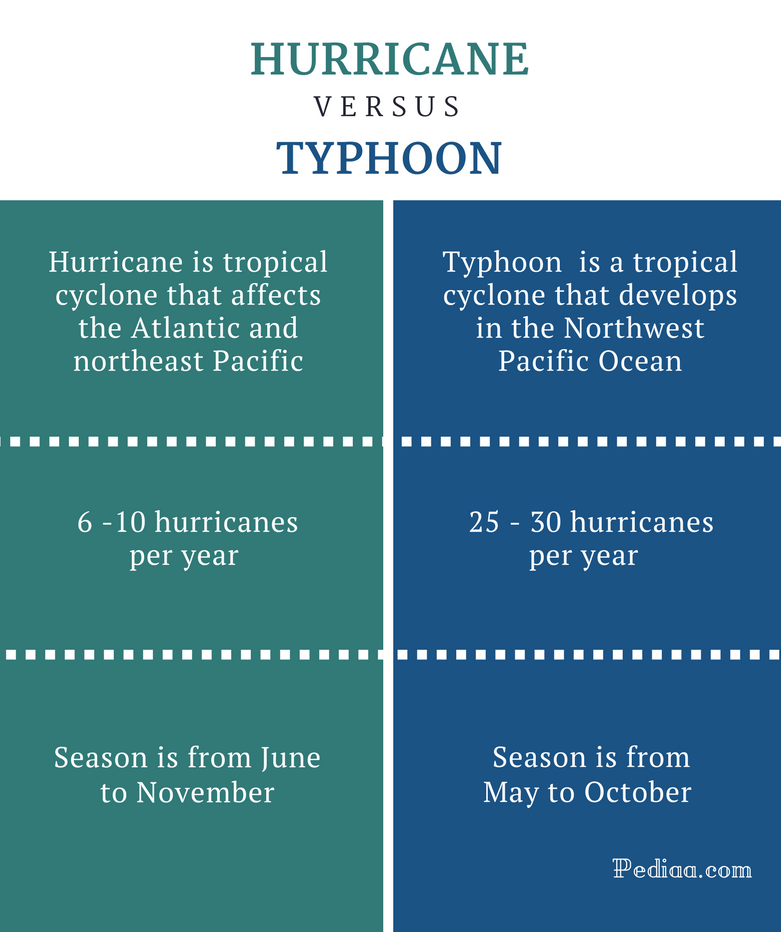
- Hurricane: This is the name we use when the storm brews in the North Atlantic Ocean, the Caribbean Sea, the Gulf of Mexico, and the eastern and central North Pacific Ocean. Think Florida, the Carolinas, and even parts of Mexico and Central America.
- Typhoon: This is the label slapped on the same type of storm when it forms in the western North Pacific Ocean. We’re talking places like Japan, the Philippines, and China.
It's like calling soda "pop" in the Midwest and "coke" in the South. Same fizzy goodness, different local dialect!

Why the Different Names? Blame the History Books!
The different names are mainly historical. Sailors and meteorologists in different parts of the world developed their own terms for these powerful storms over centuries. There’s no dramatic reason, just different cultures independently naming the same phenomenon. It’s like how some people say "y'all" and others say "you guys."
Imagine explorers landing on different shores, facing the same crazy weather, and scribbling in their journals. One guy in the Caribbean writes about a "huracan," after the Carib god of storms. Meanwhile, a sailor near Japan is battling a "typhoon," possibly derived from the Chinese word for big wind ("tai fung").
So, Are They Exactly the Same?
Yes and no. The basic science is identical. But there can be subtle differences in the average intensity or size in certain regions. For example, some studies suggest that typhoons in the Western Pacific tend to be, on average, a little stronger than hurricanes in the Atlantic. But that's just a trend; individual storms can vary wildly in strength, regardless of where they form.
Think of it like comparing a Golden Retriever to a Labrador. Both are dogs, both are retrievers, but they might have slightly different personality traits. One might be a bit more energetic; the other might be a little more laid-back. But at the end of the day, they're both loyal companions who love belly rubs.
The Bottom Line: Respect the Power!
Whether you call it a hurricane, a typhoon, or even "that crazy spinning thing that's trying to eat Florida," the important thing is to take these storms seriously. They can bring devastating winds, torrential rain, flooding, and storm surges that can cause widespread destruction and loss of life. So, when the authorities say "evacuate," listen up! It's better to be safe than sorry, no matter what you call the storm.
So, next time you hear about a hurricane or a typhoon, you'll know they're basically the same beast, just with different postal codes. Now, if you'll excuse me, I'm going to go check the weather forecast... just in case "that crazy spinning thing" decides to pay my town a visit!
