
What Is The Difference Between Watts And Amps

Ever looked at a lightbulb and wondered what all those numbers mean? Or maybe you're trying to figure out if you can plug your new espresso machine into the same outlet as your toaster oven without blowing a fuse. Don't worry, you're not alone! Electricity can seem like a mystical force, but understanding a few basic concepts like watts and amps can demystify your devices and make you a savvy energy user.
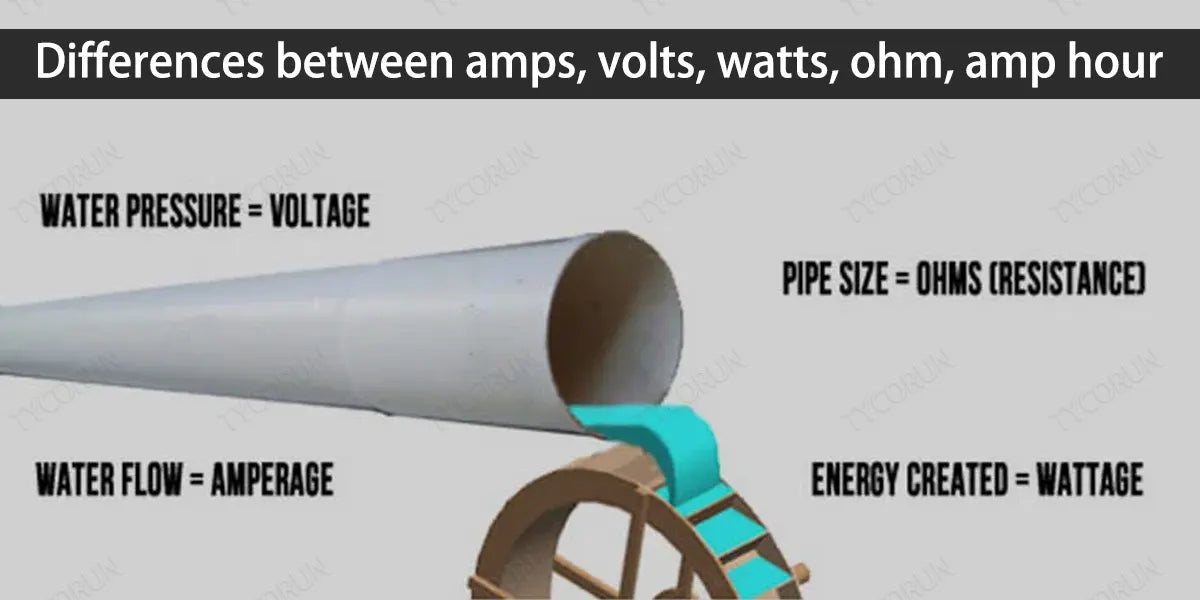
Think of electricity like a water system. Amps are like the amount of water flowing through a pipe, while volts are like the pressure pushing that water. Watts, then, are the total power of the water flow – how much work it can actually do. So, a high wattage sprinkler system will deliver a powerful stream of water to keep the lawn fresh, while a low wattage drip line is more about slow and steady hydration.
Amps: The Current Affair
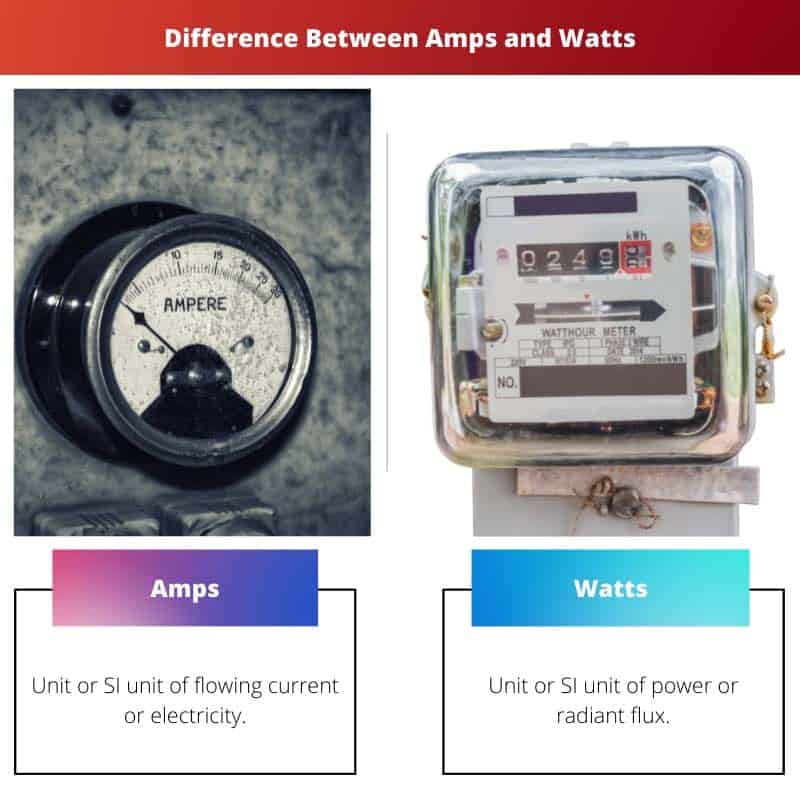
Amps (Amperes) measure the electrical current. They tell you how many electrons are flowing through a circuit at a given time. A higher amperage means more electrons are moving, and potentially, more power being delivered. Think of a crowded subway platform – lots of people (electrons) rushing to get somewhere.
Must Read
Practical Tip: Check the amperage rating of your appliances and outlets. Plugging too many high-amp devices into a single circuit can overload it and trip the breaker. This is why your grandma always told you not to run the vacuum and the microwave at the same time!
It's also why extension cords have amp ratings. Using a thin, low-amp extension cord for a power-hungry appliance like a space heater is a recipe for disaster. Always choose the right tool for the job!

Watts: The Power Player
Watts measure power – the rate at which energy is used or transferred. A higher wattage means more energy is being consumed. Think of it like horsepower in a car. A high-wattage appliance is like a powerful engine, ready to do some serious work.
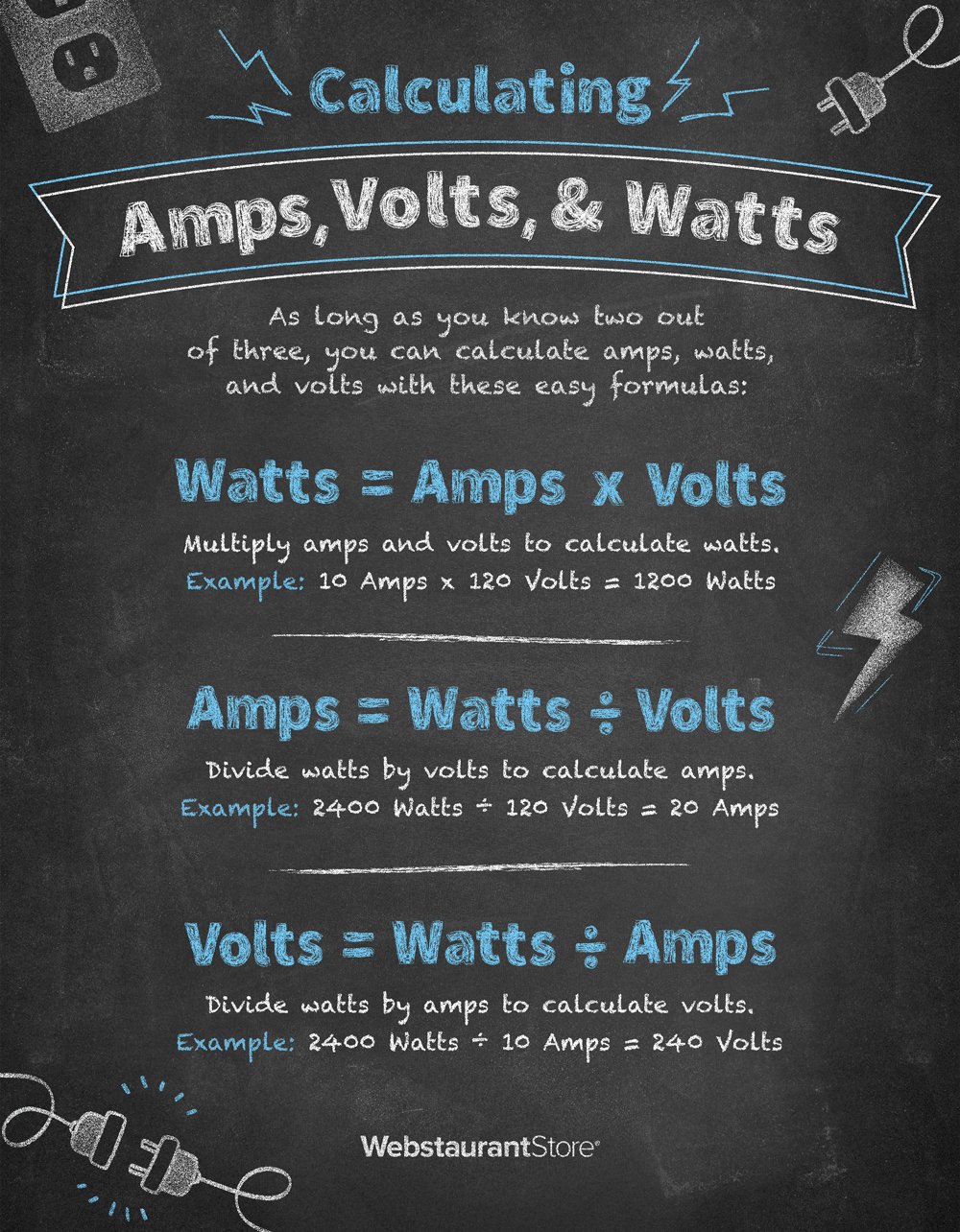
The relationship between watts, amps, and volts is defined by a simple equation: Watts = Volts x Amps. This is your secret weapon to understanding your electrical needs.
Cultural Reference: Remember the scene in "Back to the Future" when Doc Brown needs 1.21 gigawatts of electricity to power the DeLorean time machine? That's a whole lot of watts! Gigawatts are just a massive amount of watts, but it highlights how power is at the core of technology and our lives.
Putting It All Together
Let's say you have a 120-volt outlet and a lamp that draws 0.5 amps. To find the wattage, you multiply: 120 volts x 0.5 amps = 60 watts. That lamp uses 60 watts of power.
Fun Fact: Incandescent light bulbs are incredibly inefficient. They waste most of their energy as heat, which is why they are being phased out in favor of more energy-efficient options like LEDs. An LED bulb can produce the same amount of light as an incandescent bulb using a fraction of the watts!
Practical Tip: When shopping for appliances, look for the Energy Star label. Energy Star products are designed to be more energy-efficient, which means they use fewer watts to perform the same task, saving you money on your electricity bill.
Consider this: You have a hairdryer (1500W) and a curling iron (800W) that you want to use in your bathroom. The circuit is 120V. This means it can handle a current of about 16.6 Amps (120V * 16.6A ≈ 2000W). If both appliances use a combined current of 19 Amps (1500W / 120V + 800W / 120V ≈ 19A), the circuit is overloaded! This leads to a tripped circuit and potential damage.
Watts and Amps in Everyday Life
Understanding watts and amps isn't just about avoiding blown fuses. It's about making informed decisions about energy consumption and sustainability. By choosing energy-efficient appliances, reducing your reliance on power-hungry devices, and understanding the power needs of your electronics, you can shrink your carbon footprint and save money in the process.
The next time you glance at the specifications on your devices, remember the water system analogy and the power equation. Electricity might still seem a bit mysterious, but now you have the tools to navigate its currents with confidence.