
What Is The Difference Between Copper And Bronze
Ever looked at an old penny and then a fancy-looking statue and thought, "Huh, these metals seem kinda similar…but different"? You’re not wrong! We're talking about copper and bronze, two metals that have been hanging around with us humans for ages. But what exactly is the difference between them, and why should you even care? Let’s dive in!
Think of it this way: copper is like that reliable friend you can always count on. Bronze? He's the friend who's a little more… interesting, maybe a bit flashier. Okay, maybe that's a stretch, but stick with me!
Copper: The OG Metal
Copper is a pure element – straight from the Earth, baby! You'll recognize it by its reddish-brown color. It's been used for thousands of years, and for good reason. Remember that old penny we mentioned? That’s (mostly) copper! Look around your house: the wires that power your lights, the pipes that bring you water - chances are, they're made of copper.
Must Read
Why? Because copper is an amazing conductor of electricity and heat. Think about your pots and pans. Many of the high-end ones have a copper bottom to distribute heat evenly. It's like having a tiny, efficient engine right under your stew!
And here’s something else cool: copper is naturally antimicrobial. That means it kills bacteria and viruses. Some hospitals are even using copper surfaces to help prevent the spread of germs. Talk about a superhero metal!
So, to recap: copper is a pure element, reddish-brown, a great conductor, and fights germs! Pretty awesome, right?
Bronze: Copper's Cooler Cousin
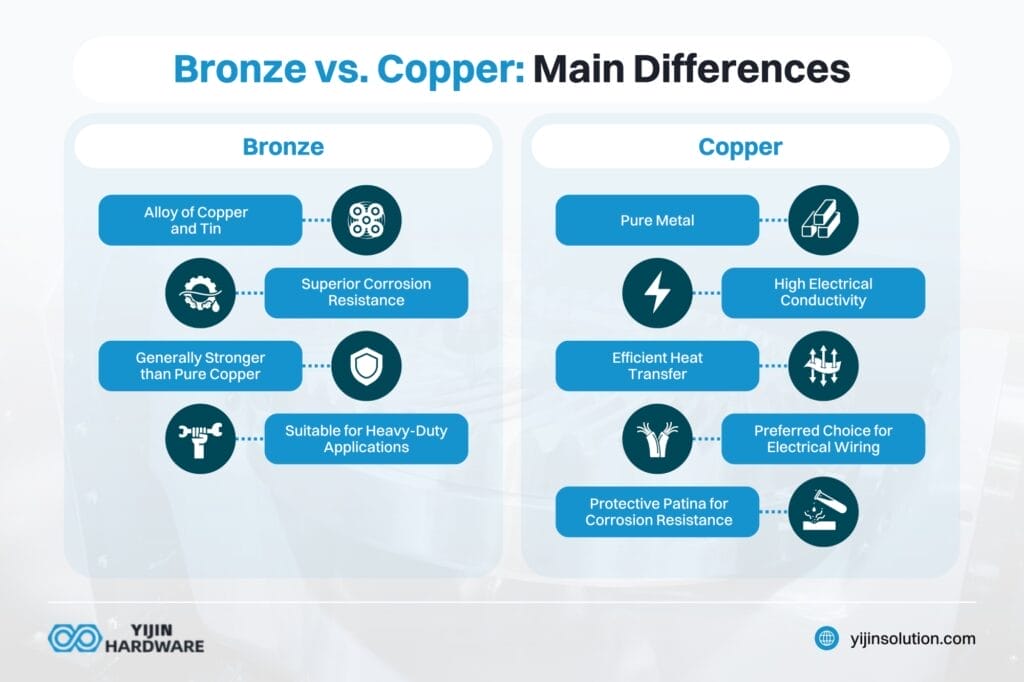
Now, let's talk about bronze. Bronze isn't a pure element; it's what we call an alloy. Think of it like a recipe: you take copper (usually about 88%), add in another metal (typically tin, about 12%), mix it all together, and bam! You've got bronze.
Adding tin (or sometimes other elements like aluminum, manganese, or zinc) to copper changes its properties. Bronze is generally harder and more durable than pure copper. It's also more resistant to corrosion, which means it doesn't rust as easily.
Ever seen a beautiful bronze statue? That's because bronze holds up incredibly well over time, even when exposed to the elements. Think of all those ancient sculptures you see in museums. They're still standing strong after hundreds, even thousands, of years! Try making a statue out of pure copper and leaving it outside – it'd probably be a green, corroded mess in a few decades.
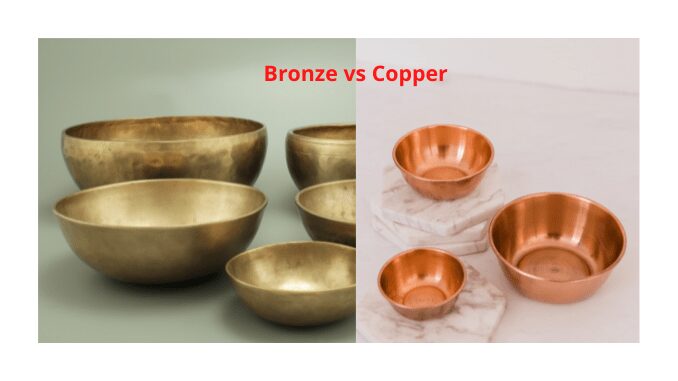
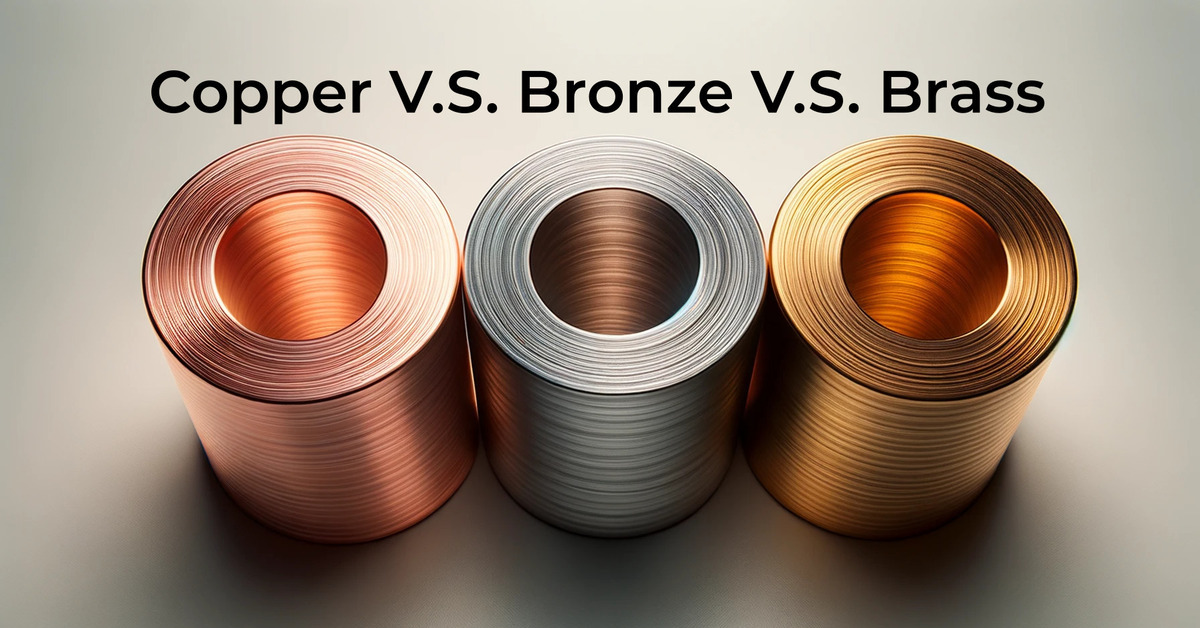
Bronze also has a slightly different color than copper. It can range from a golden-brown to a reddish-brown, depending on the exact composition of the alloy. It often has a more "classic" or "antique" look to it.
Historically, bronze was a game-changer. The "Bronze Age" (around 3300-1200 BC) marked a significant period in human history when bronze tools and weapons replaced stone tools. Bronze was used to make everything from swords and armor to farming implements and decorative objects. It was a serious upgrade!

Today, you'll still find bronze in various applications. It's used in bearings, bushings, and other parts where low friction and high wear resistance are important. You might even find it in musical instruments, like cymbals and bells, because of its resonant sound.
So, bronze is an alloy (copper + tin, usually), harder and more durable than copper, and resistant to corrosion. It's the metal of choice for statues that need to last!
Why Should You Care? (The Fun Part!)
Okay, so you know the difference between copper and bronze. But why should you actually care? Well, for starters, it’s just plain interesting! Knowing the properties of different materials helps you understand the world around you. You'll start noticing them everywhere!
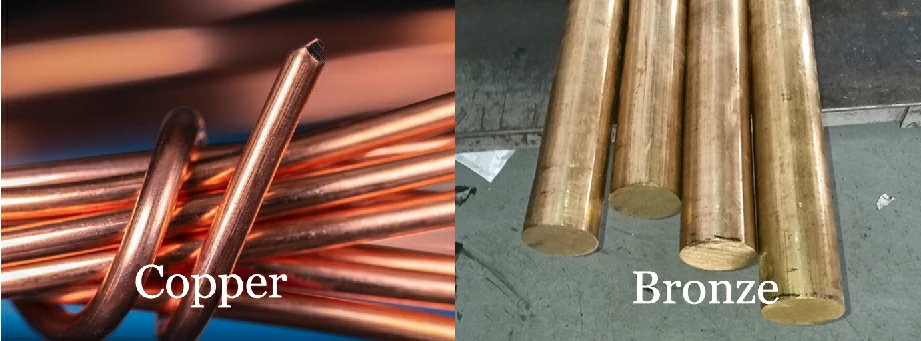
Imagine you’re at a flea market. Someone’s trying to sell you a "solid copper" statue for a steal. Now you know enough to be skeptical! You can examine it closely, look for the characteristic reddish-brown color of pure copper, and maybe even do a quick scratch test (if the seller allows it, of course!). If it looks more golden or brownish, and feels incredibly solid, it might be bronze, and the price might not be such a steal after all.
Or, let’s say you’re buying new cookware. Knowing that copper conducts heat so well might influence your decision to choose a pot with a copper bottom. You’ll become a kitchen whiz, thanks to your metal knowledge!
Ultimately, understanding the difference between copper and bronze is like gaining a little superpower. You'll be able to identify different materials, appreciate their unique properties, and maybe even impress your friends with your newfound metal expertise. So go forth and explore the world of metals! You might be surprised by what you discover.