
What Is The Difference Between A Robbery And A Burglary

Hey there, curious minds! Ever found yourself watching a crime show or reading a news article and pausing, wondering about the exact difference between a robbery and a burglary? You're definitely not alone! It's one of those common mix-ups that even native speakers often muddle, and honestly, it’s a pretty fascinating peek into how our legal system defines things.
So, let's grab a virtual coffee and chat about it. No stuffy legal jargon, just chill vibes and some fun comparisons to make it stick. Ready?
Let's Talk Burglary First: The Sneaky Ninja of Crimes
Alright, imagine this: you come home from a long day, unlock your door, and... something feels off. A window is ajar, a drawer is open, and your favorite gaming console is gone. Your house has been violated, but you didn't see anyone, right? That, my friends, is very likely a burglary.
Must Read
Think of burglary as a crime focused on place, not necessarily people. The key element here is unlawful entry into a structure – it could be a house, an apartment, a business, even a shed or a car – with the intent to commit a crime inside. Most often, that crime is theft, but it could also be vandalism or something else entirely.
The "breaking in" part? It doesn't always mean smashing a window! It could be as subtle as an unlocked door, a slightly ajar window, or even entering during business hours but then hiding until closing time. The important thing is that the person wasn't authorized to be there, and they had a naughty plan.
So, the burglar is like that really unwelcome guest who sneaks into your party when you're not looking, rummages through your stuff, and leaves without anyone even knowing they were there until the next morning. They're all about stealth and exploiting an opportunity when no one is around to stop them. It’s a crime against property.

Want a fun way to remember it? Think of a ghost: it enters a place without permission, it's often unseen, and it leaves a mess. Spooky! But also, pretty much a burglary.
Now, Let's Get to Robbery: The Direct Confrontation
Now, let's flip the script. Imagine you're walking down the street, happily listening to your podcast, when suddenly someone confronts you, demands your phone and wallet, and perhaps even shoves you. Or maybe you're at a convenience store, and a person brandishes a weapon, demanding money from the cashier.
That, my friends, is a robbery. The big, crucial difference here? Robbery is a crime against a person. It involves taking something directly from someone, and it always, always involves force, threat, or intimidation.
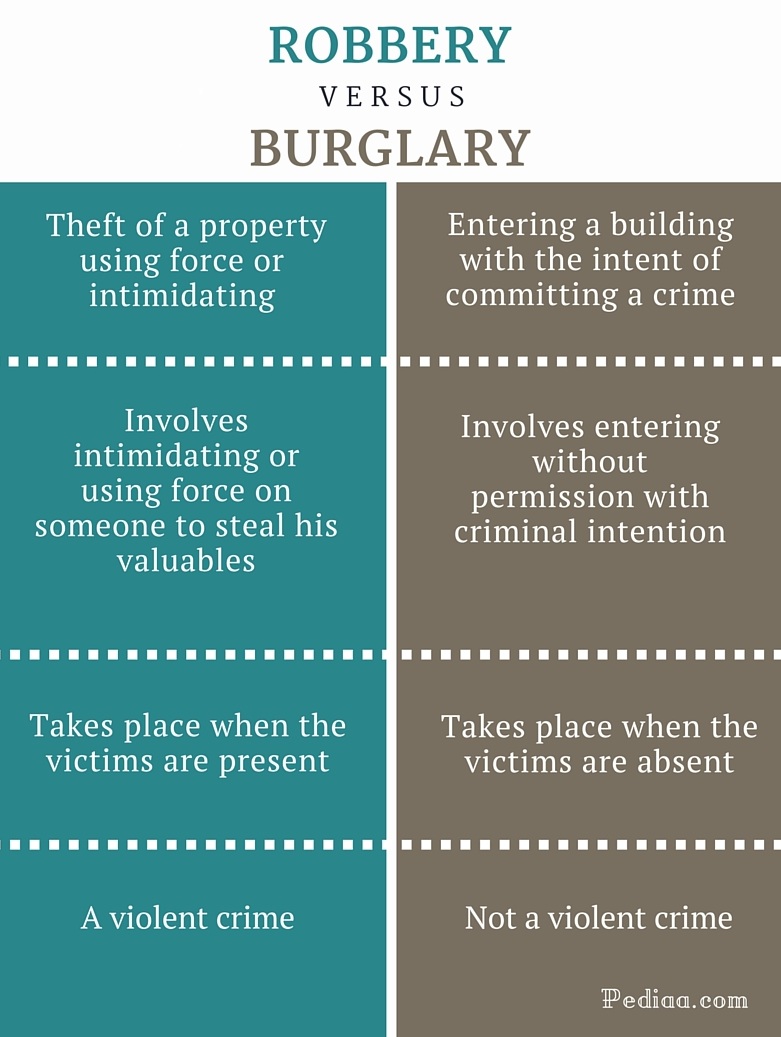
The robber isn't interested in sneaking around when no one's home. They want what you have, and they're willing to use a show of power or actual violence to get it. It’s a face-to-face, often terrifying, confrontation.
Think of it this way: if a burglar is a sneaky house guest, a robber is like someone walking right up to you at that same party and saying, "Hand over your party snacks, or else!" There's no subtlety, no quiet entry. It's direct, it's confrontational, and it puts people in immediate fear.
This is why robbery is generally considered a much more serious and often violent crime than burglary. It involves the immediate presence of a victim who is directly threatened or subjected to force.

The "Aha!" Moment: The Core Difference
So, if we boil it down to the absolute simplest terms, here's your cheat sheet:
- Burglary: It's about a place. Unlawfully entering a building (or structure) with the intent to commit a crime inside. You don't have to be home. Think "breaking and entering."
- Robbery: It's about a person. Taking property directly from someone using force, fear, or intimidation. You absolutely have to be there. Think "mugging" or "sticking up" a bank.
Could a burglary turn into a robbery? Absolutely! If a burglar is inside your home, gets startled by you coming back, and then uses force or threat to take your watch before fleeing, that sequence could certainly include both a burglary and a robbery charge. But generally, they are distinct events.
Why Does This Nuance Matter (Beyond Trivia)?
Okay, so it’s not just a fun fact to impress your friends at dinner (though it totally is!). This distinction is super important for a few reasons:

- Legal Consequences: The penalties for robbery are almost always much, much harsher than for burglary, reflecting the inherent violence and threat to a person that robbery entails.
- Insurance: Your home insurance might cover losses from a burglary, but the legal and personal ramifications of a robbery are a different beast entirely.
- Our Understanding: It helps us understand the world around us and the language used in news and legal reports. It sharpens our minds to the specifics!
Isn't it cool how just two words, often used interchangeably, describe such fundamentally different types of criminal acts? It really shows the power and precision of language, especially when it comes to the law.
So, the next time you hear someone say "Oh, my house was robbed," you can (internally, of course!) clarify and appreciate the difference. More likely, their house was burgled unless they were actually home and confronted by the perpetrator. Now you know!
Hope this little exploration made things clearer and maybe even sparked a bit of legal curiosity in you. Stay safe, stay curious, and thanks for hanging out!