
What Is Silicon Made Out Of
Ever paused to marvel at the sheer wizardry in your pocket? The tiny supercomputer that connects you to the world, guides your travels, and entertains you endlessly? Or perhaps the solar panels silently harvesting sunshine on a rooftop, powering our sustainable future? These modern wonders, which bring so much joy and convenience to our lives, owe their existence to an unassuming, yet utterly fundamental, element: silicon. It's the silent architect of our digital age, the very bedrock upon which our technological dreams are built.
The benefits and purpose of silicon are vast and interwoven into nearly every aspect of our daily existence. Its primary role is as a semiconductor, meaning it can control the flow of electricity, making it perfect for creating the integrated circuits, or "chips," that are the brains of all electronic devices. Without silicon, our smartphones would be bricks, our computers silent, and the internet a distant dream. Beyond electronics, silicon also plays a crucial role in renewable energy as the core material for solar cells, converting sunlight directly into electricity. It’s also present in countless other forms, from the flexible, heat-resistant silicone bakeware in your kitchen to the durable sealants that keep your home waterproof, showcasing its incredible versatility.
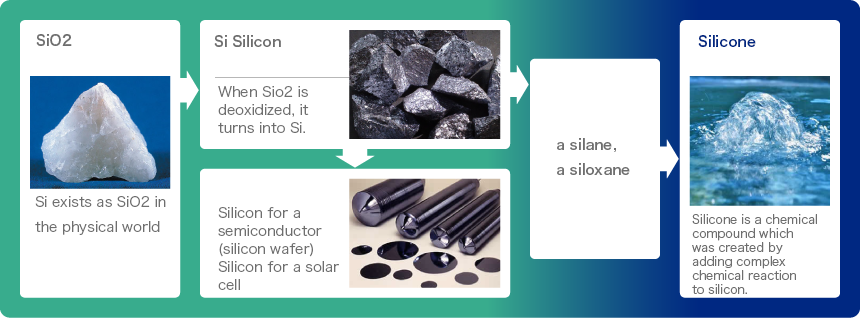
So, what exactly is this miracle material made out of? Prepare for a revelation that might make you look at your surroundings a little differently. Silicon, the element (symbol Si), is not to be confused with silicone (the synthetic polymer often used for flexible products). Silicon is the second most abundant element in the Earth’s crust, right after oxygen. And where do we find it? In one of the most common and seemingly mundane materials on the planet: sand. Yes, much of the silicon used in our cutting-edge technology begins its life as ordinary beach sand, specifically in the form of silicon dioxide (SiO2), also known as silica or quartz.
Must Read
The journey from a grain of sand to a microchip is nothing short of alchemical. It involves mining quartz sand, then purifying it through incredibly high-temperature processes, often with carbon, to extract raw metallurgical-grade silicon. This raw silicon is then subjected to even more rigorous refining stages, including complex chemical reactions and crystal growing techniques, to achieve the ultra-pure, semiconductor-grade silicon required for electronics – material so pure it allows for less than one foreign atom per billion silicon atoms! This purified silicon is then sliced into thin wafers, ready to be transformed into the intricate circuits that power our world.
To truly appreciate the wonder of silicon, try this: the next time you tap your smartphone screen or see a solar panel glinting in the sun, take a moment. Imagine the journey that humble grain of sand undertook, forged and purified by human ingenuity, to become an indispensable part of our connected world. Look around your home for everyday examples of its polymer cousin, silicone – perhaps a spatula, a baby bottle nipple, or bathtub caulk. Understanding its origins helps us appreciate not just the technology itself, but the profound scientific and engineering feats that transform abundant raw materials into the extraordinary tools of our modern existence. It’s a testament to how the mundane can be refined into the magical, turning simple sand into the very fabric of our digital lives.


