
What Is Meant By Selective Toxicity
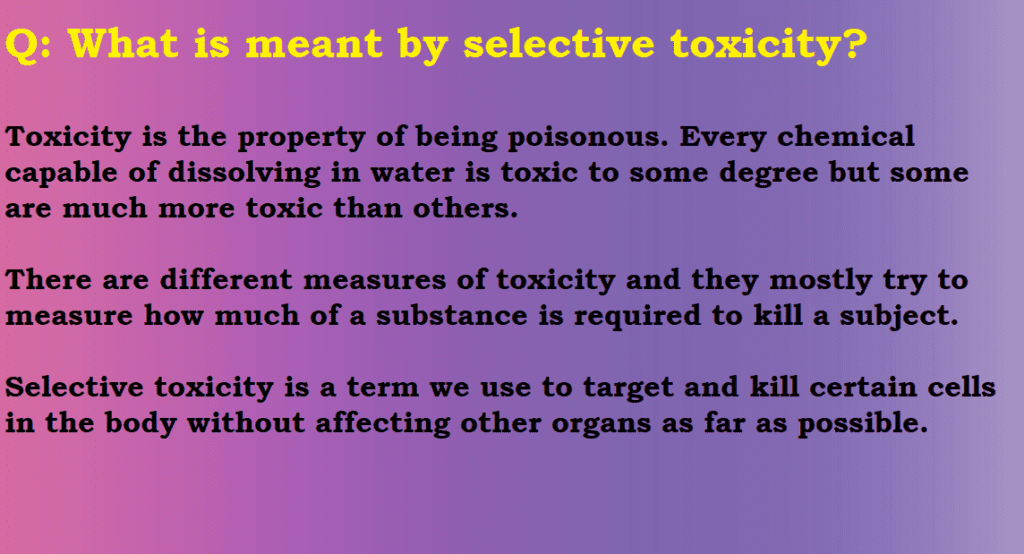
Ever wondered how a doctor can prescribe a medicine that kills the bad germs making you sick, without harming your own cells? Or how farmers can use weed killers to get rid of pesky plants without ruining their crops? That's where the fascinating concept of selective toxicity comes in! It's a bit like having a super-smart bomb that only targets the enemy, leaving the good guys alone. Sounds pretty cool, right?
At its heart, selective toxicity means a substance is more poisonous to some organisms than to others. The purpose is to exploit differences in biology. For beginners, it's simply understanding that not all chemicals are equally dangerous to everything. A family might be interested because understanding this principle helps them choose safe cleaning products or understand why certain pesticides are used in their garden. And for hobbyists like gardeners or even brewers, knowing about selective toxicity can help them manage their plants or prevent unwanted bacteria from spoiling their fermentation process.
So, how does it actually work? Let's consider a few examples. Antibiotics, like penicillin, work by targeting the cell walls of bacteria. Human cells don't have cell walls like that, so the antibiotic harms the bacteria without affecting us. Herbicides (weed killers) might target a specific enzyme found in broadleaf plants but not in grass, allowing you to kill dandelions without killing your lawn. Chemotherapy drugs use selective toxicity too. They aim to kill rapidly dividing cancer cells, although unfortunately they can also affect other fast-growing cells in the body, leading to side effects. The key is finding a unique vulnerability to exploit.
Must Read
There are many variations on this theme. Some substances are selectively toxic because of how they're absorbed or metabolized. For example, certain insecticides are much more readily absorbed by insects than by mammals, making them relatively safe for us to use. Other substances might target specific receptors or processes that are only found in the target organism. The possibilities are endless!

Want to get started learning more about selective toxicity? Here are a few simple tips:
- Read the labels: When using any product, read the label carefully. It will often indicate what organisms the product is toxic to and what precautions you should take.
- Do your research: If you're curious about a particular substance, search online for its toxicity profile. There are many resources available that provide information on the toxicity of different chemicals to different organisms.
- Consider alternatives: Before using a potentially toxic substance, explore alternative methods. For example, instead of using a herbicide, you might be able to control weeds by hand-pulling or using mulch.
- Start small: If you're experimenting with a new substance, start with a small dose and observe the effects carefully.
Understanding selective toxicity opens up a whole new world of understanding about how chemicals interact with living things. It's not just about science; it's about making informed choices and understanding the world around us. So, keep exploring, keep questioning, and most importantly, keep having fun learning! The deeper you delve, the more fascinating and useful you'll find this concept to be. It empowers you to make safer and more effective choices in various aspects of your life.


