
What Is Made Of Abs Plastic
Hey there, fellow curious human! Ever looked around your house, car, or even your desk and wondered, "What on earth is that made of?" We're surrounded by an incredible array of materials, but one unsung hero often goes unnoticed. It’s tough, it’s versatile, and it's probably touched your life more times today than you can count. Get ready to meet the rockstar of plastics: ABS!
No, it's not a new workout routine (though it does make some things pretty strong!). ABS stands for Acrylonitrile Butadiene Styrene. Sounds a bit like a mouthful of science class, right? Don't sweat it! Think of it as a super cool chemical cocktail, where each ingredient brings its own special superpower to the party.
So, What's the Secret Sauce? Breaking Down A.B.S.
Let's take a quick peek at the A, B, and S, because understanding them helps you appreciate why ABS is such a big deal. Imagine them as a superhero team:
Must Read
A is for Acrylonitrile: The Brains & Brawn. This guy brings the rigidity and strength. It's like the disciplined general, making sure everything holds its shape and isn't easily dented or squashed. It also gives ABS a good resistance to chemicals, so it won’t dissolve if it accidentally gets splashed with, say, a rogue cleaning product. Pretty neat, huh?
B is for Butadiene: The Bouncy Brawler. This is the fun part! Butadiene is a type of rubber, and it's what gives ABS its amazing toughness and impact resistance. Think of it as the shock absorber, the one that can take a punch and bounce back without shattering. Without Butadiene, ABS would be brittle. Thanks to B, dropped items often survive their fall!
S is for Styrene: The Smooth Operator. Styrene is the stylish member of the team. It gives ABS that lovely shiny, smooth surface we often see. Plus, it makes the whole mixture super easy to process and mold into all sorts of fantastic shapes when it's heated up. This means factories absolutely love working with it, making production a breeze and keeping costs down.

The Power of Three: Why ABS is Everywhere!
When these three superheroes combine, they create a plastic that’s basically a jack-of-all-trades. ABS is known for being:
- Strong and rigid: It holds its shape like a champ.
- Tough and impact-resistant: It can take a hit without falling apart.
- Relatively lightweight: Easy to carry around.
- Good-looking: Often has a smooth, glossy finish.
- Easy to mold: Super versatile for manufacturers.
- Temperature resistant: Holds up in varying heat conditions (within reason!).
It's like having a material that’s both a bodybuilder and a gymnast. Pretty impressive for a plastic, right?
Where Can You Find Our Unsung Hero? Prepare to Be Amazed!
Alright, let’s play a quick game of "Spot the ABS!" You’re probably surrounded by it right now. Here are some common places where ABS plastic shines:

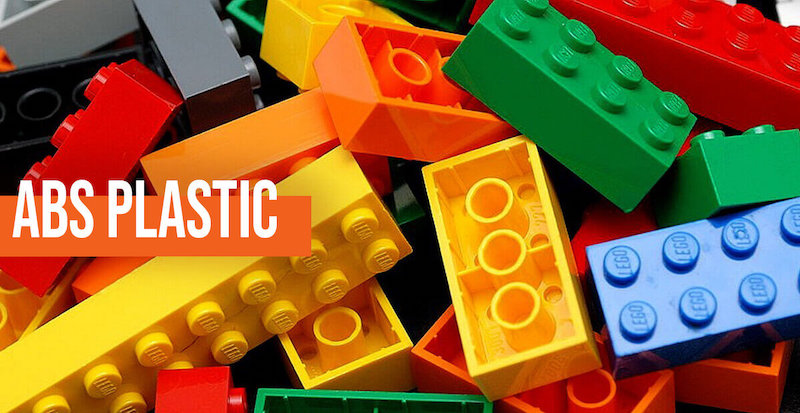
LEGO Bricks: Yes, those near-indestructible little plastic wonders that cause excruciating pain when stepped on? Mostly ABS! That's why they click together so perfectly and last for generations (or until the vacuum cleaner eats them). Mind blown, right?
Car Interiors: Pop into your car and look at the dashboard, door panels, and maybe even the console. Much of that durable, good-looking plastic is ABS. It holds up well to temperature changes and general wear and tear.
Appliance Housings: The outer casings of many kitchen appliances like blenders, coffee makers, and even your fridge door lining often use ABS. It needs to be tough enough for daily use and look good doing it.
Computer Keyboards & Mouses: Yup, the tools you might be using to read this article are probably clad in ABS. It’s comfortable to touch, durable, and can handle millions of clicks and keystrokes.
Pipes: Especially in drainage, waste, and vent pipes, ABS is a common choice because it’s strong, rigid, and resistant to chemicals. Not the most glamorous job, but someone's gotta do it!
Luggage: Many hard-shell suitcases are made with ABS. It provides a great balance of protection for your belongings and keeping the suitcase itself from becoming a crumpled mess after a rough flight.
Helmets: While the inner padding and core protection materials vary, the outer shell of many protective helmets (like some bike or sports helmets) is often made of ABS because of its impact resistance.
From your child's toys to musical instruments (ever seen an ABS clarinet?), ABS is the silent workhorse making countless products reliable, durable, and aesthetically pleasing. It’s like the ninja of plastics – always there, always doing its job, but rarely getting the credit.
The Grand Finale: A Nod to Our Plastic Pal
So, the next time you pick up a LEGO brick, hop in your car, or even just glance at your computer keyboard, give a little mental high-five to ABS plastic. It might not be the flashiest material, but its incredible combination of strength, toughness, and good looks makes it one of the most important and widely used plastics on the planet.
It's a testament to how clever engineering and a little bit of chemistry can create something so ubiquitous and so incredibly useful, making our everyday lives just a little bit easier, a little bit more durable, and a whole lot more fun. Isn't it wonderful how much goes into the simplest things? Keep those smiles coming!