
What Is Glass Transition Temperature Of Polymers
Ever wondered why that plastic spoon snaps easily in the freezer, but bends when you accidentally leave it on the stovetop? Or why some rubber bands get brittle in winter? It's all thanks to a quirky little thing called the glass transition temperature! Don't let the fancy name scare you. It's actually pretty cool (and sometimes pretty hot!).
What's the Big Deal with Glass Transition?
Imagine a crowd of people dancing. That's kind of like the molecules in a polymer when it's warm. They're wiggling, jiggling, and generally having a good time. Now, imagine the music stops and everyone freezes in place. That's what happens when a polymer cools down to its glass transition temperature (often abbreviated as Tg).
Essentially, Tg is the temperature where a polymer goes from being rubbery and flexible to being hard and glassy. Think of it like water turning into ice. Below the freezing point, it's solid ice. Above it, it's liquid water. The glass transition temperature is like the "freezing point" for amorphous (non-crystalline) parts of polymers.
Must Read
But here’s the kicker: it's not exactly like freezing. Water goes through a very distinct, sharp change. With polymers, it's more gradual. It's like the dancers slowly start to stiffen up instead of instantly turning into statues. That's because polymers are made up of super long chains of molecules all tangled together. It takes them a while to settle down!
Why Should You Care?
Okay, so molecules are dancing and then freezing. Why is this entertaining? Well, Tg affects a ton of things we use every day! From the tires on your car to the glue holding your shoes together, Tg plays a critical role.
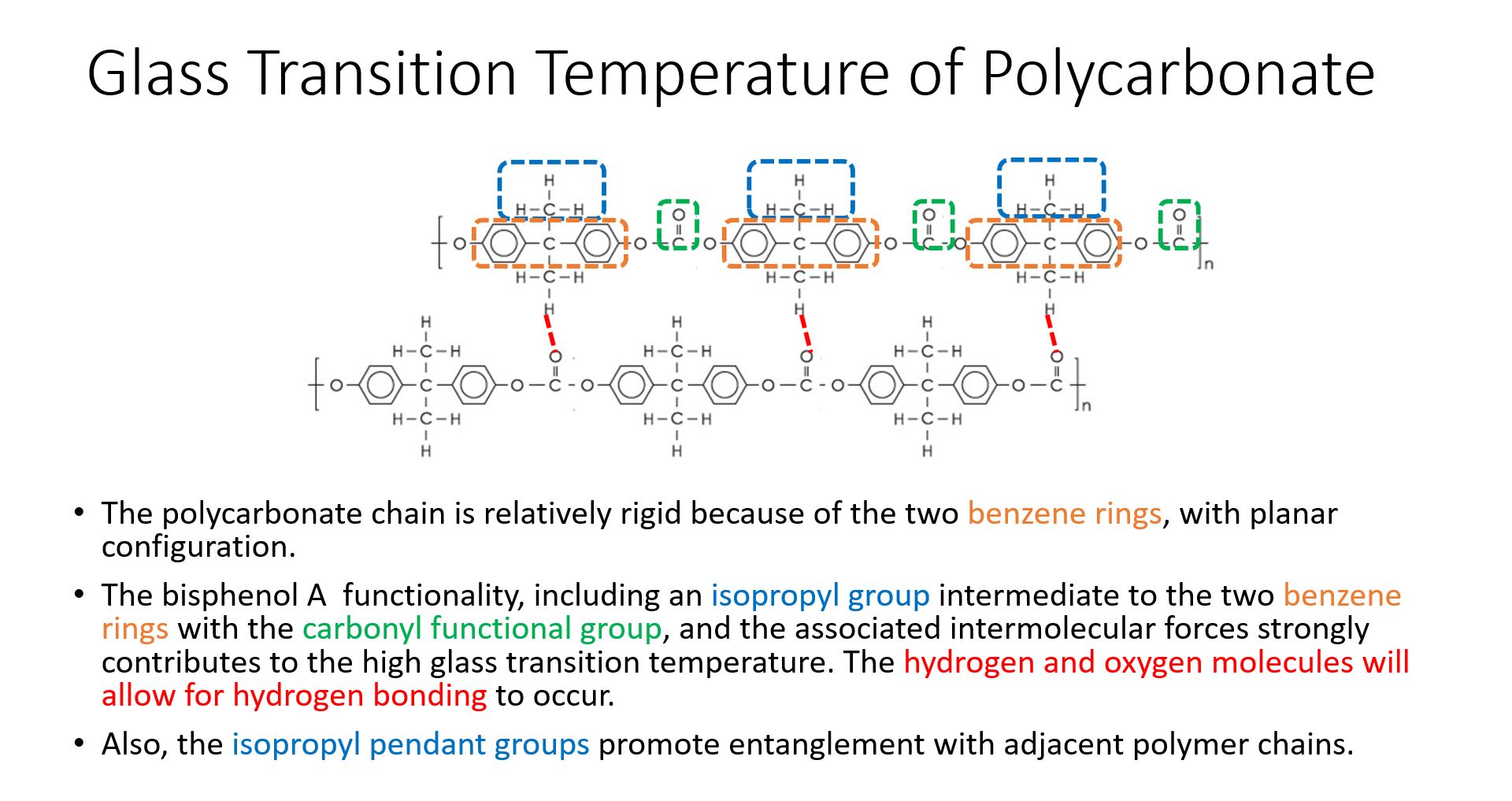
Consider your car tires. They need to stay rubbery enough to grip the road in all sorts of weather. If the temperature drops below the glass transition temperature of the tire rubber, the tires would become hard and brittle, like driving on hockey pucks! Not exactly a safe or smooth ride.
On the flip side, think about hot glue. You want it to be nice and melty when you apply it, so it can stick things together. But once it cools down, it needs to harden up and hold everything in place. The glass transition temperature determines how well it does this balancing act.

The Fun Stuff!
What makes Tg truly special is that it's not just one single number. Different polymers have different glass transition temperatures. Some polymers, like silicone rubber, have very low Tg values, which means they stay flexible even in super cold temperatures. Other polymers, like acrylic plastic, have high Tg values, so they're hard and rigid even at room temperature.
Scientists and engineers can tweak the properties of polymers to get the exact Tg they need for a particular application. They can do this by changing the chemical structure of the polymer, adding different ingredients, or blending different polymers together. It's like being a master chef, but instead of creating delicious food, you're creating materials with specific properties!

Imagine inventing a super-strong, flexible material that can withstand extreme temperatures. You could use it to build spaceships, create new types of medical implants, or even design self-healing roads! The possibilities are endless. Understanding Tg is a key step towards making these incredible inventions a reality.
So, What's Next?
Hopefully, this has piqued your curiosity about the fascinating world of polymers and the glass transition temperature. It's a lot more interesting than it sounds, right? The next time you pick up a plastic object, take a moment to think about the amazing science that makes it possible. And who knows, maybe you'll be inspired to become a polymer scientist and invent the next big thing! Now, isn't that something to dance about?
Want to dive deeper? Look up terms like "polymer morphology" or the "Williams-Landel-Ferry (WLF) equation."
These are just some entry point to understand more details about Tg and its relationship to other properties of polymers.
