
What Is Ductility Of A Material
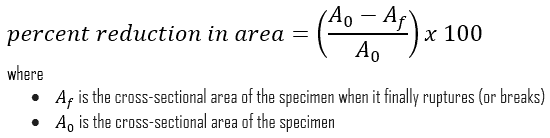
Hey there! Grab a coffee, or whatever your beverage of choice is, because we're about to dive into one of those super cool, but often overlooked, properties of materials. Ever wonder why some stuff bends beautifully, and other stuff just… snaps? We're talking about something called ductility. Fancy word, right? No, it's not a new dance move, though it does involve some impressive flexibility!
So, What Even Is Ductility?
Okay, let's get down to brass tacks, or should I say, copper wire? In simple terms, ductility is a material's ability to be stretched thin into a wire without breaking or losing its strength. Think about it like this: you know how you can take a piece of copper wire, bend it, twist it, and even pull it pretty long before it eventually gives up? That, my friend, is ductility in action!
Imagine trying to do that with a piece of glass. Or, even worse, a potato chip. Go on, try to stretch a potato chip into a wire. I'll wait. (Don't actually, you'll just end up with crumbs. And maybe a sad face.) See? Glass and potato chips? Not ductile. Copper? Super ductile!
Must Read
It’s all about a material’s willingness to deform under tensile stress – that’s just a fancy way of saying "when you pull on it." Instead of just fracturing instantly, a ductile material says, "Alright, I'll stretch a bit, I'll elongate for you!" It’s quite accommodating, really.
Why Should We Even Care About This?
Oh, you should care! Our entire modern world, pretty much, is built on the back of ductile materials. Seriously! Think about electrical wiring – what's that made of? Copper! Because it's incredibly ductile, allowing it to be drawn into those super long, thin wires that bring electricity to your home. Could you imagine trying to wire your house with, say, ceramic rods? Good luck getting those around corners without a monumental mess!
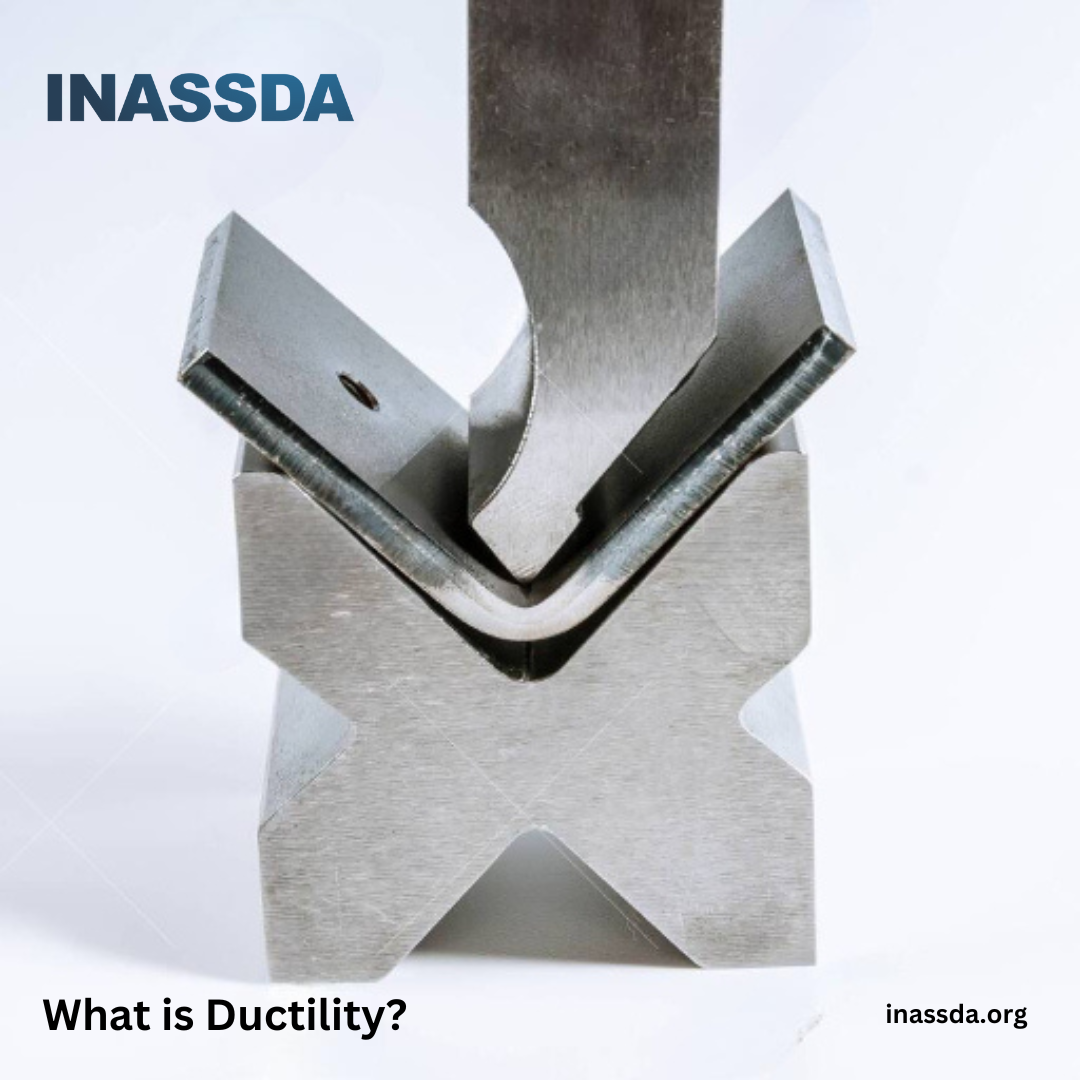
Or what about jewelry? Gold, for example, is ridiculously ductile. That's why jewelers can transform it into those intricate, delicate chains and designs. If gold wasn't ductile, every necklace would be a clunky, rigid collar. Not quite the same vibe, is it?
From paper clips (bend, bend, bend!) to car parts that need to absorb impact without shattering, ductility is absolutely everywhere. It's what makes materials both strong and forgiving.

How Does This Magic Happen (Simplified, Of Course!)?
Alright, let's peek behind the curtain a tiny bit. Without getting too deep into atomic physics (because, let's be real, we're having coffee, not a lecture!), it boils down to how the atoms or molecules inside a material are arranged and how they "stick" together.
In ductile materials, the atoms are often arranged in a crystal lattice, and they have the ability to slide past each other without completely breaking their bonds. Imagine a bunch of tiny little LEGO bricks that are connected, but can also shift positions relatively easily without snapping apart entirely. When you pull on the material, these atomic planes just kinda… slip. They reorganize, stretching out the material, rather than just pulling apart completely.
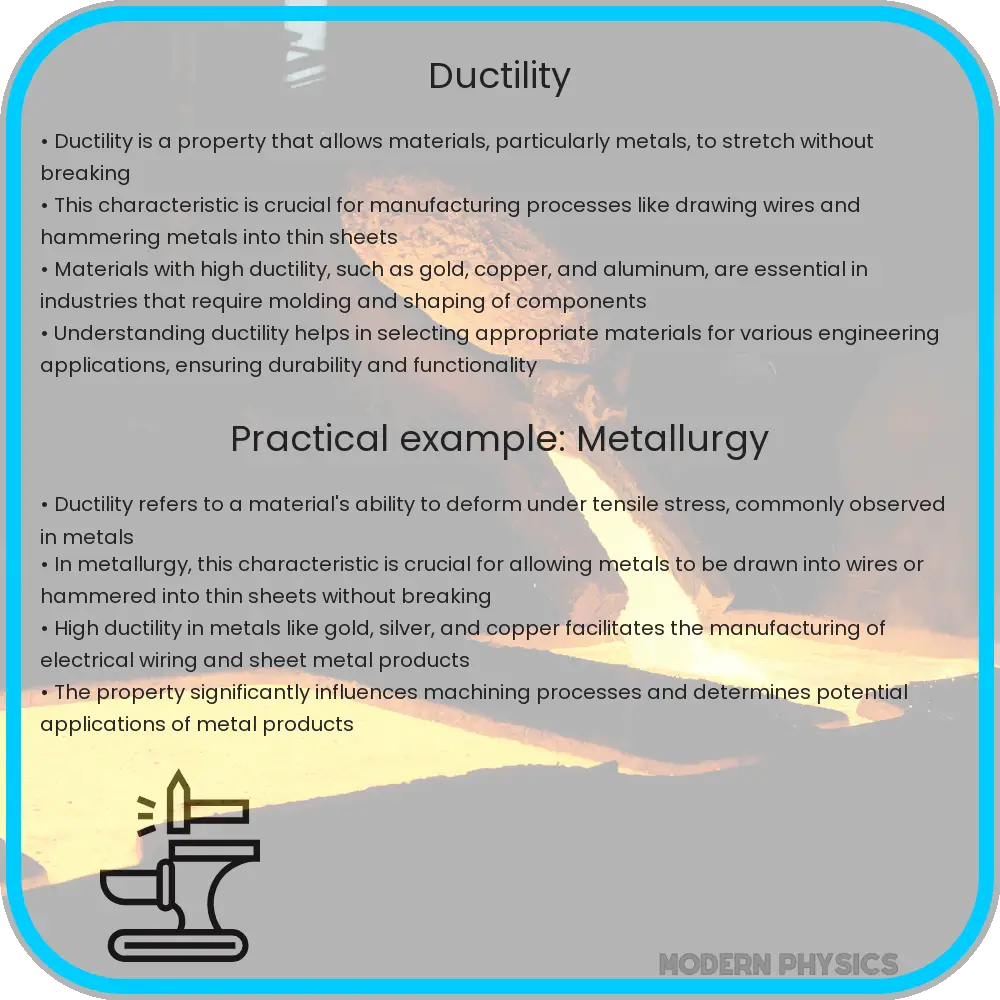
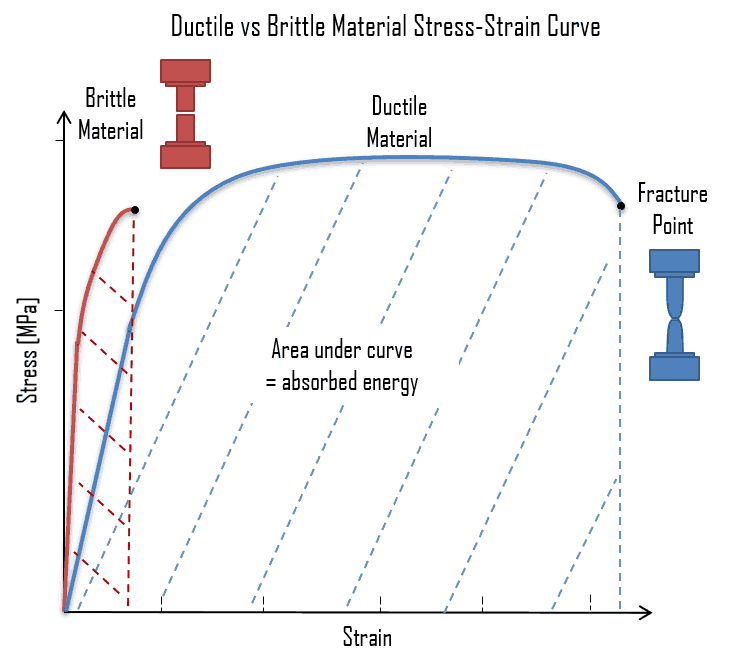
Contrast that with brittle materials, where those bonds are super rigid, and when you apply stress, they just say, "Nope! Not moving!" and crack. There's no negotiation, no stretching – just an instant farewell.
Who's the Star of the Ductility Show?
Metals, generally speaking, are the cheerleaders of ductility. We've already mentioned copper and gold. But let's give some shout-outs to others!
- Aluminum: Super ductile, which is why it's great for things like beverage cans (they get pressed and shaped like crazy!) and aircraft components.
- Steel (some types): While known for its strength, many types of steel are also quite ductile, which is crucial for construction, allowing beams to bend a little under stress rather than just failing catastrophically.
- Platinum and Silver: Also up there with gold in terms of their fantastic ability to be stretched and shaped.
On the flip side, we have our less-ductile friends, the brittle materials:
- Ceramics: Think coffee mugs. Drop one, and it's not stretching – it's shattering!
- Glass: Very strong in compression, but pull it or hit it wrong, and poof!
- Cast Iron: Strong, but notoriously brittle. Try bending an old cast iron skillet – wouldn't recommend it.
The Takeaway?
So, next time you see a delicate piece of jewelry, or a long stretch of electrical wire, or even just bend a paperclip into an elaborate new shape, give a little nod to ductility. It's the unsung hero that allows materials to be manipulated, shaped, and put to work in countless ways, making our lives easier, safer, and, let's be honest, a lot more interesting than if everything just snapped on us.
It's pretty cool how something so fundamental can have such a huge impact, isn't it? Who knew materials had such a flexible personality? Now, go forth and appreciate the stretchiness of the world around you!