
What Is Cu On Periodic Table
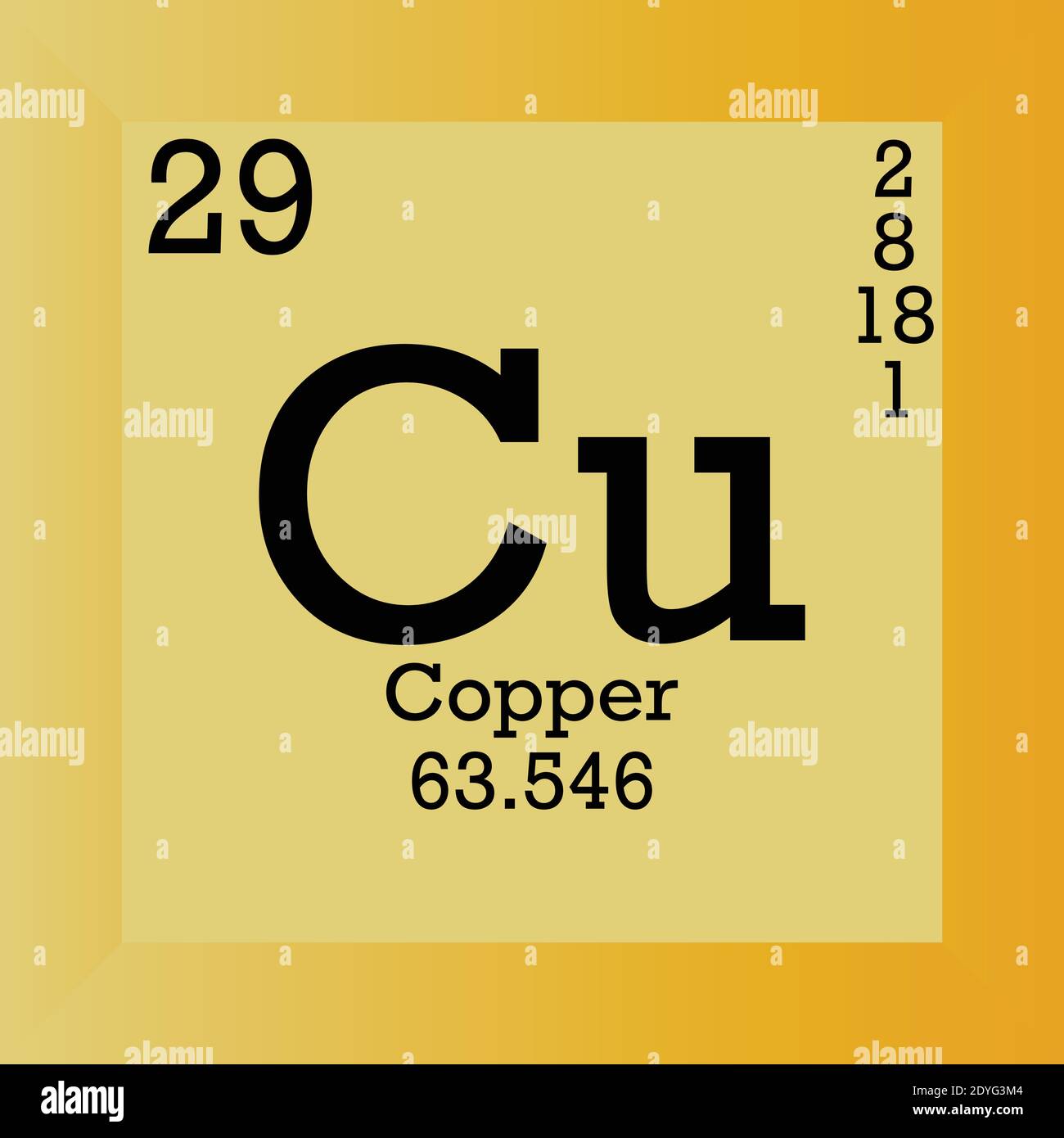
Alright, science sleuths and casual curiosity seekers, gather 'round! We're about to tackle one of the periodic table's most intriguing enigmas. You've seen it lurking there, a short, sharp, two-letter mystery. We're talking about Cu.
What is Cu, you ask? Is it a secret code? A cosmic sound effect? Perhaps it’s the noise a highly intellectual pigeon makes when pondering quantum physics?
Nope, sorry to disappoint the pigeon enthusiasts. While that would be delightful, the truth is a bit more grounded. But no less fascinating, we promise!
Must Read
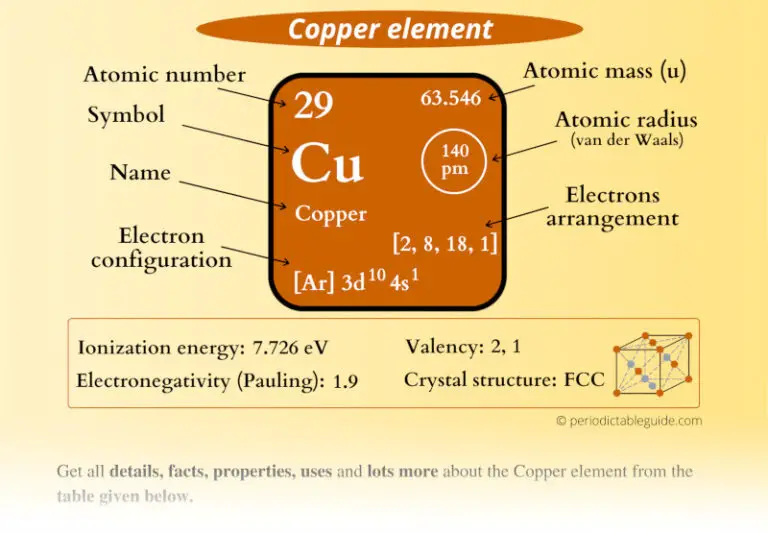
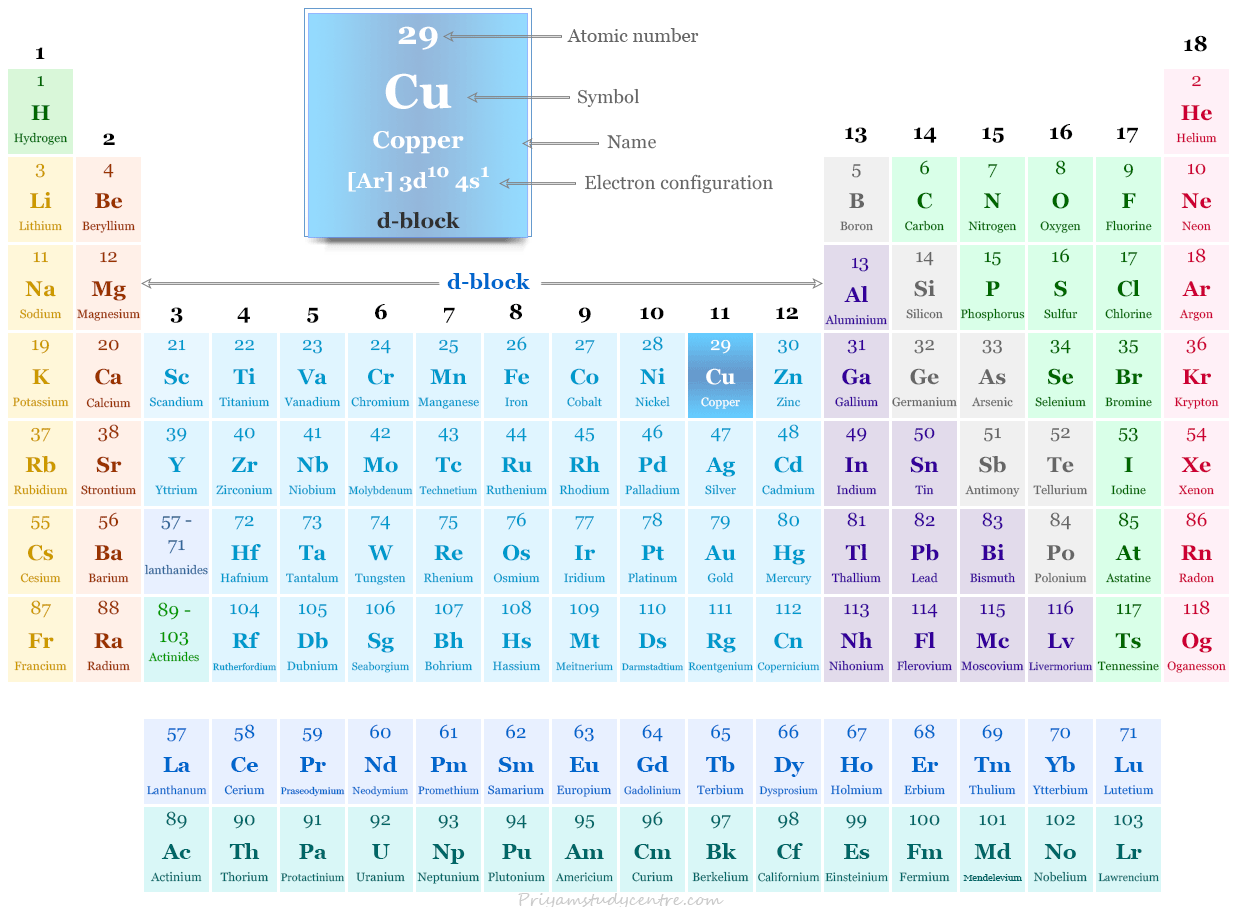
Ready for the big reveal? Brace yourselves. Cu on the periodic table stands for... Copper. Yes, good old Copper!
Now, I know what some of you are thinking. "Copper? That's it? Where's the dramatic alien invasion? Where's the hidden ancient prophecy?" My friends, the drama is in its everyday ubiquity.
And here's my slightly unpopular opinion, which I believe you'll soon agree with. Why do we even bother with "Copper" when "Cu" is just so much snappier? It’s sleek. It’s efficient. It’s got a certain je ne sais quoi.
Imagine, if you will, a world where we just called it Cu. "Honey, can you pass me that Cu pan?" "My old car has a radiator made of pure Cu." See? It just rolls off the tongue. It sounds futuristic!
The name Copper feels a bit... dusty, doesn't it? Like something from a forgotten metals workshop. But Cu? That’s for the modern age, for sharp minds and even sharper science.
It's a symbol that whispers possibilities, while Copper just, well, is. It lacks that zing, that playful mystery. Don’t you agree?
The Many Faces of Cu: A Daily Spectacle
Let's talk about where this marvelous element, our dear Cu, shows up. You probably touch it every single day without even realizing it. It's like the quiet superhero of the elemental world.
First off, think about electricity. All those wires carrying power to your lights, your computer, your phone charger? That's almost certainly Cu. It's an incredible conductor, making our modern lives possible.
Without Cu, we'd be living in a very dim, unplugged world. Thanks, Cu!
Then there are pennies! Yes, those little reddish coins in your pocket or couch cushions. They used to be almost entirely Cu. While modern pennies are mostly zinc with a Cu coating, they still carry the legacy.
So, every time you flip a coin, you're experiencing a tiny piece of Cu history. Pretty cool for such a humble little symbol, wouldn't you say?
But wait, there’s more to our shining star! Think about all those beautiful brass musical instruments. Trumpets, trombones, saxophones – they owe their soulful sounds to alloys containing plenty of Cu.
So, Cu isn't just about utility; it’s about making magnificent music! It truly is an element with rhythm and soul, don't you think?
Why Cu Deserves More Credit (and a Name Change)
Cu is famous for its beautiful reddish-brown color. It's warm, inviting, and just lovely to look at. Think of antique teapots or shiny kitchen utensils.
But wait, there's more! When Cu gets old and weathered, it turns that fantastic greenish-blue color. This is called a patina. It’s like Mother Nature’s art project.
The Statue of Liberty, for example, isn't green because it was painted that way. It's made of Cu! Over many years, the elements have given her that iconic green hue. It’s a testament to Cu's enduring beauty.
So, from bright and shiny to gorgeously weathered, Cu just keeps on giving. It’s truly an elemental chameleon, wouldn't you agree?

Our "unpopular opinion" isn't so unpopular anymore, is it? Calling it Cu seems to give it the crisp, no-nonsense recognition it deserves. It cuts right to the chase!
Imagine a high-tech science lab. "Pass me the Copper beaker," sounds a bit clunky, right? But "Pass me the Cu beaker!" Now that sounds like serious business.
This remarkable element isn't just about utility; it's also about art. Sculptors love Cu for its malleability. It can be hammered and shaped into intricate designs.
It’s durable too! Many ancient artifacts made of Cu or its alloys (like bronze, which is Cu and tin) have survived thousands of years. Talk about staying power!
Think of ancient Roman plumbing. Yes, they used Cu pipes! Some are still in surprisingly good condition today. Our modern pipes often rely on its strength and resistance to corrosion.
So, whether it's powering your smart home or ensuring your water flows cleanly, Cu is quietly doing the heavy lifting. It's the silent workhorse we often forget to praise.
Cu: Beyond the Obvious
Did you know that Cu is essential for life? Small amounts of it are found in our bodies. It helps us form red blood cells and keeps our immune system strong.
So, yes, you literally have a little bit of Cu running through your veins! It’s truly an all-rounder, from your phone to your physiology.
![Copper (Cu) - Periodic Table [Element Information & More]](https://knordslearning.com/wp-content/uploads/2023/01/copper-element-periodic-table.jpg)
It’s even antimicrobial. That means bacteria have a tough time surviving on Cu surfaces. Hospitals are starting to use more Cu for doorknobs and bedrails.
Who knew our little friend Cu was such a germ-buster? It’s like the ninja of the periodic table, silently fighting off microscopic baddies.
Think of all the unsung heroes out there. Cu is definitely one of them. It doesn't get the same flashy headlines as gold or silver. But it’s arguably more important to our daily existence.
Gold is for show, silver is for sparkle, but Cu is for getting things done! It’s the workhorse, the backbone, the true MVP of the elements.
It even helps our plants grow! Cu is a micronutrient for crops, ensuring healthy development. So, your morning coffee or crunchy salad also owes a debt to Cu.
Honestly, is there anything Cu can’t do? It seems to have its elegant two letters stamped on all the good things in life.
Embracing the Cu-ness
So, the next time you see a penny, a wire, or even a green statue, give a little nod to Cu. And maybe, just maybe, try calling it Cu instead of Copper.
Join me in this slightly rebellious, undeniably cool movement. Let's make "Cu" happen! It's short, it's sweet, and it perfectly encapsulates this fantastic element.
From plumbing pipes to power lines, from ancient artifacts to essential nutrients, Cu is everywhere. It powers our world and helps keep us healthy.
It's time to elevate Cu to its rightful place in our everyday lexicon. It's not just a symbol; it's a statement. A statement of efficiency, utility, and understated coolness.
Imagine telling a friend, "My new kitchen faucet is solid Cu." It just sounds more sophisticated, doesn't it? Less "old-fashioned metal," more "cutting-edge material."
We’re not just talking about chemistry here; we’re talking about style. And Cu definitely has it in spades. So let’s embrace the modern, sleek identity of Cu!
So, there you have it. The mystery of Cu, playfully unraveled and championed. Now go forth and spread the good word of Cu!
You’ll be surprised how often you spot it once you start looking. And when you do, give it a knowing wink. Because you, my friend, are now a true connoisseur of Cu.
Who needs complicated names when two letters can do so much heavy lifting? Long live Cu!
It truly is the best two-letter symbol on the entire periodic table. Change my mind! (You can't.)
Let's make Cu a household name, even more so than its longer counterpart. It's time for the symbol to shine brighter than the name!
Next time you see it on a chart, don't just glance. Give Cu the respect it deserves. It’s earned it, by being everywhere and doing everything important.