
What Is Bigger 2 0 Or 4 0 Wire
Ever found yourself staring at some numbers related to wire, like "2/0" or "4/0," and feeling a tiny bit confused? It's okay, you're definitely not alone! It's one of those things that seems like a secret code, but once you crack it, it's actually pretty cool. Today, we're going to unravel the mystery of electrical wire sizes, specifically tackling the question: What is bigger, 2/0 or 4/0 wire?
And let me tell you, it’s not just about some random numbers; it’s about understanding the silent superheroes that power our homes, gadgets, and lives safely and efficiently. Ready to dive in?
The Curious Case of Wire Gauges: Smaller Numbers, Bigger Wires?
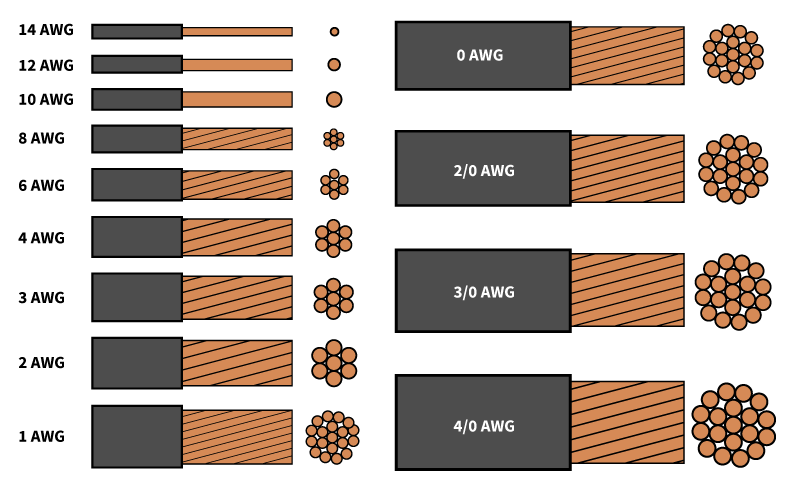
First things first, let's talk about wire gauges in general. You might be familiar with common household wires like 14-gauge or 12-gauge, used for lights or outlets. Here's the kicker: with standard gauge numbers, the smaller the number, the thicker the wire. Yep, it's a bit counterintuitive, right?
Must Read
Think of it like this: a 10-gauge wire is significantly thicker and can carry more electricity than a 14-gauge wire. It’s like comparing a garden hose (14-gauge) to a slightly wider garden hose (10-gauge). The wider hose lets more water through, right?
Enter the "Aughts": What Does 2/0 and 4/0 Mean?
So, where do "2/0" and "4/0" fit into this topsy-turvy numbering system? Well, once wires get really thick – thicker than a regular 1-gauge wire – they switch over to a special designation. This is where the "/0" or "aught" comes in.
After 1-gauge, the next size up is 1/0 gauge, which you'd pronounce as "one aught."
Then comes 2/0 gauge, or "two aught."
Next, you guessed it, is 3/0 gauge, or "three aught."
And finally, 4/0 gauge, or "four aught."
See a pattern emerging? The "aught" numbers continue the tradition: the higher the number before the /0, the bigger the wire. So, if 1-gauge is bigger than 2-gauge, then 1/0 is bigger than 1-gauge, and 2/0 is bigger than 1/0, and so on.
Which brings us to our big reveal...
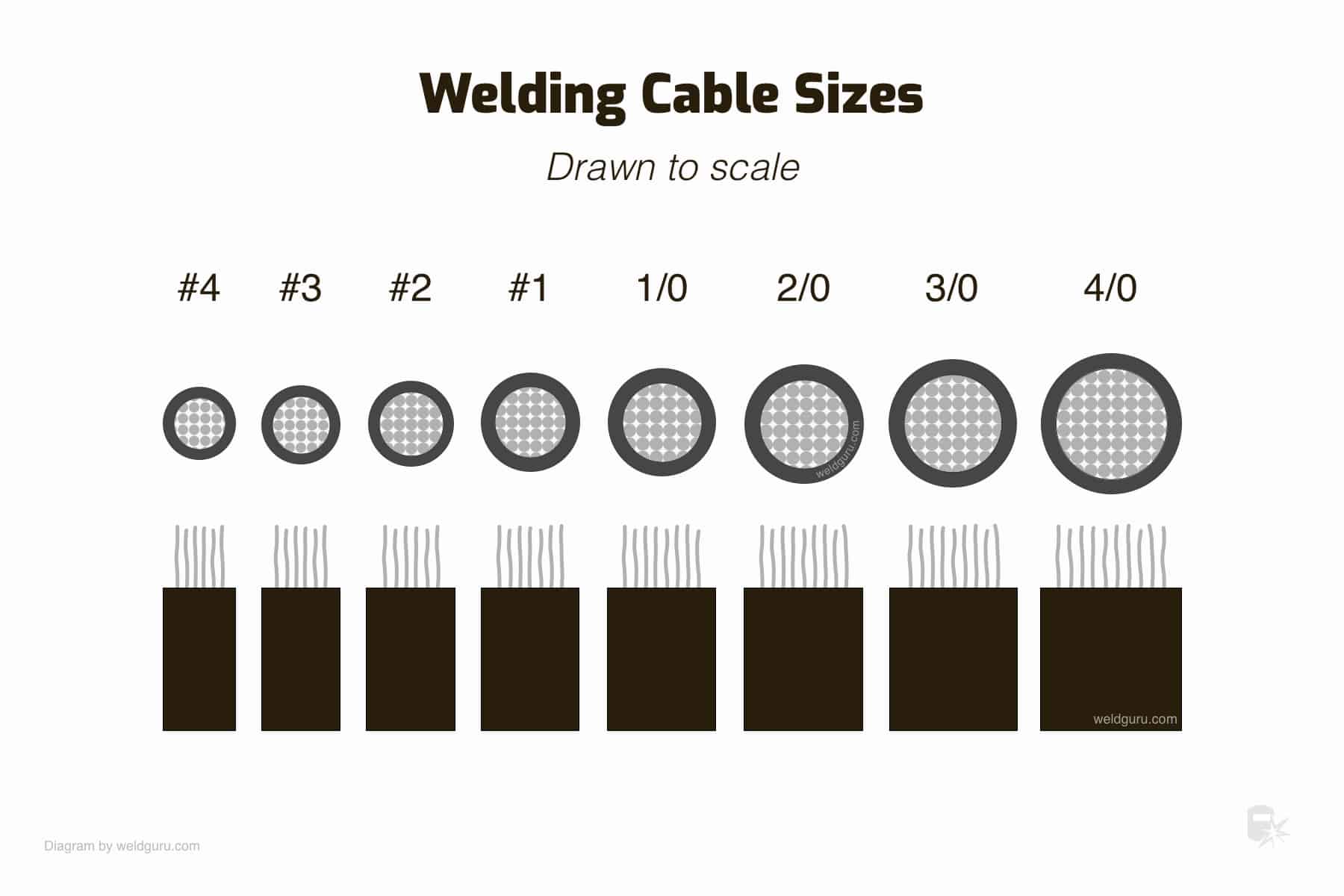
The Answer: 4/0 Wire is Bigger Than 2/0 Wire!
Yep! A 4/0 wire is significantly thicker and beefier than a 2/0 wire. Think of it like comparing a substantial milkshake straw (2/0) to an even wider, industrial-strength milkshake straw (4/0). Both are big, but one is clearly designed for even more serious slurping!
It follows the same logic as the regular gauge numbers, just on the "super-sized" end of the spectrum. The bigger the "aught" number, the larger the wire's diameter.
Why Does Bigger Wire Matter, Anyway? It's All About Power!
This isn't just a quirky numbering system; it's fundamental to how electricity works safely. The main reason we need different wire sizes is for carrying different amounts of electrical current, measured in amperes (amps). Bigger wires can safely carry more amps without overheating.
Imagine a Highway:
Think of electricity as traffic and the wire as a road. A 2/0 wire might be like a busy two-lane highway. It can handle a lot of cars (current) moving smoothly. But if you try to cram too many cars onto that two-lane highway, things get congested, slow down, and maybe even dangerously hot.

Now, a 4/0 wire is like a massive six-lane interstate. It can handle a seriously huge volume of traffic with ease. Trying to push the same amount of traffic through the smaller 2/0 wire would be like trying to run rush hour traffic on a country road – a recipe for disaster!
The Danger of "Too Small":
If you try to run too much electricity through a wire that's too small for the job, it's like forcing too much water through a narrow pipe. The pipe can burst, or in the case of a wire, it gets hot. Very hot. Hot enough to melt its insulation, start a fire, or damage connected equipment. So, choosing the correct wire size isn't just engineering; it's about safety first!
Where Do These Mighty Wires Show Up?
So, where would you actually encounter these heavy-duty wires?
A 2/0 wire is still a pretty substantial cable. You might find it used for connecting a main electrical panel in a smaller home, feeding a large sub-panel in a workshop, or providing power to a substantial RV hookup.

But the 4/0 wire? That's the real muscle. This is often what's used for the main service entrance cable coming into a larger home from the utility pole, or for bigger commercial buildings. It’s also common in industrial settings or for heavy-duty welding machines – anywhere you need to deliver a serious punch of power.
The Coolness Factor: Invisible Engineering
Isn't it fascinating how something so fundamental, often hidden behind walls or underground, has such precise engineering behind it? Understanding wire sizes gives you a new appreciation for the complex, yet incredibly reliable, system that powers our modern world.
These seemingly obscure numbers and symbols (like the "aught" designation) are actually a language. A language spoken by electricians, engineers, and anyone who needs to ensure electricity flows safely and efficiently from power plants to your toaster, computer, and everything in between.
Next time you see an electrician working with thick cables, you'll be in on the secret. You'll know that if they're pulling out that mighty 4/0 wire, they're preparing for some serious power delivery, ensuring everything hums along safely. And that, my friend, is pretty cool!