What Is An Example Of Plasma
/examples-of-plasma-608335-v1sffinal-06e12367bdfd40089615b11662c2f5d5.png)
Ever feel like you’ve got a handle on the universe? You know, solid, liquid, gas – the big three? Well, buckle up, buttercup, because there's a cosmic rockstar hiding in plain sight, and it’s called plasma! Think of it as the original, wild, super-energetic VIP of the states of matter. It's not just some fancy science word; it's practically everywhere, from the deepest reaches of space to the coolest gadgets on your desk!
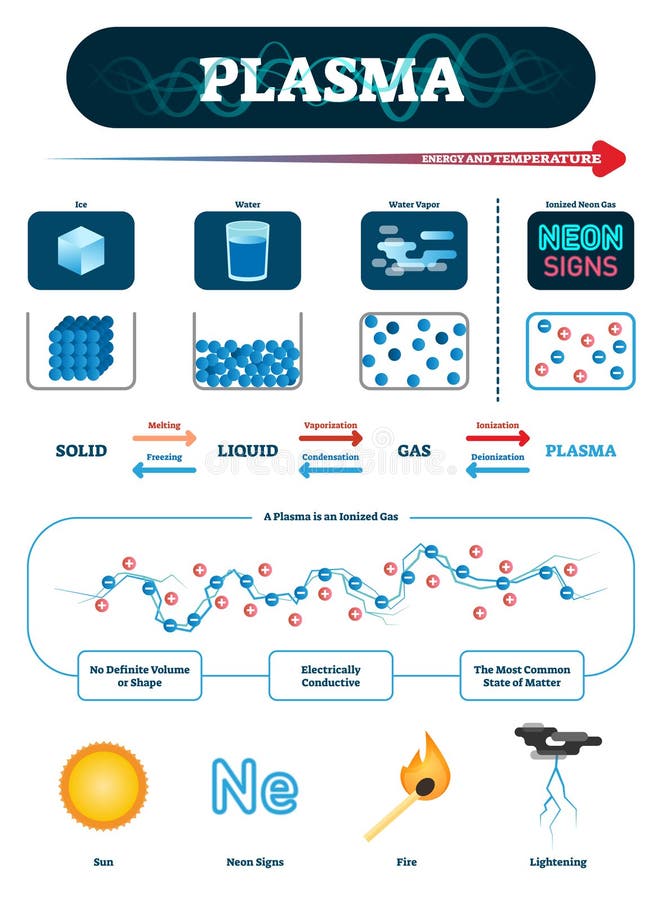
So, what exactly is this magnificent beast? Imagine taking a gas and cranking up the heat to eleven (or a million!). The atoms get so ridiculously excited that their electrons literally fly off, leaving behind a chaotic, electrifying mix of charged particles. This isn't just gas anymore; it's an ionized gas, a super-charged, super-conductive disco party of matter. And trust me, it’s responsible for some of the most dazzling light shows in existence.
Shining Bright: Plasma in the Cosmos!
Let's kick things off with the grandest example of all, the undisputed heavyweight champion of plasma: the Sun! And every single star twinkling in the night sky? Yep, they’re all giant, magnificent balls of plasma. Our Sun isn’t just a big, fiery gas ball; it’s a colossal, scorching nuclear furnace, churning out energy and light because it’s made almost entirely of plasma. When you feel that warmth on your face, you're experiencing the direct awesomeness of cosmic plasma at work. Without it, our world would be a very cold, very dark place. So next time you see the sun, give a little nod to the incredible plasma show it puts on, every single day!
Must Read
But you don’t have to gaze light-years away to witness plasma in action. Sometimes, nature brings the spectacle right to our backyard – or, more accurately, right above it! Think about a massive, awe-inspiring bolt of lightning during a thunderstorm. That electrifying streak that momentarily lights up the entire sky? That's pure, raw plasma. The incredible energy heats the air so intensely and rapidly that it turns into a super-heated channel of ionized gas, creating that blinding flash and thunderous boom. It's a fleeting, powerful reminder that plasma is not just in distant stars, but also in the very air we breathe.
And speaking of skies, have you ever dreamed of seeing the magical, dancing lights of the aurora borealis or aurora australis? These celestial ballets of green, pink, and purple are another breathtaking example of natural plasma. When charged particles from the Sun (which, as we know, is plasma!) hit Earth's atmosphere, they collide with our atmospheric gases. These collisions excite the gas particles, turning them into temporary, glowing plasma. It’s like the universe's most epic light show, performed by energized particles in the polar skies. Truly enchanting!
Everyday Glow: Plasma Closer to Home
Okay, so stars and lightning are pretty impressive, but plasma isn't just a cosmic heavyweight; it's also a surprisingly common feature in our daily lives. Take a stroll down a busy street at night, and what do you see? Those vibrant, glowing neon signs! The secret to their eye-popping brilliance? You guessed it – plasma! Inside those glass tubes, a small amount of gas (like neon, argon, or xenon) is zapped with electricity. This electricity excites the gas atoms, ionizing them and making them glow with their characteristic colors. Red for neon, blue for argon, and so on. It’s a literal glow-up thanks to everyday plasma!
Remember those sleek, flat-screen televisions that were all the rage not too long ago? Many of them were called plasma TVs, and for good reason! Each tiny pixel on the screen contained a minuscule cell filled with noble gases. When zapped with electricity, these gases turned into plasma, emitting ultraviolet light that then illuminated colored phosphors to create the vibrant images you saw. While LEDs have taken over, plasma TVs were a fantastic household example of this super-cool state of matter bringing your favorite shows to life.

Even the humble fluorescent light bulb above your kitchen table is a plasma party in miniature! Inside that long glass tube, a tiny amount of mercury vapor is energized by electricity. This creates a low-pressure plasma that emits ultraviolet light. This UV light then hits a special coating on the inside of the tube, making it glow with visible light. It’s an incredibly efficient way to light up a room, all thanks to a carefully controlled plasma reaction!
And for a truly hands-on, playful encounter with plasma, you might have a plasma ball on your desk. Those mesmerizing glass spheres with tendrils of light dancing inside? They're miniature plasma generators! A high-voltage electrode in the center creates an electric field that excites and ionizes the gas inside (usually a mix of noble gases), forming those beautiful, touchable streamers of plasma. It's science you can literally put your finger on!
So, there you have it! From the fiery heart of our Sun to the playful glow of a plasma ball, this super-charged, fourth state of matter is truly a marvel. It's not just a scientific curiosity; it's the engine behind stellar brilliance, the flash of a storm, and the vibrant glow of our everyday world. Pretty awesome, right? Plasma is truly the unsung hero, constantly putting on a spectacular show!