
What Is An Alkali Metal On The Periodic Table
Ever looked at the periodic table and felt like you were staring at a secret code? Fear not! Today, we're cracking the code of one super-reactive family: the alkali metals. Get ready for some elemental excitement!
What are Alkali Metals? They're the Life of the Periodic Party!
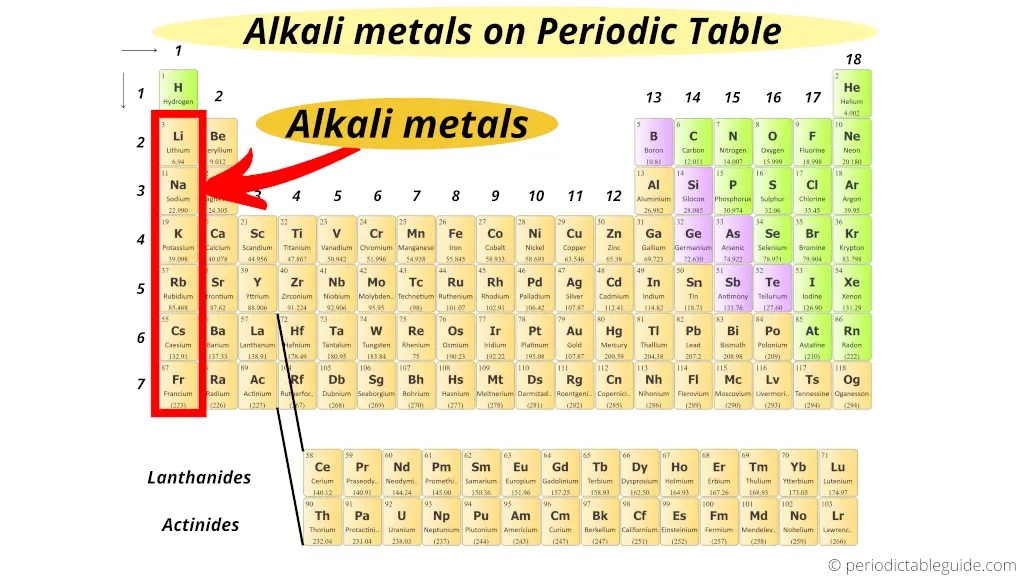
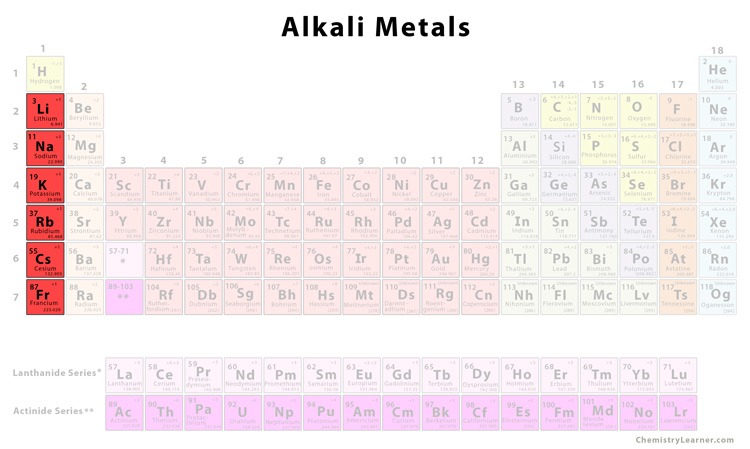
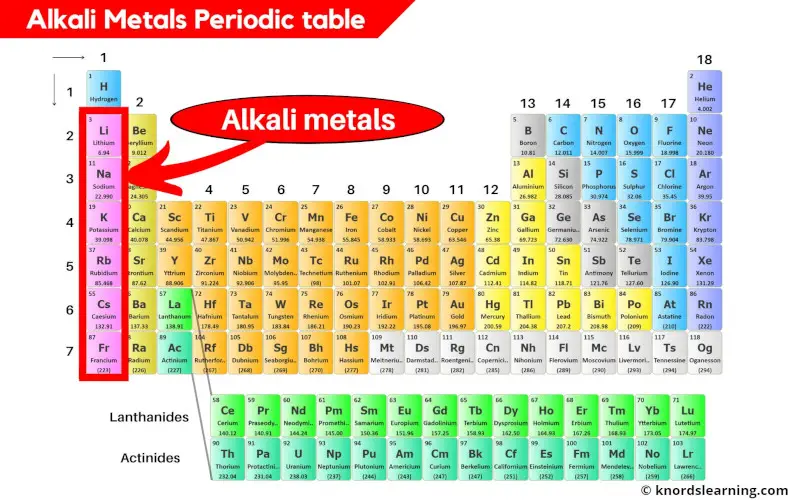
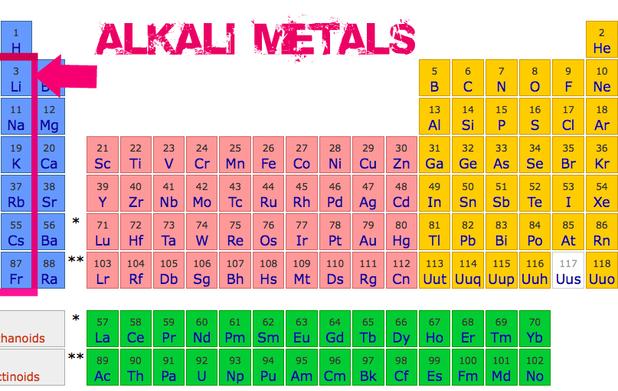
Imagine a group of friends who are all about making connections, sometimes a little too enthusiastically. That's our alkali metal crew! They're located in the first group, Group 1, on the periodic table, excluding hydrogen (it's a bit of a rebel).
Think of them as the ultra-social butterflies of the element world. They just love to react, and they do it with a bang – sometimes literally!
Must Read
Meet the Family: From Lithium to Francium
Let's introduce the key players: Lithium (Li), Sodium (Na), Potassium (K), Rubidium (Rb), Cesium (Cs), and Francium (Fr). Each one is special and has its own unique twist. You can think of them as characters in a quirky sitcom.
Lithium is the light-weight, dependable one. Sodium is the salty character, always ready to react. Potassium is the one that keeps your bananas healthy.
Rubidium is the one we don't hear about very often. Cesium, the timekeeper, is hyper accurate. Francium is rare and radioactive: a true enigma.
Common Characteristics: Shiny, Soft, and Super-Reactive
So, what makes these elements a family? They share some striking similarities. Firstly, they're all shiny and silvery when freshly cut.
Secondly, they're incredibly soft! You could cut them with a butter knife, although we don't recommend trying that at home.
But the most defining trait? Their extreme reactivity. They have a single, lonely electron in their outermost shell. They are desperate to ditch it to achieve a stable, balanced state like all elements are.
Why are they so Reactive? The Lonely Electron's Tale
Imagine you're at a party, and you're the only person not in a couple. You'd be pretty eager to find a partner, right? That's how the alkali metals feel with their lone electron!
They're desperate to get rid of that extra electron. This eagerness drives their reactivity. They readily bond with other elements.
This electron desperation makes them react violently with water, air, and pretty much anything they can get their electron-grabbing "hands" on. We're talking mini-explosions and flashes of fire!
The Water Works: A Dramatic Demonstration (Don't Try This!)
If you toss a small piece of sodium into water (which, again, DON'T DO), you'll witness a dramatic reaction. It skitters across the surface, melts into a ball, and releases hydrogen gas.

The hydrogen gas then ignites with a "pop!" and a bright orange flame. It is chemistry at its most theatrical. Potassium is even more reactive than sodium, and the heavier alkali metals are downright terrifying in water.
Think of it as a tiny chemical volcano, erupting with energy. This is why they are always stored under oil, to keep them away from air and moisture.
Where Do We Find Alkali Metals? Not in Their Pure Form!
Because of their intense reactivity, you'll never find alkali metals in their pure form in nature. They're always bonded with other elements, forming stable compounds.
Sodium, for example, is a major component of common table salt (sodium chloride, NaCl). Potassium is found in many minerals and is essential for plant growth.
Lithium is found in certain rocks and is used in batteries, particularly those powering our smartphones and laptops. So, they are closer to you than you might think.
Everyday Uses: From Batteries to Bananas
Alkali metals play essential roles in our daily lives, even if we don't realize it. Lithium is a key ingredient in batteries.
Sodium, as we mentioned, is in table salt. But it's also used in streetlights, giving them that characteristic yellow glow.
Potassium is vital for nerve function, muscle contraction, and maintaining fluid balance in our bodies. That's why bananas, rich in potassium, are often touted as a healthy snack.
A Word of Caution: Handle with Care!
While alkali metals are fascinating and essential, they're not to be trifled with. Their reactivity makes them hazardous if not handled properly. Never, ever try to experiment with them on your own.
Leave the handling of these elements to trained chemists in a controlled laboratory environment. They have the knowledge and equipment to ensure everyone's safety.
Remember, a little knowledge is a powerful thing, but understanding safety precautions is even more important!
In Conclusion: Appreciating the Alkali Metals
So, the next time you glance at the periodic table, remember the alkali metals. They may be reactive and potentially dangerous, but they're also essential for many aspects of modern life.
From powering our devices to keeping our bodies functioning, they play a vital role in our world. They're the energetic, slightly chaotic, but ultimately invaluable members of the elemental family.
These elements might be crazy reactive, but they're also crazy cool! Now, go forth and impress your friends with your newfound knowledge of alkali metals.
The alkali metals are a testament to the power and complexity of chemistry. Their unique properties make them both fascinating to study and essential to our modern world.