
What Is A Property Of A Metal
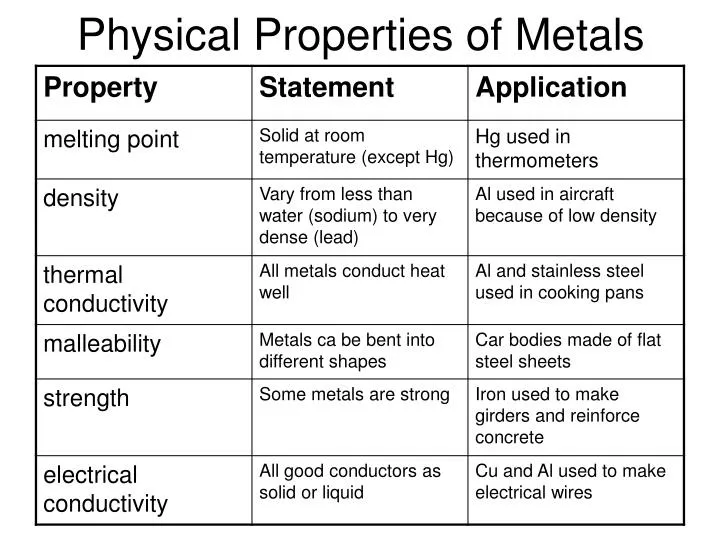
Ever picked up a frying pan and thought, "Wow, this thing just gets me"? Or maybe you’ve admired a shiny piece of jewelry, or cursed a tangled mess of copper wires while trying to set up your new gadget. If so, congratulations, you've been casually interacting with the incredible "personalities" of metals! See, metals aren't just lumps of stuff; they have a whole host of quirks and superpowers that make them, well, metals.
Think of it like this: if elements were at a high school dance, metals would be the cool, versatile kids everyone wants to hang out with, each with their own special talents. And these talents? We call them properties.
The Bling-Factor: Lustre
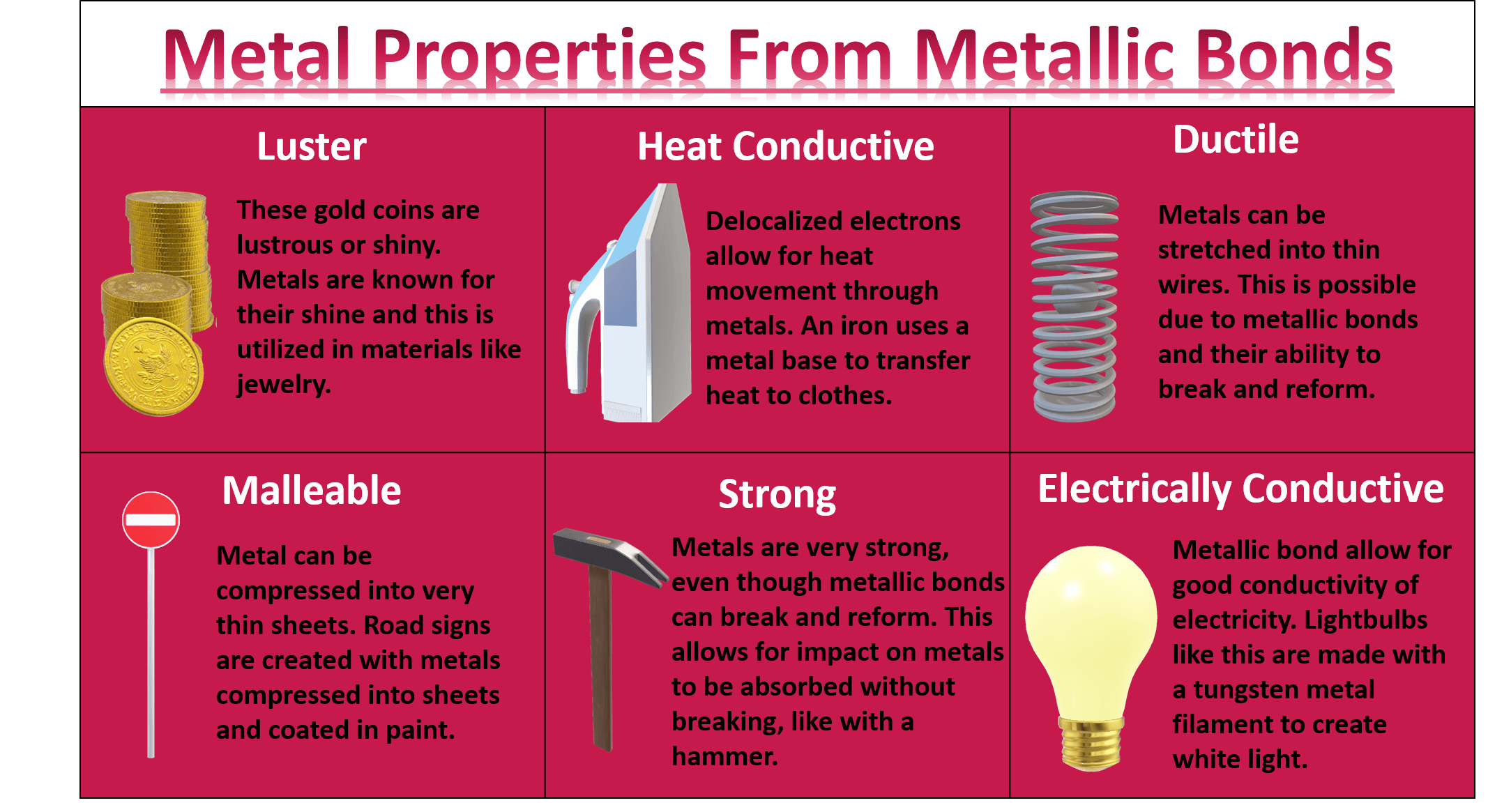
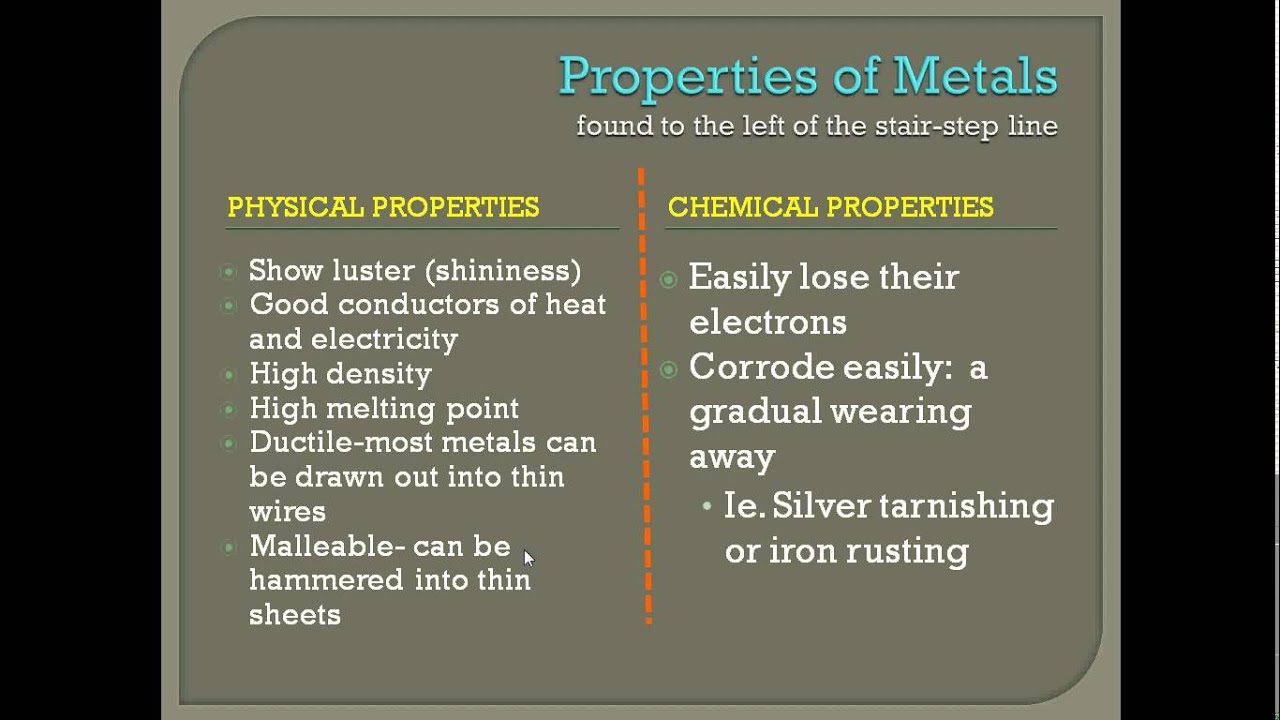
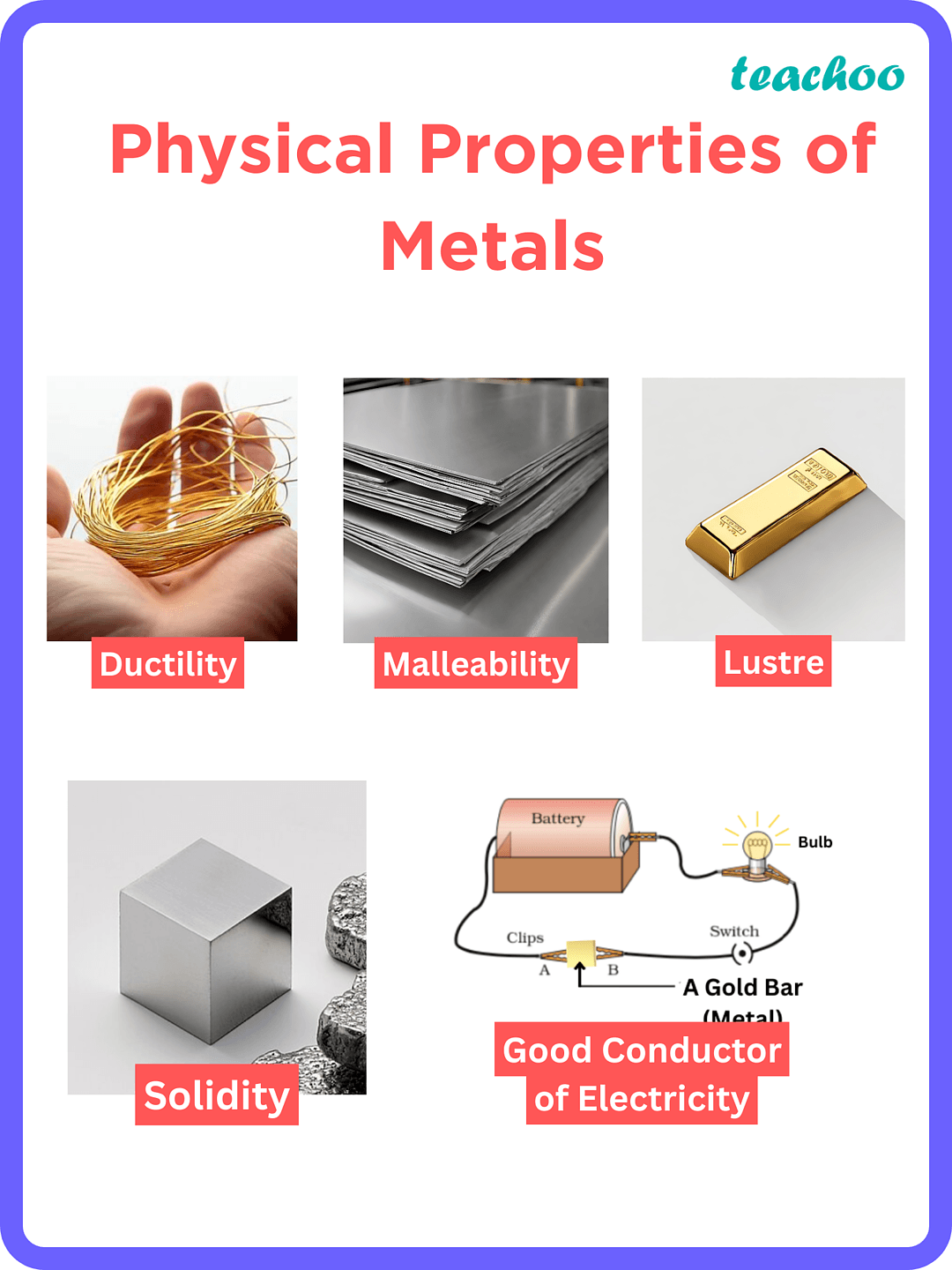
First up, let’s talk about that undeniable sparkle. Metals love to shine! This isn't just vanity; it's a property called lustre. When light hits a metal, it doesn't just absorb it; it bounces right off, making it gleam. It's like metals are constantly saying, "Look at me! I'm fabulous!"
Must Read
You know that feeling when you polish an old coin and it suddenly looks brand new? Or when the sun catches your ring just right? That’s metallic lustre doing its thing. Wood? Not so much. A plastic spoon? Definitely not. Metals are the undisputed divas of the reflective world, always ready for their close-up.
The Play-Doh Principle: Malleability
Now, imagine trying to hammer a rock into a thin sheet. Good luck with that! It'll just crumble, probably with a dramatic sigh. But metals? They're the ultimate "go with the flow" materials. This incredible ability to be hammered or pressed into thin sheets without breaking is called malleability.

Think of aluminum foil. That started as a big block of aluminum, probably looking very stern and unyielding. But thanks to its malleability, it got flattened into that super-thin, crinkly stuff we use to wrap leftovers. It's like a metal saying, "Sure, I can be a plate! Or a roof tile! Whatever you need, buddy!" It’s the ultimate adaptable friend, always ready to take on a new shape for you.
The Spaghettification Skill: Ductility
Closely related to malleability is ductility. If malleability is the ability to be flattened, ductility is the superpower to be stretched into a thin wire. Imagine trying to stretch a piece of wood into a long, thin string. Nope! It snaps like a dry twig.
But metals? They're like the stretchy cheese on a pizza – you can pull them and pull them, and they just keep going! That copper wiring in your walls or in your headphones? That started as a chunk of copper. It was drawn out, stretched, and pulled into those super-long, slender strands. It’s like a metal saying, "I can go the distance for you!" Perfect for connecting all your gadgets and lighting up your life, literally.
The Ultimate Party Host: Conductivity
Here’s where metals really shine (pun intended!) as fantastic socialites. They are brilliant at sharing. Specifically, sharing heat and electricity. This is their conductivity.
Ever noticed how quickly a metal spoon gets hot when you leave it in a steaming mug of tea? That’s thermal conductivity. The metal is rapidly passing that heat from one end to the other, like a gossip spreading hot news at lightning speed. And electrical conductivity? That's why we use copper wires for electricity, not, say, a banana peel.
Metals have free-moving electrons – tiny particles that are like super-efficient couriers, zipping around and carrying energy wherever it needs to go. They’re the ultimate networkers, ensuring everyone gets the message (or the heat!). It's why your frying pan heats up evenly and why your phone actually charges. Thank you, conductive metals!
The Heavyweight Champs: Density
Pick up a small metal object, like a coin or a bolt. Now pick up something of similar size made of plastic or wood. Feel the difference? Metals are generally pretty hefty for their size. This is due to their density – essentially, how much "stuff" is packed into a given space.
Metals are like those unassuming people who look small but could totally lift a car. They've got a lot more mass crammed into their atomic structure compared to most other materials. This makes them feel substantial and gives them strength, which is pretty handy if you're building bridges, cars, or just a sturdy garden gate.
The Stubborn Ones: High Melting Point
Finally, metals are quite stubborn when it comes to changing their state. You can't just wave a candle at an iron bar and expect it to melt into a puddle. Oh no, metals demand serious heat! They have a high melting point.
This is fantastic news if you enjoy cooking on your stove or don't want your car engine to turn into a puddle on a hot day. Metals generally require a serious amount of energy to break the strong bonds holding their atoms together and transform them from a solid into a liquid. They’re like that friend who absolutely refuses to leave the party until the very last song, no matter how much you try to convince them.
So, there you have it! From shining like superstars to being bendy like Play-Doh, stretching like spaghetti, spreading warmth and electricity like the best party hosts, feeling hefty, and being incredibly resilient, metals are truly a fascinating bunch. Next time you encounter a piece of metal, give it a little nod. It's working hard, flexing its unique superpowers, and just being its wonderful, metallic self.