
What Is A Hurricane Caused By
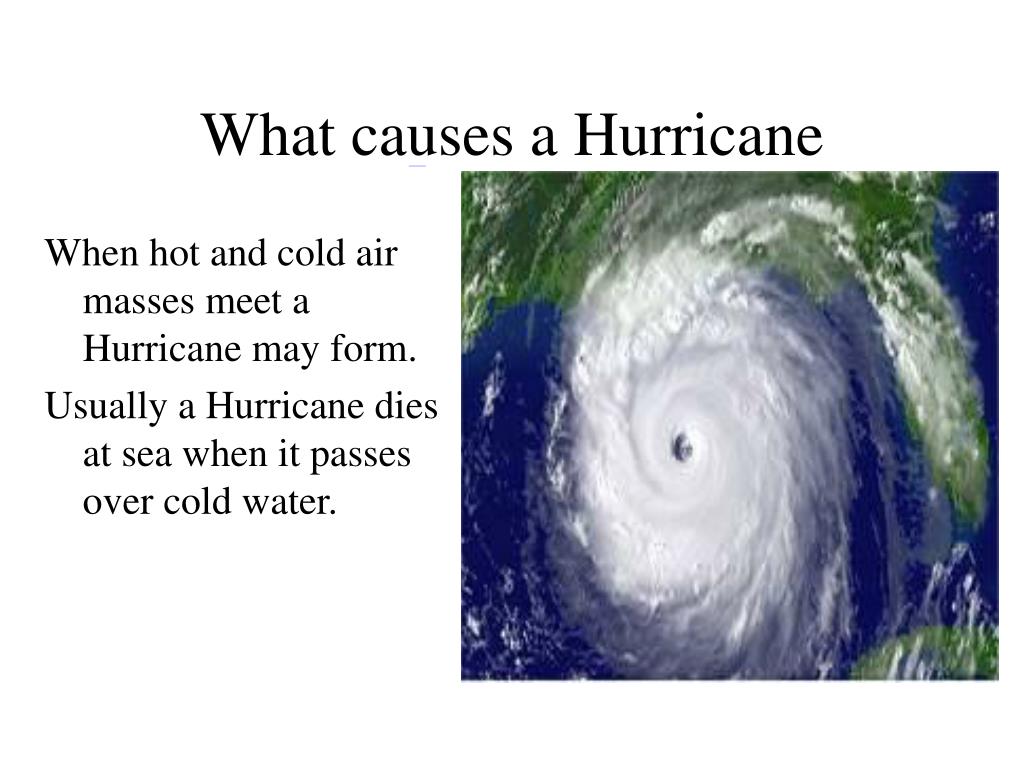
Ever looked at a hurricane on the news, all swirly and angry, and thought, "What in the heck makes that thing tick?" Well, pull up a chair, grab a metaphorical (or real) latte, because we're about to spill the beans on Mother Nature's most epic, watery temper tantrum. It's less about a giant cosmic blender and more about a very specific, slightly dramatic recipe.
Imagine you're trying to bake the world's most enormous, destructive cake. You can't just throw ingredients in willy-nilly. Hurricanes, it turns out, are just as particular. They need a very precise set of circumstances to go from a gentle breeze to a house-shredding, boat-tossing, umbrella-inverting monstrosity.
The Hurricane's Favorite Hot Tub: Warm Water
First ingredient, and arguably the most crucial: warm ocean water. Not lukewarm, not 'just right' Goldilocks water, but seriously toasty, 80-degree Fahrenheit (26.5°C) water, or warmer, stretching down a good 150 feet or so. Think of it as the hurricane's personal energy drink, or perhaps its favorite hot tub.
Must Read
This isn't just a preference; it's a fundamental requirement. Warm water evaporates, turning into moisture-rich air, which is the fuel for the hurricane engine. Without this constant source of heat and moisture, a hurricane would just be a slightly breezy, incredibly confused puddle. It’s why hurricanes love tropical regions – the sun-baked seas are their ideal breeding ground.
The Air-Powered Vacuum Cleaner: Low Pressure
Next up, we need some low-pressure air near the ocean's surface. Think of it like this: hot air rises, right? So when that warm, moist air from our hot tub ocean starts to ascend, it leaves a little void, a spot of lower pressure below it. Nature, being the ultimate stickler for balance, hates a vacuum. It demands that air rush in to fill that void.

This creates an updraft, a bit like a giant, invisible chimney. More warm, moist air gets sucked in from the surrounding areas, warms up, and then rises, perpetuating the cycle. It's essentially the ocean playing a giant game of 'follow the leader' with air molecules.
The Steamy Ascent: Moist Air
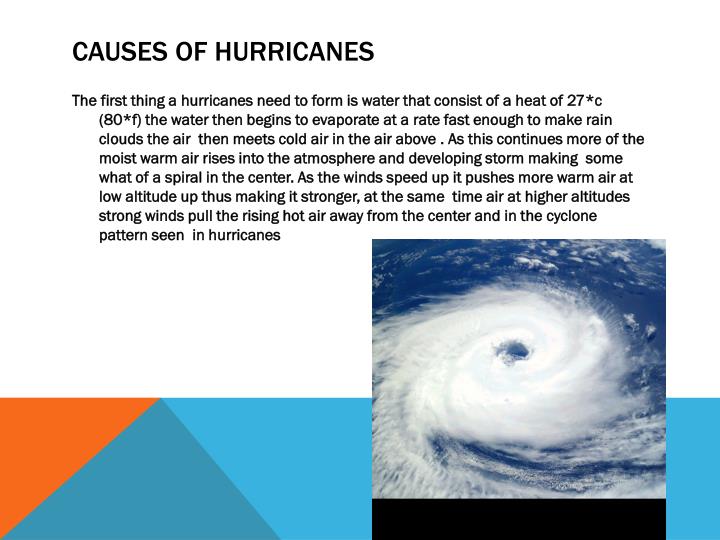
As that warm, moist air rises, it cools. And what happens when water vapor cools? It condenses, forming clouds and releasing a boatload of latent heat. This is where the hurricane really gets its groove on. That released heat warms the air even more, causing it to rise faster. It’s like a positive feedback loop of meteorological mayhem.
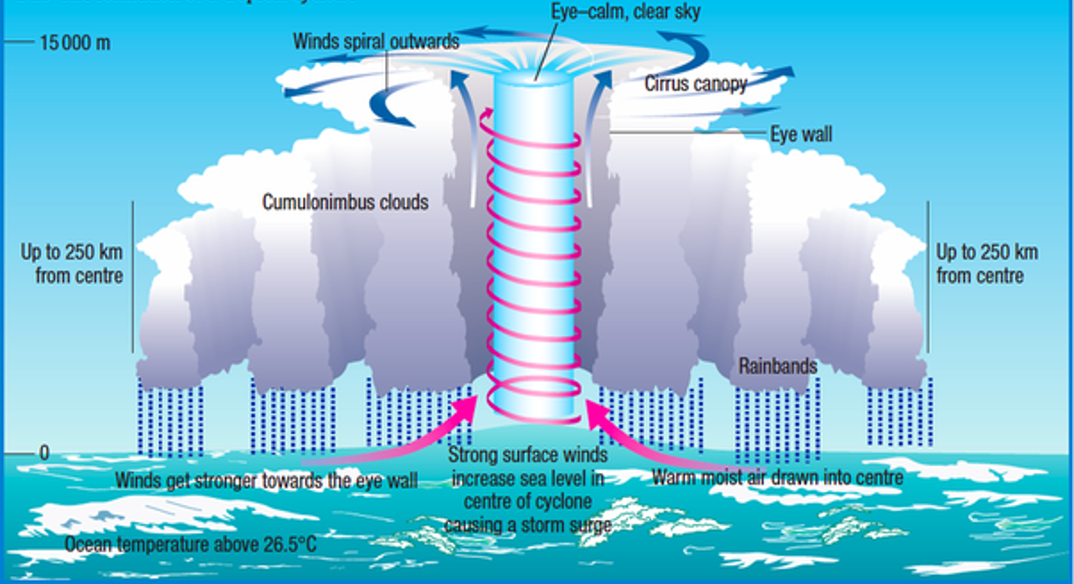
Imagine lighting a tiny candle under a hot air balloon. Now imagine that candle is actually a nuclear reactor made of water vapor. That's the kind of energy we're talking about! This process makes the whole system more efficient, drawing in even more air, fueling the rising currents, and creating more condensation. It’s a beautifully destructive steam engine.
The Earth's Sneaky Spin: The Coriolis Effect
Okay, we've got rising air, we've got low pressure, we've got fuel. But where does the iconic spin come from? This, my friends, is thanks to the Earth's rotation, and it's called the Coriolis Effect. It’s why water swirls down your drain (sort of, but not really the primary reason for your toilet), and why hurricanes spin.
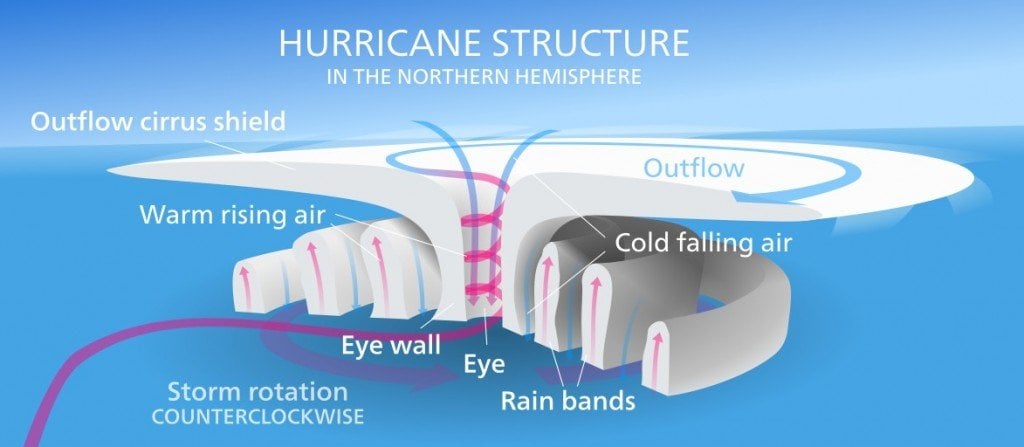
Because the Earth is spinning, air doesn't just flow straight into that low-pressure zone. Instead, it gets deflected. In the Northern Hemisphere, it gets deflected to the right, causing hurricanes to spin counter-clockwise. In the Southern Hemisphere, it's deflected to the left, making them spin clockwise. Fun fact: hurricanes never form right on the equator because the Coriolis Effect is weakest there!
The Gentle Nudge: Minimal Wind Shear
Finally, for a hurricane to truly organize and strengthen, it needs its personal space. Specifically, it needs an environment with minimal wind shear. Wind shear is when winds at different altitudes blow in different directions or at different speeds. Think of it as Mother Nature trying to give her meticulously styled hair a bit of a shake-up.
Too much wind shear is like a celestial buzzkill. It rips apart the hurricane's vertical structure, preventing it from stacking neatly and efficiently. It basically decapitates the storm, scattering its heat and moisture and turning it into a disorganized mess. So, a calm upper atmosphere is key for that perfectly symmetrical, terrifying swirl.
Putting It All Together: A Recipe for Awesome Power
So, there you have it: a cocktail of really warm water, rising moist air, a vacuum of low pressure, the Earth's subtle spin, and a bit of peace and quiet in the upper atmosphere. When all these ingredients come together in just the right proportions, you get a tropical depression, which can then escalate to a tropical storm, and finally, a full-blown, named hurricane.
It's a marvel of atmospheric physics, a powerful reminder of nature's forces, and honestly, a pretty cool (and terrifying) meteorological dance. Now, if you'll excuse me, I hear the ocean calling, and I just need to make sure it's not boiling its own bath water.