
What Is A Cnc Lathe Machine

Alright, let's talk about a machine that's probably working hard right now, somewhere in the world, making something you'll use today.
It's one of those unsung heroes of manufacturing, a real workhorse behind the scenes.
But here's my slightly unpopular opinion: it's basically a fancy, super-precise pencil sharpener for grown-ups who are making, well, everything else.
Must Read
I'm talking about the legendary, the mysterious, the wonderfully practical CNC Lathe Machine.
Don't let the technical name scare you; it’s actually quite charming once you get to know it.
What's in a Name? (Spoiler: Mostly Spinning!)
First, let's peel back the layers of that rather technical-sounding name.
Forget the scary letters for a second. Let's focus on the "Lathe" part first.
Imagine a potter's wheel, but instead of delicate clay, it's working with tough metal, durable plastic, or even sturdy wood.
At its core, a Lathe is simply a machine that spins a piece of material really, really fast.
As the material spins, a sharp, unyielding cutting tool comes along and shaves bits off.
It’s like turning a big, blocky potato into a perfectly smooth, cylindrical chip, but with much more precision and for much cooler stuff than just snack time.
Think about anything perfectly round in your life: a bolt, a shaft, a wheel hub, the perfectly cylindrical leg on your fancy coffee table, or even the smooth handle on a tool.
The "Spinny Bit" Explained: A Dance of Precision
So, the lathe part is all about spinning and shaping things symmetrically around a central axis.
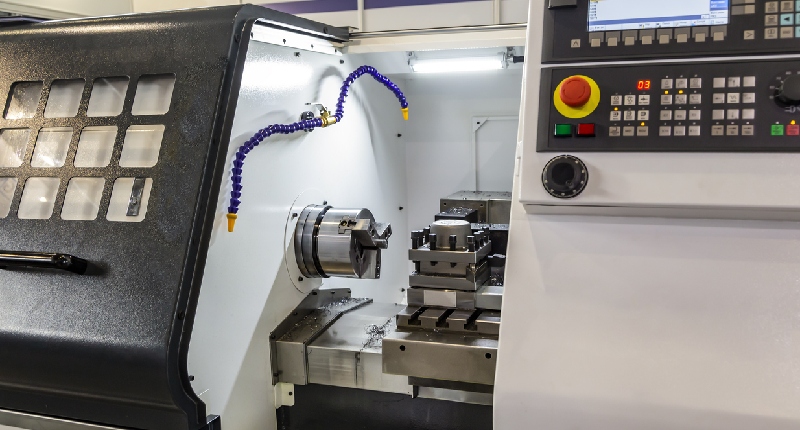
It's an ancient idea, truly. Humans have been spinning materials to shape them for millennia, from wooden bowls to bronze ornaments.
This machine just takes that age-old concept and turbo-charges it with incredible power and speed, making it an engineering marvel.
It securely holds the workpiece, often a solid bar or a block, then whirls it around at impressive speeds.
Then, various specialized tools approach with grace and purpose to carve, cut, drill, thread, or shape it.
The result is usually something exquisitely cylindrical, beautifully tapered, or with a very precise bore, ready for its destined role.
Every spin, every cut, is designed to remove just the right amount of material.
It's a subtractive process, meaning it starts with more than it needs and carefully removes the excess.
It's a bit like a sculptor, but one obsessed with perfect circularity.
Now for the "CNC" Magic: The Brains of the Operation
Now, let's tackle those slightly intimidating letters: C-N-C.
Don't worry, it doesn't stand for "Crazy Noodle Contraption," although sometimes watching it make metal shavings can look a little like that.
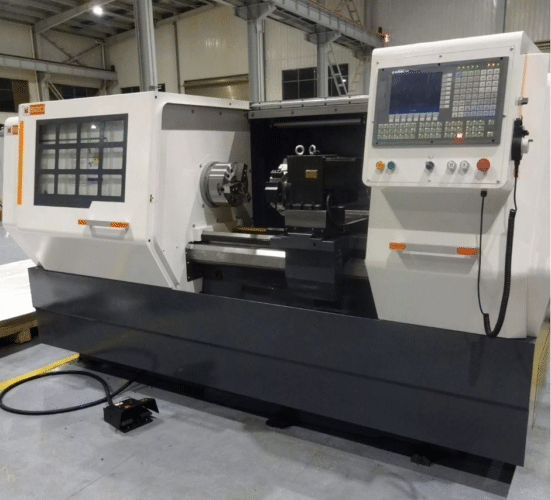
It simply stands for Computer Numerical Control. See? Sounds fancy, but at its heart, it's actually simpler than you might think.
The CNC bit just means there's a highly intelligent computer telling the machine exactly what to do, every single step of the way.
Instead of a human operator carefully guiding the cutting tool with levers and wheels, a sophisticated computer program takes the reins.
This program is like a super-detailed, step-by-step recipe, telling the machine precisely where to move, how fast to cut, and what intricate shape to create.
Imagine a robot chef, but instead of preparing gourmet meals, it's meticulously crafting engine parts with unwavering precision.
Why Computers Are Better Than Us (For This Kind of Job, Anyway)
Why do we hand over such a vital, precision-demanding job to a computer?
Well, unlike us, computers don't get tired, they don't get distracted, and they certainly don't sneeze or have a shaky hand in the middle of a critical, micrometer-level cut.
They follow instructions with astonishing, unwavering accuracy, replicating the same perfect motion time and time again.
This means if you need 10,000 identical bolts, each one precisely 2.5 inches long with exactly 20 threads per inch, a CNC Lathe can make them all absolutely identical.
No two human-made bolts would ever be that consistently perfect.

It's the ultimate consistency machine, a tireless artisan bringing dreams of perfect roundness and exact dimensions to life across industries.
The precision is mind-boggling, often down to a fraction of a human hair.
The Unpopular Opinion: It's Just a Super-Smart Spinny Sharpener!
So, combining the relentless spinning power of the lathe with the unerring, digital brain of CNC, you get a machine that precisely carves perfectly round or symmetrical objects.
My unpopular opinion is this: at its very core, it's a very sophisticated, incredibly powerful way to make a piece of raw material perfectly round, or to add perfect holes, precise threads, and flawless curves to things that are already round.
It’s a gloriously advanced tool for solving the universal manufacturing question: "how do I make this perfectly circular, flawlessly precise, and repeatable?"
What Does It Actually Make? Things You Use Every Single Day.
You interact with countless things made by CNC Lathes all the time, probably without ever even giving it a second thought.
Think about the smooth, perfectly balanced shaft inside your washing machine or the intricately machined components deep within the engine of your car.
Those tightly sealed fittings under your kitchen sink, the tiny, life-saving components in your medical devices, or even the precise gears and axles of your bicycle.
All those perfectly formed, threaded, or precisely cylindrical pieces started their life as a raw block on a machine just like this.
It takes raw chunks of metal, sturdy plastic, or composite materials and transforms them with robotic grace and unfathomable accuracy.
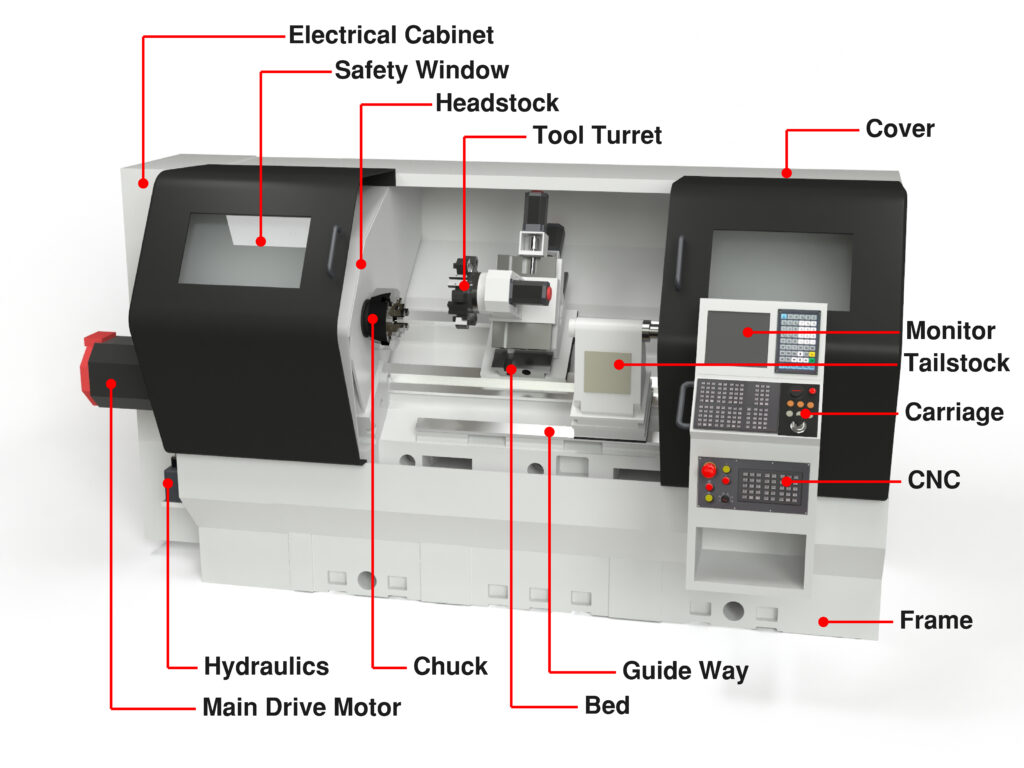
From essential aerospace components that keep planes in the sky to the smallest, most intricate jewelry parts, the CNC Lathe is the unsung, whirring hero of precision manufacturing.
It even makes the bolts that hold your desk together or the inner workings of your garden hose connector.
Every time something fits together perfectly, or rotates without a wobble, you can probably thank a CNC Lathe.
Why We Should Appreciate Our Spinny Friends
These machines are true industrial workhorses. They can run for hours on end, even days, producing thousands of identical parts with incredible speed and minimal human intervention.
They are the silent backbone of modern industry, and they are why so many of our everyday conveniences are both affordable and incredibly reliable.
Without them, everything from our cars to our coffee makers, from our medical equipment to our smartphones, would be much more expensive, much less precise, and far less dependable.
So next time you hold a perfectly round object, or marvel at how two parts fit together flawlessly, take a moment.
It probably wasn't just shaped by hand, or by some ancient, mystical magic.
It was likely born from the precise, tireless, and wonderfully efficient work of a CNC Lathe Machine, the grown-up's super pencil sharpener, making our world a little smoother, rounder, and far more perfectly engineered.
It's not just a machine; it's a quiet, digital artisan, crafting the cylindrical necessities and the intricate wonders of our modern lives.
And that, my friends, is something quite remarkable, and definitely worth a little smile of appreciation.