
What Is A Charpy Impact Test

Ever Wonder How Things... Don't Break (Usually)?
Picture this: you're enjoying your favorite snack, and suddenly, your plate slips. Gasp! It hits the floor. Does it shatter into a thousand tiny fragments, or does it merely crack with a sigh of resignation? This isn't just a dramatic moment for your dinnerware; it's a profound question that engineers ponder daily. They want to know how tough materials really are. That's where a rather theatrical, yet incredibly important, scientific showdown called the Charpy Impact Test comes into play.
Meet the Charpy Impact Test: A Scientific Smash-Up!
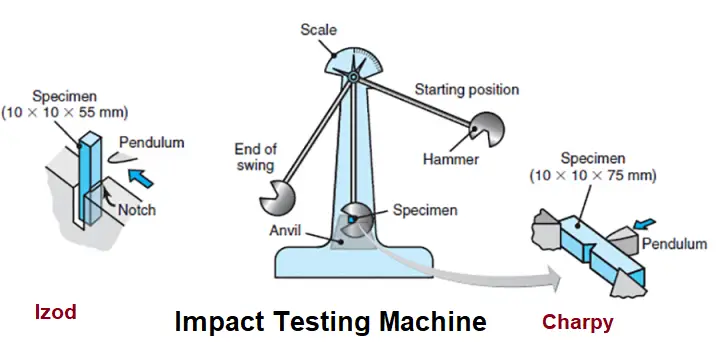
Imagine a mighty, swinging pendulum straight out of a medieval siege weapon. But instead of flattening castles, this impressive contraption is designed to deliver one swift, decisive blow. Its target? A small, precisely shaped piece of material, often a metal or a sturdy plastic. This isn't just any old chunk; it's a carefully prepared "specimen." The whole show is surprisingly quick, a blur of motion, a satisfying thwack, and then it's all over.
"The Charpy Impact Test is like a material's ultimate trust fall... except the material usually breaks."
At its heart, the Charpy Impact Test is all about giving a material a really bad day. It's designed to simulate a sudden, sharp impact, like dropping something or a car crash. Engineers want to know if their chosen material will hold up under such unexpected stress, or if it will simply give up the ghost. It’s crucial for safety and reliability. Essentially, it's a controlled demolition, but for science, not spectacle (well, maybe a little spectacle).
Must Read
The Star of the Show: The Notched Specimen
Now, here's where my "unpopular opinion" might sneak in. The material isn't tested completely unprovoked. It has a secret weapon, or rather, a secret weakness: a tiny, V-shaped groove called a notch. This notch is absolutely critical to the test. It's like pre-scoring a piece of cardboard so it folds perfectly. We're basically saying to the material, "Hey, we know you're tough, but what if we gave you this little helper to fail right here?"
The notch forces the stress to concentrate at one specific point. This ensures that the material will break exactly where the scientists want it to, making the test results predictable. Without this clever little indentation, the specimen might deform randomly or not break at all, making it harder to get consistent data. So, while it feels a bit like rigging the game, it's actually about getting a standardized, scientific snapshot of the material's breaking point.
The Mighty Pendulum's Purposeful Plunge
The test begins with the heavy pendulum arm hoisted high, full of potential energy, like a weightlifter poised for a record lift. Then, it's released! Gravity takes over, and the pendulum swings down in a mighty arc, gathering speed and kinetic energy. Wham! It strikes the notched specimen with incredible force, right in the middle, opposite the notch.
The material either shatters with a satisfying crack or bends dramatically before breaking. The pendulum, having lost some of its initial energy to the breaking process, doesn't swing quite as high on the other side. This difference in swing height is the magic number! It tells engineers exactly how much energy the material absorbed during its dramatic demise. More absorption means a tougher, more resilient material; less absorption points to a brittle, perhaps a bit dramatic, performer.

Brittle Drama Queens vs. Ductile Tough Guys
This is where materials truly reveal their personalities under pressure. Some materials are like glass – they just shatter with almost no warning. These are the brittle materials. They absorb very little energy before completely giving up. Their fracture surfaces are often clean and flat, a testament to their sudden, no-nonsense failure.
Then there are the ductile materials, the real heavyweights. Think of a tough steel or certain plastics. These materials will bend, stretch, and deform significantly before they finally break. They absorb a lot of energy. Their fracture surfaces are often rough and torn, showing how much effort they put into resisting the inevitable.
"Some materials embrace the smash; others put up a valiant, if ultimately futile, fight."
Knowing whether a material is brittle or ductile is incredibly important. Imagine an airplane wing! You certainly don't want it to suddenly snap like a dry twig in cold weather. You'd prefer it to bend and deform, giving warning before a catastrophic failure. That's why understanding impact toughness, measured by the Charpy Impact Test, is a big deal in engineering.
![What is Charpy Impact Testing? [PDF] - Design | Engineering](https://sp-ao.shortpixel.ai/client/to_auto,q_glossy,ret_img,w_1024,h_476/https://dizz.com/wp-content/uploads/2022/10/Charpy-Impact-Test-Machine-1024x476.png)
Why All This Scientific Smashing?
My slightly unpopular take: while it looks like a fun way for scientists to smash things, the Charpy Impact Test has a serious purpose beyond sheer entertainment. It's not just about seeing things break; it's about making sure things don't break unexpectedly when we really need them to hold up. Think about bridges, pressure vessels, pipelines, or even the crash-worthiness of your car's chassis.
Engineers need to select materials that can withstand sudden loads, especially in harsh conditions like extreme cold, which can make many materials surprisingly brittle. A sudden drop in temperature can turn a perfectly strong material into something as fragile as an ice cube. The Charpy Test helps identify these temperature-dependent behaviors. So, it's less about the joy of destruction and more about ensuring our world doesn't fall apart at the seams. Literally.
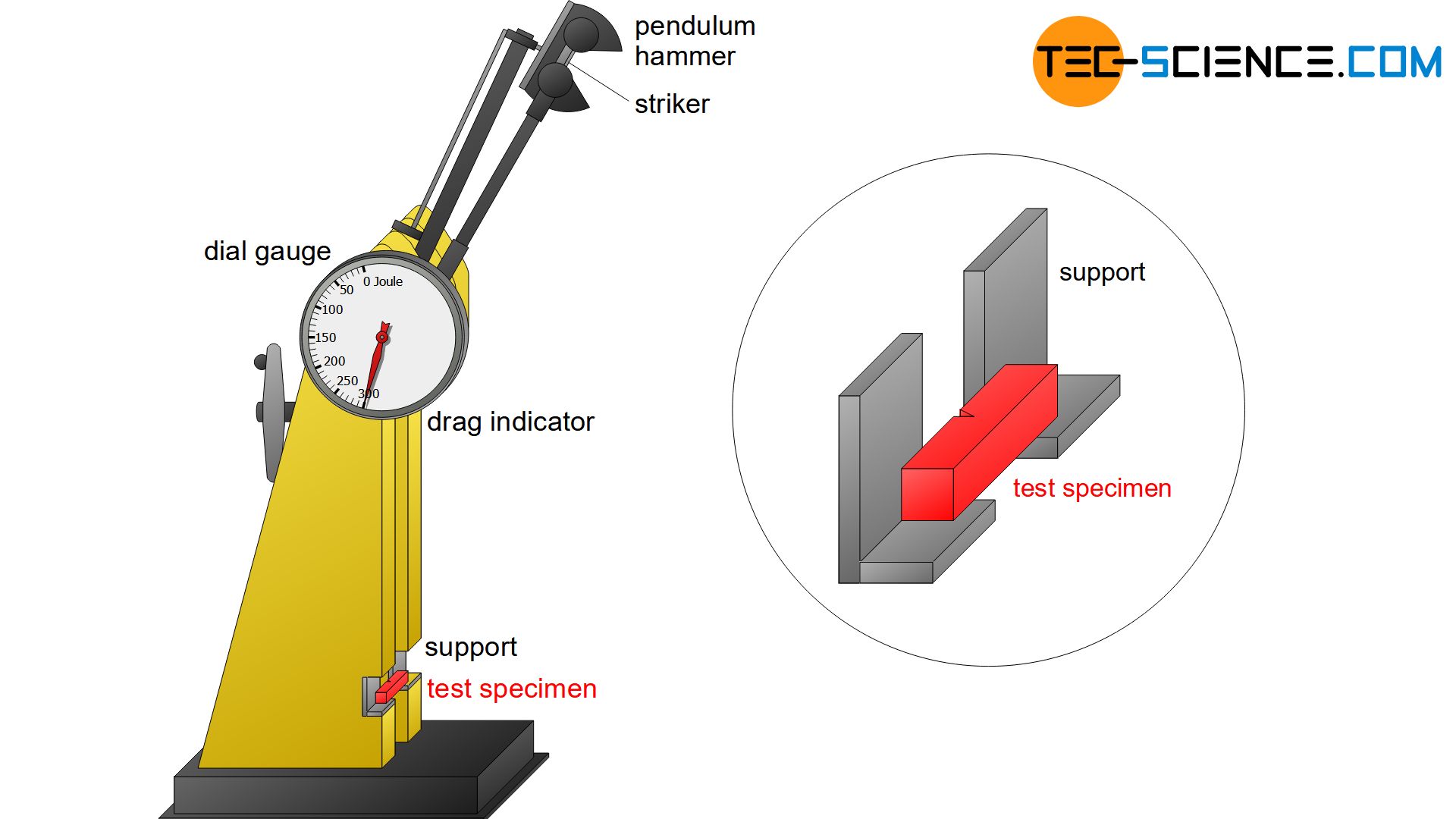
This test helps determine a material's transition temperature. That's the point where it goes from being a relatively tough, ductile player to a fragile, brittle one. Understanding this critical temperature means designers can choose materials suitable for specific environments, from arctic pipelines to spacecraft. It's about anticipating the worst-case scenario and designing to prevent it, all thanks to a carefully planned smash.
The Unsung Hero (or Over-The-Top Performer?)
So, the next time you see something miraculously withstand a sudden jolt, or perhaps tragically succumb to one, spare a thought for the Charpy Impact Test. It's the unsung, slightly dramatic hero in the world of materials science, making sure our everyday items, and the critical infrastructure around us, are up to the task. Perhaps my unpopular opinion is that we give this test too much credit for merely confirming what our common sense already tells us: some things are tough, some things aren't. But hey, at least they confirm it with science!
It’s a powerful reminder that understanding how materials fail under specific, planned conditions is just as important as knowing their strength. After all, knowing a material’s weakness can be its greatest strength, leading to safer designs and more reliable products. And who knew watching something break could be so utterly fascinating, and even, dare I say, fun?