
What Gauge Of Wire For 30 Amps
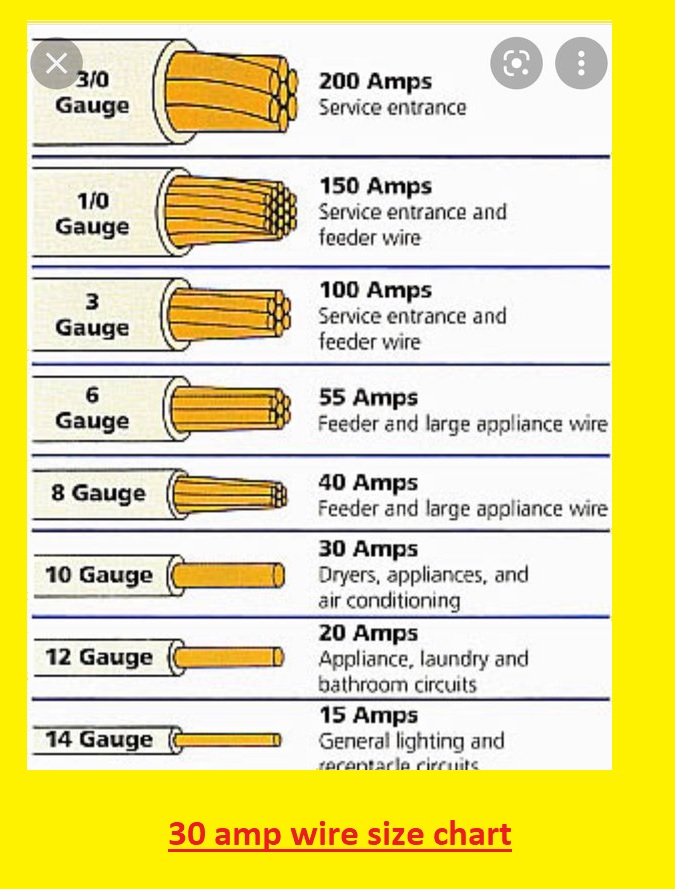
The Great Wire Gauge Mystery: What About 30 Amps?
Alright, let’s talk electricity. Not the scary, sparks-flying, “don’t-touch-that” kind, but the everyday, “why-is-this-so-complicated” kind. You’re doing a little project around the house, maybe finally tackling that new appliance installation, or just trying to understand why your garage circuit keeps tripping. And then boom! You hit the dreaded, seemingly simple, but surprisingly complex question: What gauge of wire for 30 amps?
It sounds like it should be an easy lookup, right? A quick peek, a definitive answer, and you’re off to the hardware store. But oh no, my friend. Dive into the internet rabbit hole, and suddenly you’re drowning in intricate charts, dense footnotes, obscure temperature ratings, and acronyms like THHN or NM-B that make your head spin faster than a miswired ceiling fan. It's enough to make you want to just, well, guess. (And please, for the sake of all things un-sparky, don't guess.)
The Overthinking Trap (We've All Been There)
We’ve all been there. You just want to safely hook up your fancy new air conditioner, that beefy electric water heater, or a dedicated line for your workshop tools, and suddenly you feel like you need a PhD in electrical engineering. You see numbers like AWG (American Wire Gauge), you hear terms like ampacity (which sounds like an extreme sport), and your brain starts to fog. You wonder if that seemingly thick enough wire you found in the garage, which looks sturdy, might just work. (Seriously, resist the urge to self-diagnose your home's electrical health with a visual inspection!)
Must Read
Then someone mentions the great debate of copper versus aluminum, or asks about insulation types, and you just want to throw your hands up, offer a dramatic sigh, and call a professional. Which, by the way, is always a fantastic and recommended idea if you're ever truly unsure or uncomfortable. But sometimes, you just want to understand the basics without having to enroll in a full semester of night school just to install a dryer.
“In a world of overly complex calculations, sometimes you just want the straight dope from a friend.”
My (Playfully) Unpopular Opinion on Simplicity
Here’s my slightly "unpopular" take on navigating electrical advice: While all the detailed charts, precise formulas, and safety regulations are absolutely, positively, 100% correct and critically important for electrical professionals (the folks who keep our lights on and houses safe!), for us everyday homeowners and weekend warriors just trying to understand, sometimes it feels like we’re being asked to launch a satellite when we just want to toast a bagel.
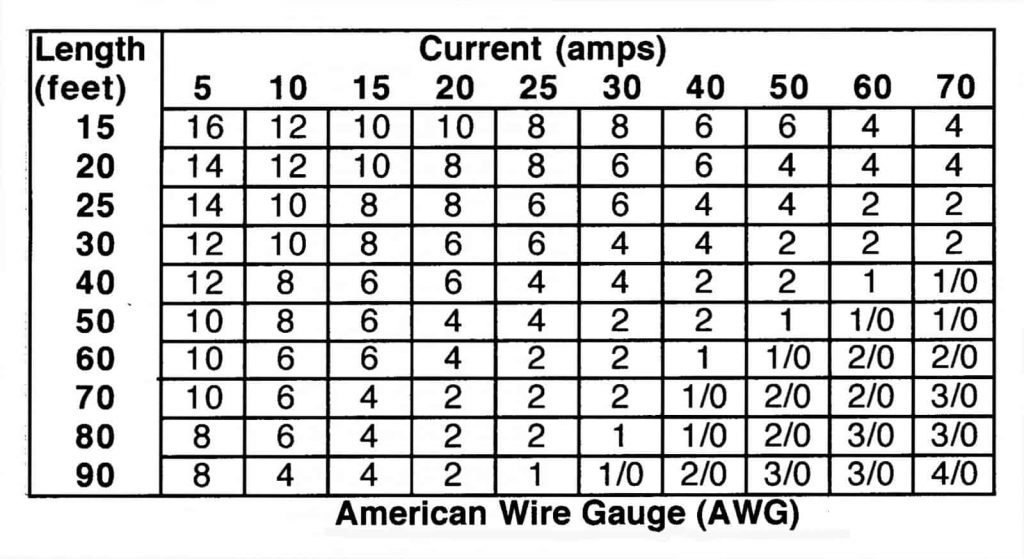
My "unpopular" opinion isn't about ignoring safety – never, ever! It's about cutting through the academic noise and getting to the practical, common-sense essence. For 30 amps, you fundamentally need a wire that can comfortably handle that much electrical flow without getting too hot, melting its insulation, or, heaven forbid, causing a fire. Think of it like a bustling highway for electricity: too small a road for too many fast cars, and you get a serious traffic jam, overheated engines, and potential fiery mishaps. Not good, not fun.
The Not-So-Secret Answer for 30 Amps
So, you want to know the magic number for 30 amps, without having to consult the entire National Electrical Code? Drumroll, please… for most general household wiring applications in the good ol' USA, when you're specifically dealing with copper wire (which is what you’ll find in most modern homes), the overwhelmingly common, safe, and electrician-approved answer for 30 amps is usually 10-gauge wire.
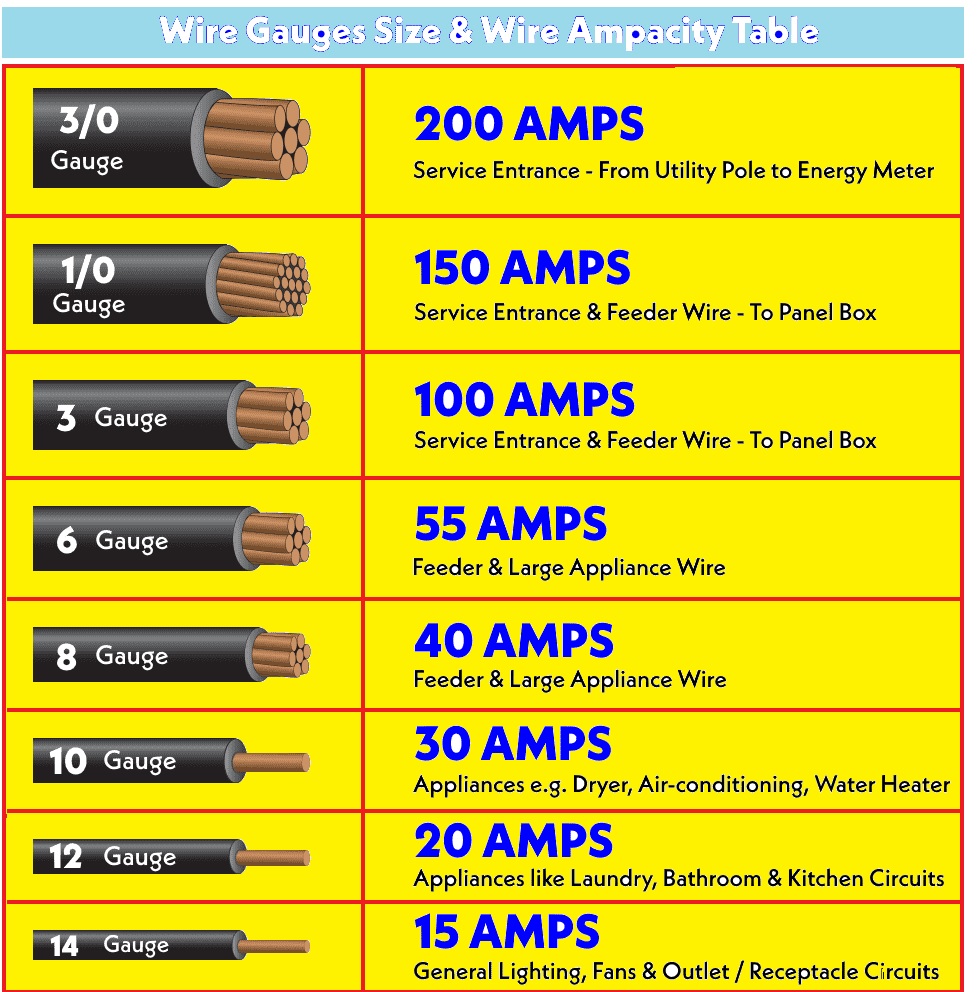
Yep, that’s it. Ten gauge. Remember the rule of thumb: the bigger the gauge number, the smaller the actual diameter of the wire. So 10-gauge is thicker than 12-gauge, and 12-gauge is comfortably thicker than 14-gauge. Think of it with our garden hose analogy: a fatter hose (a smaller gauge number, ironically) can carry much more water (amps) without struggling, losing pressure, or bursting at the seams. A tiny drinking straw isn't going to fill your pool, and a skinny wire won't handle 30 amps.
Now, before the electrical gods strike me down for delightfully oversimplifying, let me add a tiny, but important, caveat. This guidance is for standard, everyday scenarios. If you're running wire for a super long distance (like across your entire property), or in an extremely hot environment (like a boiler room), or if it's deeply buried in insulation, things can indeed get a smidge more complicated, requiring larger gauges. But for your average range hood,

“Why complicate things with endless variables when a trusty 10-gauge often does the trick safely and reliably?”
Don't Be a Hero, Just Be Smart
Ultimately, while we can playfully poke fun at the perceived complexity, electrical work demands serious respect. It’s absolutely not a guessing game. But understanding the basic principle – bigger wire for more current (amps) – can genuinely empower you, making you feel less intimidated. When someone asks you, "What gauge for 30 amps?", you can confidently, and perhaps with a knowing wink, say, "Ah, for copper, you're generally looking at 10-gauge. Easy peasy!"
It’s about finding that sweet spot between being informed enough to make sensible, safe decisions and not getting paralyzed by endless technicalities that might not apply to your specific, straightforward situation. So next time you're facing a wire gauge quandary, take a deep breath, remember our friendly 10-gauge buddy, and maybe, just maybe, agree that sometimes, a straightforward, well-understood answer is exactly what the electrician (and the DIYer) ordered.
