What Gas Is Used In Mig Welding
Ever stood in front of a MIG welder, gear on, ready to create? Beyond the sparks and the satisfying glow of molten metal, there's a quiet, unseen hero making it all possible: the shielding gas. It's the molecular bodyguard for your weld, and understanding it is key to transforming your projects from "oops" to "awesome."
MIG welding, or Gas Metal Arc Welding (GMAW), is a favorite for many hobbyists and pros alike. It's relatively easy to learn and incredibly versatile. But without the right gas, your beautiful bead would turn into a pockmarked, brittle mess faster than you can say "porosity." So, let's pull back the curtain on this vital ingredient!
The Silent Guardian: Argon
When it comes to MIG welding gases, Argon (Ar) is often the first name on the guest list. It's an inert gas, meaning it doesn't react with anything – like that cool, collected friend who never stirs up drama. Argon's main job is to create a protective cloud around the molten weld pool, shielding it from the nasty effects of oxygen and nitrogen in the surrounding air. If those atmospheric gases get into your weld, they cause weaknesses, voids, and a whole lot of headache.
Must Read
Think of Argon as a tiny, invisible force field. It prevents contamination, resulting in a cleaner, stronger, and more aesthetically pleasing weld. It's particularly fantastic for welding aluminum and stainless steel, where purity is paramount. Fun fact: Argon is the third most abundant gas in Earth's atmosphere, making up about 1% – but you can't see, smell, or taste it!
The Dynamic Duo: Argon-CO2 Blends
While Argon is great for delicate work, sometimes you need a little more muscle, especially when welding mild steel. That's where Carbon Dioxide (CO2) steps in. Often, you'll find Argon blended with a percentage of CO2, creating what's known as a reactive shielding gas. The most common blend? The venerable 75% Argon / 25% CO2, often simply called "C-25" in welding circles.

Why add CO2? Because while Argon is inert, CO2 brings some advantageous properties to the party. It helps create a hotter, more fluid weld puddle, which translates to better penetration and a smoother, more robust weld bead. It’s the workhorse blend for everything from automotive repairs and structural fabrication to fixing that rusty garden gate. If you're welding mild steel, chances are this is your go-to.
Other common blends include 80/20 or even 90/10 Argon/CO2, each offering slightly different characteristics in arc stability, penetration, and spatter levels. Experimentation (safely, of course!) can help you find your sweet spot for specific projects.

Beyond the Basics: Other Gases & Pro Tips
While Argon and Argon-CO2 blends cover most MIG welding needs, a few other players exist for specialized tasks:
- 100% CO2: Cheaper, offers deep penetration for thick steels, but expect more spatter and a rougher finish. Ideal for structural work where appearance isn't critical.
- Argon/Helium blends: Helium boosts heat, excellent for thick aluminum, copper, or magnesium, but significantly more expensive.
- Tri-mixes (e.g., Argon/CO2/Oxygen): These are advanced, often industrial blends for specific alloys like stainless steel, enhancing arc stability and weld wetting.
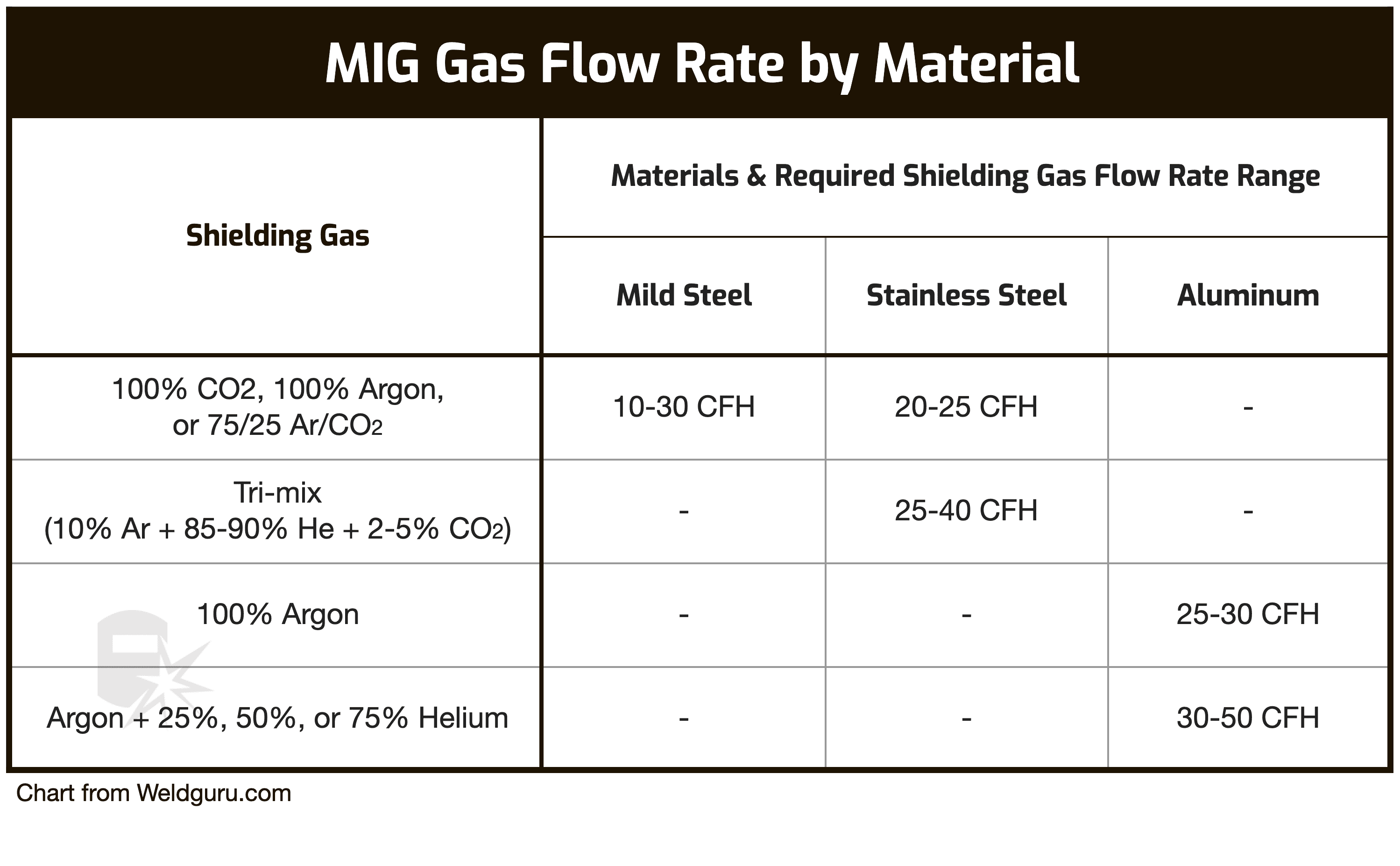
Practical Tip: Always check your gas tank pressure! You don't want to run out mid-weld. Keep an eye on your flow rate (the amount of gas coming out per minute). Too little, and your weld will be contaminated; too much, and you're just wasting gas and potentially creating turbulence around the arc. Most regulators have a flow ball or gauge to help you dial it in. Generally, 15-25 cubic feet per hour (CFH) is a good starting point for MIG.
Wind Warning: If you're welding outdoors, even a gentle breeze can blow away your precious shielding gas, leaving your weld unprotected. Try to work in a sheltered area or create a temporary windbreak to ensure that invisible guardian stays on duty!
The Unseen Connection
So, the next time you fire up your MIG welder, take a moment to appreciate the unsung hero working tirelessly in the background. It's not just the electricity or the filler wire making that strong, beautiful connection; it's the carefully chosen, invisible gas creating the perfect environment for that magic to happen. Understanding these subtle details not only improves your welds but deepens your appreciation for the craft itself.
Just like in daily life, sometimes the most important influences are the ones we can't see – the supportive friendships, the quiet routines, or the hidden efforts that hold things together. Paying attention to these unseen forces, both in your workshop and beyond, can make all the difference in building something truly lasting and strong.