Have you ever stopped to think about steel? It’s everywhere, from the spoons in your kitchen to the towering skyscrapers that touch the clouds. It’s like the silent superhero of our modern world, holding everything together!
But what exactly is steel? Is it just some magical, super-strong metal found deep underground? Nope! Steel is actually a fantastic team effort, a brilliant recipe cooked up by clever folks called metallurgists.
Think of it like baking a cake. You have your main ingredients, and then you add a pinch of this or a dash of that to make it truly special. Steel works in much the same way, with a few superstar elements taking center stage.
So, let’s peel back the curtain and meet the incredible cast of characters that give steel its legendary strength and dazzling versatility! Get ready for a journey into the microscopic world of metallic marvels.
The Dynamic Duo: Iron & Carbon
Meet Iron: The Strongman of the Show!
First up, the absolute boss, the main event, the foundation of all steel: Iron! Imagine a burly, good-natured giant who loves to lift heavy things. That's iron for you.
Iron is incredibly abundant on Earth, making it a perfect starting point. It's naturally strong and hardworking, but a little bit... well, soft around the edges by itself. It needs a buddy to truly shine.
Picture it as the gentle giant with a big heart, ready to take on the world. But even the biggest hearts sometimes need a little extra backbone to face tough challenges.
It provides the bulk, the mass, and the core metallic properties that we associate with strength. Without iron, there simply is no steel. It’s the ultimate base layer!
Enter Carbon: Iron's Tiny, Mighty Sidekick!
Now, for iron's best friend and secret weapon: Carbon! This isn't the carbon you write with in a pencil; this is a microscopic powerhouse.
Carbon joins iron in tiny amounts, often less than 2% of the total mix. But don't let its small size fool you! It acts like iron's personal trainer, whipping it into super-strong shape.
"Carbon is the secret sauce that transforms merely strong iron into super-duper strong steel!"
When carbon atoms snugly fit into the iron structure, they make it much harder and tougher. It’s like adding rebar to concrete, giving it that unbreakable quality.
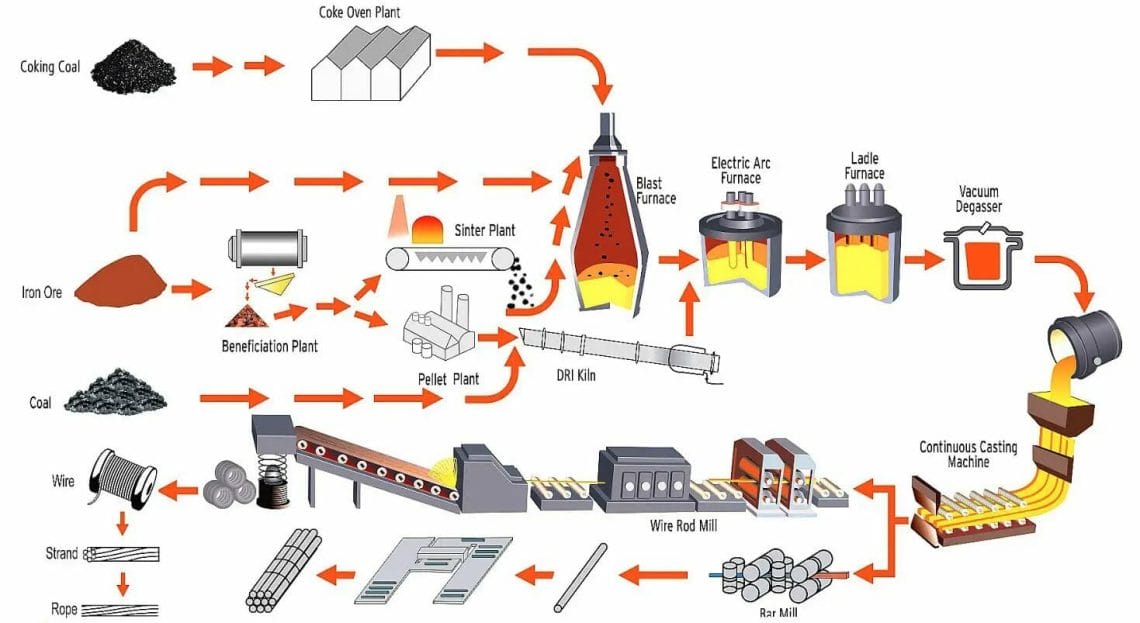
How is Steel Made? Learn how Steel is Manufactured
This tiny addition prevents the iron atoms from sliding past each other too easily. This means steel can resist bending, breaking, and deforming under pressure. Bravo, carbon!
The Supporting Superheroes: Alloying Elements!
But wait, there’s more! To give steel its incredible range of superpowers – like resisting rust, handling extreme heat, or becoming super flexible – other elements jump into the mix. These are called alloying elements, and they’re the true marvels of customization.
Each one brings a unique skill to the table, turning our basic iron-carbon duo into a specialized champion. Think of them as individual superheroes, each with their own fantastic power.
Chromium: The Shiny Knight!
If you love stainless steel cutlery or shiny kitchen sinks, you have Chromium to thank! This element is the ultimate rust-fighter, the guardian against corrosion.
When chromium is added (usually at least 10.5%), it forms an invisible, super-thin protective layer on the steel’s surface. This shield literally fends off rust and tarnish.
"Chromium is the superhero cap for steel, making it gleam and never rust!"
It’s like giving steel an invisible force field that keeps it looking brand new, even in wet environments. So next time you see something shiny and rust-free, give a nod to chromium!
Nickel: The Tough-But-Flexible Friend!
Meet Nickel, the element that makes steel super tough, even more corrosion-resistant, and surprisingly flexible! It's like the yoga instructor of metals, adding both strength and bendability.
Nickel helps steel withstand extreme temperatures, both hot and cold. This makes it perfect for applications in airplanes, cryogenic tanks, and even some high-performance car parts.
How Stainless Steel is Made | Art of Creating Durable Metal
It’s a truly versatile player, ensuring steel can take a beating and still bounce back. Nickel makes sure the steel doesn't become brittle when things get chilly.
Manganese: The Impurity Pulverizer!
Every good team needs someone to keep things clean, right? That's where Manganese steps in! It's like the bouncer and cleaner-upper of the steel world.
Manganese helps remove nasty impurities like sulfur and oxygen during the steel-making process. These impurities could otherwise make the steel weak and brittle.
It also adds to steel’s hardness and strength, making it more resistant to wear and tear. Manganese truly ensures our steel is tough and robust, ready for anything.
Molybdenum: The Heat Whisperer!
When steel needs to keep its cool under pressure, Molybdenum is the call. This element gives steel incredible strength at high temperatures.
Imagine steel components working inside a roaring jet engine or a scorching furnace. Molybdenum ensures they don't lose their shape or strength.
"Molybdenum keeps steel cool as a cucumber, even when things get infernally hot!"
It’s a true hero for applications where things are literally cooking. Molybdenum prevents steel from softening when it's supposed to be working hard in the heat.
Vanadium: The Grain Refiner!
Vanadium is a bit of a quiet achiever, but oh-so-important! It helps make the internal structure of steel super fine and even.
How Is Steel Made? | Structural Steel Fabrication Sydney | Metal
Think of it like a master chef ensuring every grain of rice is perfectly cooked and separated. A fine-grained structure means stronger, tougher steel.
Even small amounts of vanadium can dramatically improve steel's strength without making it heavy. It’s about smart, efficient strengthening.
Silicon: The Deoxidizer & Toughener!
While often overlooked, Silicon plays a crucial role in making clean, strong steel. It’s an expert at removing unwanted oxygen during the melting process.
This "deoxidizing" action prevents bubbles and weaknesses, leading to a much sounder and tougher final product. It purifies the steel, making it robust.
Silicon also adds a bit more strength and hardness, contributing to steel's overall durability. It's a fundamental part of many steel recipes, ensuring quality from the start.
Tungsten: The Super Hard Bruiser!
If you need steel that's unbelievably hard and resistant to wear, you're calling on Tungsten. This element creates tools that can cut through almost anything.
Tungsten steel is famous for its use in high-speed cutting tools and drill bits. It holds its hardness even at extreme temperatures, making it a true workhorse.
"Tungsten makes steel so hard, it laughs in the face of lesser metals!"
It's the ultimate tough guy, ensuring tools stay sharp and effective even under brutal conditions. Tungsten is truly a champion of durability.
Top 13 Alloying Elements of Steel | Alloying Elements Properties and
Niobium (or Columbium): The Stealthy Strengthener!
Last but not least in our superhero lineup is Niobium, sometimes called Columbium. This element is another fantastic grain refiner, similar to vanadium.
It helps to create very fine-grained steel, which translates to incredible strength. Niobium can significantly strengthen steel without adding much weight.
This makes it perfect for lightweight, high-strength applications like pipelines and vehicle structures. Niobium adds muscle without the bulk.
The Magic of the Mix!
So, as you can see, steel isn’t just one thing. It's a marvelous concoction, a brilliant blend of elements working in harmony. Each specific "type" of steel is just a different recipe of these amazing ingredients.
Need super-strong girders for a bridge? You'll have one recipe. Want a rust-proof fork? Another recipe entirely! That's the beauty and genius of it all.
Scientists and engineers carefully choose and measure these elements to create steel with specific properties. It’s like having a giant chemical cookbook, with endless possibilities.
From the iron in your car frame to the chromium in your watch, these tiny atoms are performing incredible feats of engineering every single day.
So, the next time you encounter something made of steel, take a moment to appreciate the incredible chemistry behind it. It’s a true testament to how a few simple elements can create something so universally useful and awe-inspiring.
It truly makes you marvel at the invisible world of elements, doesn't it? They're the unsung heroes making our modern world possible, one strong, shiny, and tough piece of steel at a time!