
What Does Wh Stand For In Text

Ever stopped to think about those two little letters, W and H, cozied up together at the start of so many words we use every single day? They might seem small, but they hold a surprising amount of power in our conversations. In the world of text, these humble letters kick off some of our most essential inquiries.
Think about it: from the moment we wake up, we’re probably launching into a flurry of Wh-questions. They are the keys that unlock understanding, the little detectives that help us make sense of the world around us. Without them, our chats would be a lot less interesting, wouldn't they?
At its heart, Wh in text often signals a question, a journey into the unknown. It’s our brain’s way of saying, "Tell me more!" These aren't just any old questions; they're the foundational blocks of curiosity and connection. They make up the very fabric of how we learn and share.
Must Read
The Magnificent Five (or Six!)
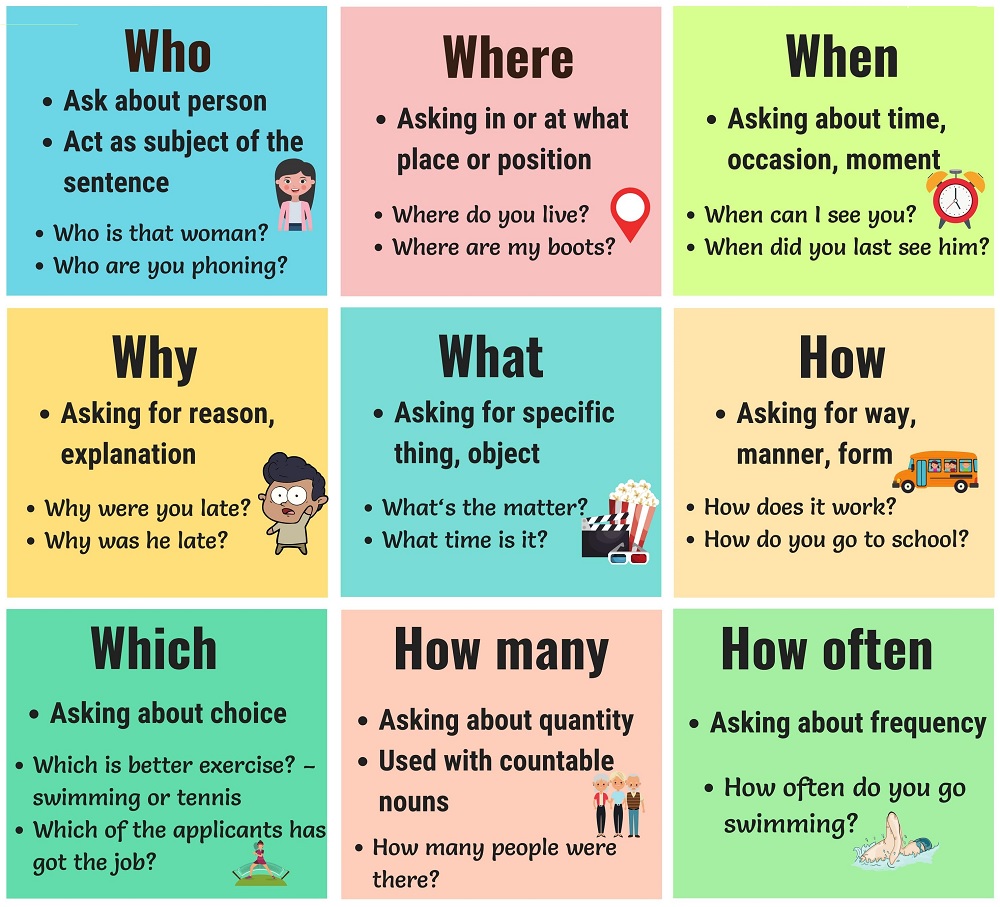
Let's meet the stars of the show, the famous Wh-words that lead the charge. First up, we have Who, the people-finder. Whenever you want to know about a person, their identity, or who performed an action, Who steps in.
"Who ate the last cookie?" is a classic example of its crucial role.
Then there's What, the all-rounder, asking about things, ideas, or actions. It's incredibly versatile and probably one of the most frequently used. You might ask, "What's for dinner?" or "What's the big idea?" – always seeking information about a non-person entity.
Next, we zoom in with Where, the location scout. This word guides us to places, pinpointing positions and destinations. It helps us navigate our daily lives, from asking "Where are my keys?" to "Where should we meet?" It’s how we map out our world.
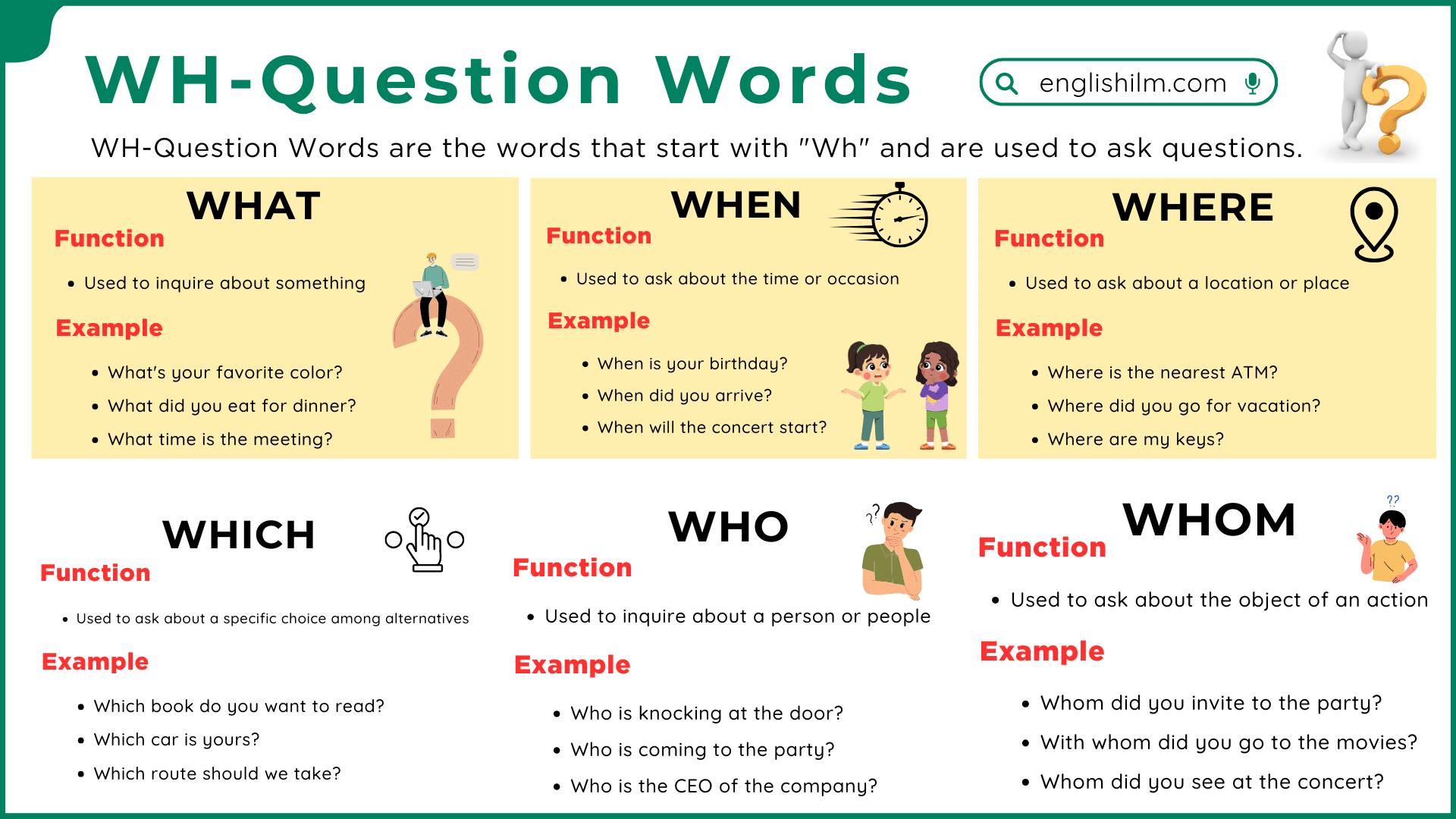
For matters of time, we have When. This word is our trusty calendar and clock rolled into one. It helps us schedule, remember, and anticipate events. Asking "When does the movie start?" or "When did that happen?" helps us keep track of time.
Perhaps the deepest diver of them all is Why, the reason-seeker. This little word is often at the heart of genuine understanding and empathy. It encourages us to look beyond the surface, to explore motives and causes. "Why did the chicken cross the road?" is not just a joke; it’s a philosophical inquiry!
And let's not forget Which, our decision-maker. When you have a choice between a limited number of options, Which helps you specify. "Which one do you prefer?" is the polite way to narrow down possibilities. It brings clarity to choices.
More Than Just Questions: The Wh-Family's Hidden Talents
While their primary gig is asking questions, these Wh-words are multi-talented. They also play vital roles in connecting sentences and providing extra information. They're like little linguistic bridges, linking ideas together seamlessly.
For instance, consider relative clauses. You might say, "That's the person who helped me." Here, who isn't asking a question; it's linking the person to an action. It's giving us more detail, making our sentences richer and more descriptive.
Similarly, "The book which you lent me was fantastic" uses which to specify a particular book. These words add depth without directly interrogating. They show us how versatile and subtle language can be when we really pay attention.
They also pop up in indirect questions, where you're asking about something without directly putting a question mark at the end. For example, "I wonder what time it is." The question is implied, but the sentence itself is a statement. This shows a softer, more reflective kind of curiosity.
The Humorous and Heartwarming Side
Think about a child first learning to ask Wh-questions. It's a hilarious, often relentless barrage of "Why?" "What's that?" "Where's mommy going?" It’s a beautiful, innocent explosion of curiosity that reminds us how fundamental these words are to learning.

These words are the foundation of every good story, too. Imagine a detective novel without "Who did it?" or "What was the motive?" Impossible! They drive the plot, build suspense, and ultimately lead to resolution. They are the scaffolding of narrative.
On a heartwarming note, Wh-words are tools for empathy. Asking "Why are you sad?" or "What can I do to help?" shows genuine care and a desire to understand another person's experience. They open doors to deeper connections and support.
They are the quiet architects of understanding, working tirelessly behind the scenes in every conversation. They help us navigate misunderstandings and seek clarification.
"Wait, what did you mean by that?" can avert many a communication breakdown.
The very act of asking a Wh-question implies engagement. It says, "I'm interested in what you have to say." This small act of linguistic interaction builds relationships and fosters shared experiences. It’s a verbal handshake.

A World Without Wh-? (Imagine the Silence!)
Can you imagine a world without Wh-words? It would be a very quiet, very confusing place. We'd struggle to get directions, understand instructions, or even share basic information. Communication would be clunky and incredibly limited.
Conversations might go something like this: "It happened." "Oh." "Yes." "Indeed." No opportunity to ask "When?" or "Where?" or "Who was there?" It would be a world devoid of true inquiry, a place where curiosity went to hibernate forever.
So, the next time you type out a text or speak a sentence, give a little nod to those hardworking letters, Wh. They stand for so much more than just a couple of characters. They stand for curiosity, connection, and the endless quest for knowledge.
They are the tiny engines that power our curiosity, our stories, and our understanding of each other. In their simple two-letter form, they hold the key to unlocking worlds of information and emotion. They are truly marvelous!