
What Does V Mean When Calculating Shear Force
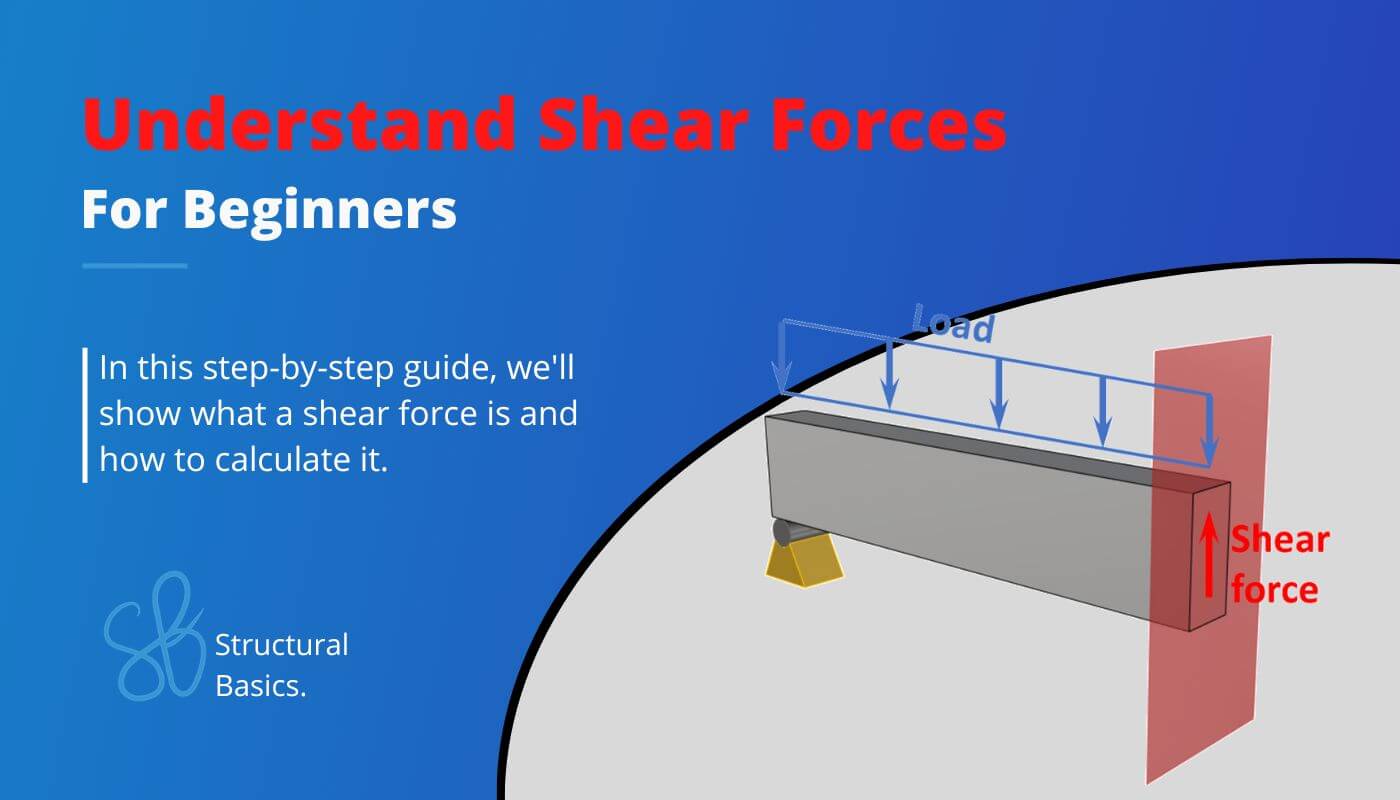
Alright, so you're staring at a shear force diagram, maybe sweating a little (don't worry, we've all been there!), and you see that big, bold V. What the heck does it mean? Is it some secret engineering code? Nope! Relax, it's actually pretty straightforward.
Basically, V stands for Shear Force. Groundbreaking, right? I know, I know, I should be winning awards for explaining the obvious. But hang with me, because understanding what Shear Force actually represents is the key to conquering those diagrams.
Think of it this way: Imagine you have a beam, like a diving board, and someone is standing on the end. That person is applying a force, right? Now, Shear Force is the internal force within the beam that's trying to resist being sheared, or sliced, in half. Like if you tried to cut the beam with a giant pair of scissors (please don't actually do this – that's a terrible idea!).
Must Read
Shear Force: The Internal Resistor
Shear Force is all about internal resistance. It's the beam's way of saying, "Hey, I don't appreciate being bent and broken! I'm going to fight back!" The 'V' represents the magnitude of this internal resisting force at a particular point along the beam. So, a large 'V' means the beam is having to work really hard to resist shearing at that point.
Think of it like trying to tear a phone book in half (remember those?). The Shear Force is the internal force you're having to overcome with your mighty biceps (or lack thereof – no judgement!).
![Understand Shear Forces [An Engineering Explanation] - Structural Basics](https://www.structuralbasics.com/wp-content/uploads/2023/07/Shear-force-example-768x462.jpg)
Why is it important? Well, knowing the Shear Force is crucial for designing safe and reliable structures. Engineers need to know the maximum Shear Force a beam will experience to choose the right material and dimensions. Otherwise, you might end up with a bridge that... well, let's just say you don't want to be the engineer responsible for that news headline.
Understanding the Shear Force Diagram
Now, that 'V' isn't just a random letter floating in space. It lives on a Shear Force Diagram. This diagram is your best friend when you're trying to visualize how Shear Force changes along the length of the beam. It's basically a graph that plots the Shear Force (V) against the position along the beam (usually labeled as 'x').
What can the diagram tell you? Plenty!

- The sign of V (+ or -): Tells you the direction of the shear force. Don't get too hung up on this – it's more about convention than anything. Just be consistent!
- The magnitude of V: Tells you how much shear force the beam is experiencing at that point.
- The maximum Shear Force: This is the big one. It's the largest value of V on the entire diagram, and it's crucial for design.
- Where Shear Force is zero: This can be important for finding locations where bending moment (a whole other topic!) is maximum.
Remember that diving board example? The Shear Force is probably going to be highest right near where the board is attached to the base. Further out, where the person is standing, the Shear Force might be lower.
Pro Tip: Look for sudden jumps in the Shear Force diagram. These usually indicate concentrated loads (like our person standing on the diving board!) or reactions from supports.
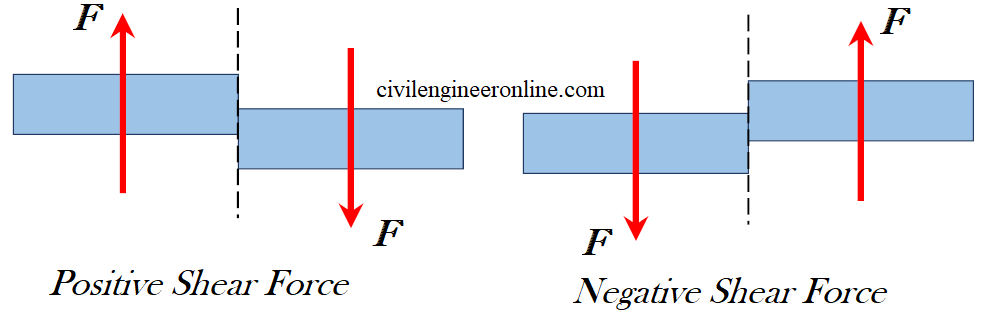
Don't Be Scared of the 'V'!
So, the next time you see that 'V' staring back at you from a shear force calculation, don't panic! Just remember that it's simply telling you about the internal resistance of a beam to being sheared in half. It's a critical piece of information that helps engineers design safe and strong structures.
Learning this stuff can be a bit like trying to juggle chainsaws at first, but I promise, with a little practice, you'll be wielding those shear force diagrams like a pro in no time! And who knows, maybe one day you'll be the one designing the next groundbreaking bridge (just make sure you get that 'V' right!).
Keep practicing, keep asking questions, and keep that engineering spirit alive! You've got this!
![Understand Shear Forces [An Engineering Explanation] - Structural Basics](https://www.structuralbasics.com/wp-content/uploads/2023/06/Shear-force-in-beam.jpg)