
What Does Led Mean For Lights

Ever gazed at a sparkling string of holiday lights, or felt the crisp glow of a modern desk lamp, and wondered about the magic inside? You're likely enjoying the brilliance of an
LED, a tiny marvel that has completely changed how we light our world. But what does that little three-letter acronym actually mean for the everyday glow in your life?
Before these clever little lights came along, most of us grew up with the familiar warmth of the incandescent bulb. Remember those? They were charming, but a bit like a tiny sun in a glass sphere.
They got incredibly hot, were fragile to the touch, and loved to gobble up electricity. Changing a hot bulb often felt like a daring act of bravery, or a quick game of "don't burn your fingers!"
Must Read
Then, quietly but powerfully, the LED stepped onto the scene. It stands for Light Emitting Diode. Now, don't let those big words scare you!
Think of a diode as a tiny, one-way street for electricity. When electricity flows down this special street in the right direction, a wonderful thing happens: it creates light.
It’s a bit like a miniature, super-efficient light factory, tucked away in a small package. And the best part? It barely breaks a sweat while doing its job.
One of the first things you notice about an LED is how incredibly
cool it is to the touch. No more yelping and dropping a hot bulb when you try to change it!
This coolness isn't just a comfort; it's a sign of incredible efficiency. Unlike old bulbs that wasted most of their energy as heat, LEDs turn almost all their energy into actual light.

Imagine a tiny dancer who puts all their energy into their moves, without sweating at all. That's your LED light, gracefully illuminating your space.
Another delightful surprise is their
durability. Old bulbs often shattered with a minor bump, leaving you with glass shards and a dark room. LEDs, on the other hand, are remarkably tough little cookies.
They don't have a delicate filament to break, nor a fragile glass vacuum. They're solid-state devices, which is a fancy way of saying they're built strong and compact.
This makes them perfect for everything from rugged outdoor lights to playful fairy lights that can withstand a playful tug.
Have you ever been amazed by the vibrant, pure colors of modern festive lights? That's another gift from the LED world. Old bulbs needed colored glass or plastic filters to create hues, often dimming the light in the process.
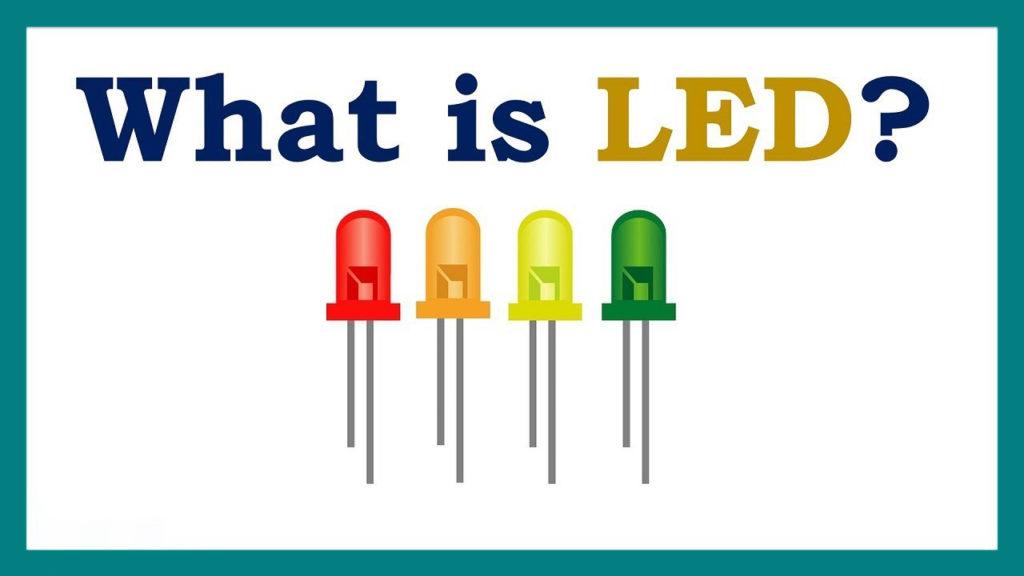
LEDs, however, can inherently produce different colors of light themselves. Red LEDs simply emit red light, blue LEDs blue light, and so on.
This means brighter, richer colors that pop with a magical intensity. It’s like having a painter who can create any color from pure light itself, without mixing paints.
Think of the stunning displays at concerts or the customizable mood lighting in smart homes. All that vibrant magic is thanks to the fundamental color-producing ability of the LED.
The practical benefits of LEDs are truly heartwarming. Perhaps the most celebrated is their
energy-saving superpower. Because they waste so little energy as heat, they consume significantly less electricity.
This translates directly into lower electricity bills for your household. It's like finding extra cash in your pocket every month, just for lighting your home!
Beyond your wallet, this energy efficiency is a huge win for our planet. Less electricity used means less energy needs to be generated, reducing our carbon footprint.
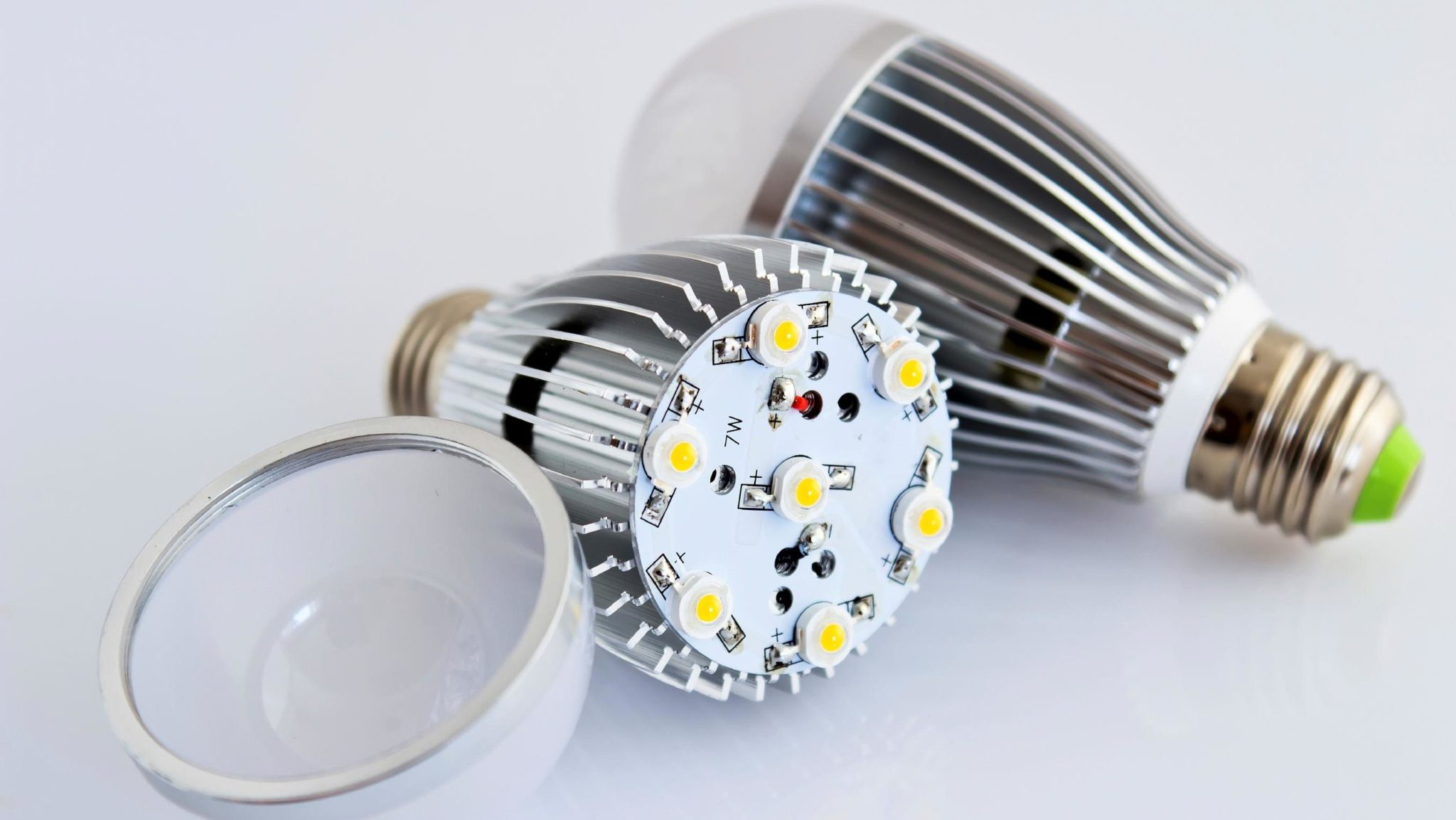
Every time you flick on an LED light, you're making a small, positive impact on the environment. It's a feel-good choice that literally brightens the future.
Then there's the sheer
longevity. Traditional bulbs had a lifespan measured in hundreds, maybe thousands, of hours. LEDs? We're talking tens of thousands of hours.
What does this mean for you? Less time on a wobbly ladder trying to reach a ceiling fixture. Less frequent trips to the store to buy replacement bulbs.
It means turning on a light and almost forgetting it exists, knowing it will reliably glow for years and years. This quiet dependability is a true relief in a busy world.
The small size of LEDs has also unleashed a wave of creative possibilities. Imagine the tiny lights woven into fabric, or flexible strips that trace the contours of a room.
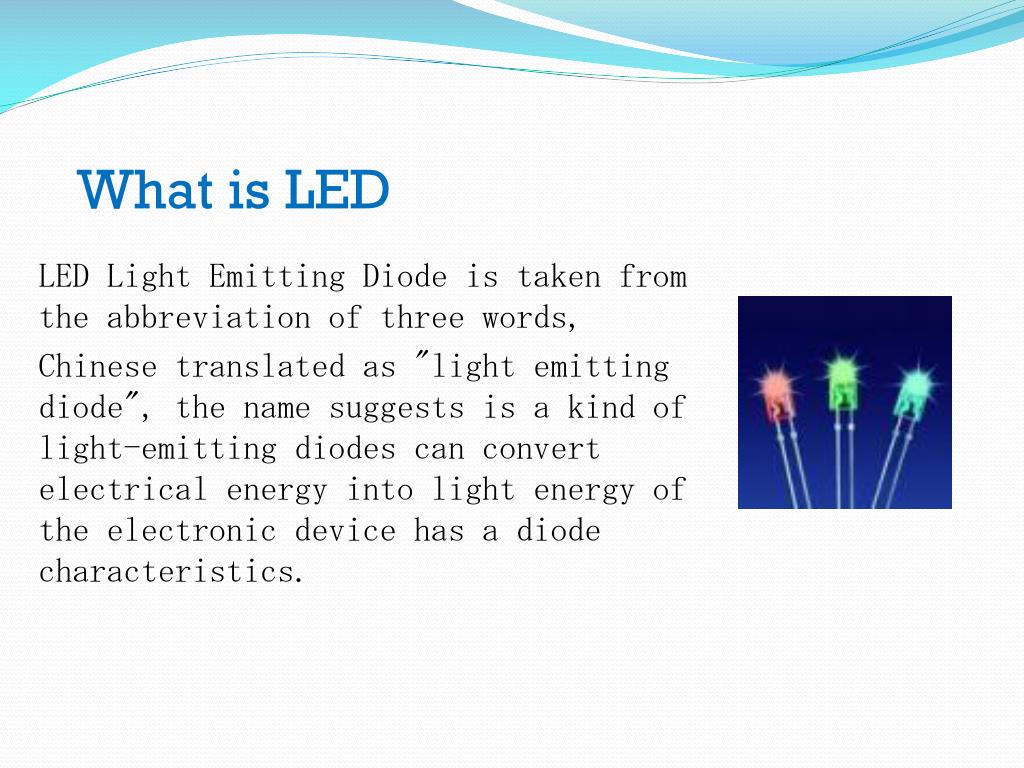
They can be so small that they blend seamlessly into decor, providing hidden illumination. This has led to incredible design freedom, allowing light to become an integral part of architecture and art.
From whimsical fairy lights in a child's bedroom to sophisticated under-cabinet lighting, the diminutive stature of the LED means light can go almost anywhere imagination takes it.
So, what does LED mean for lights? It means a transformation. It means goodbye to scorching hot bulbs and hello to safe, cool light.
It means saying farewell to constant bulb changes and welcoming years of reliable illumination. It means less money spent on electricity and a smaller impact on our precious planet.
It's a story of humble technology making a huge, positive difference in our daily lives. The next time you switch on a light, take a moment to appreciate the tiny, powerful Light Emitting Diode.
It's not just a light bulb; it's a testament to human ingenuity, offering a brighter, cooler, and more sustainable glow. It’s a little piece of modern magic, quietly making our world a more luminous place, one tiny beam at a time.