
What Does Ferrous And Nonferrous Metals Mean
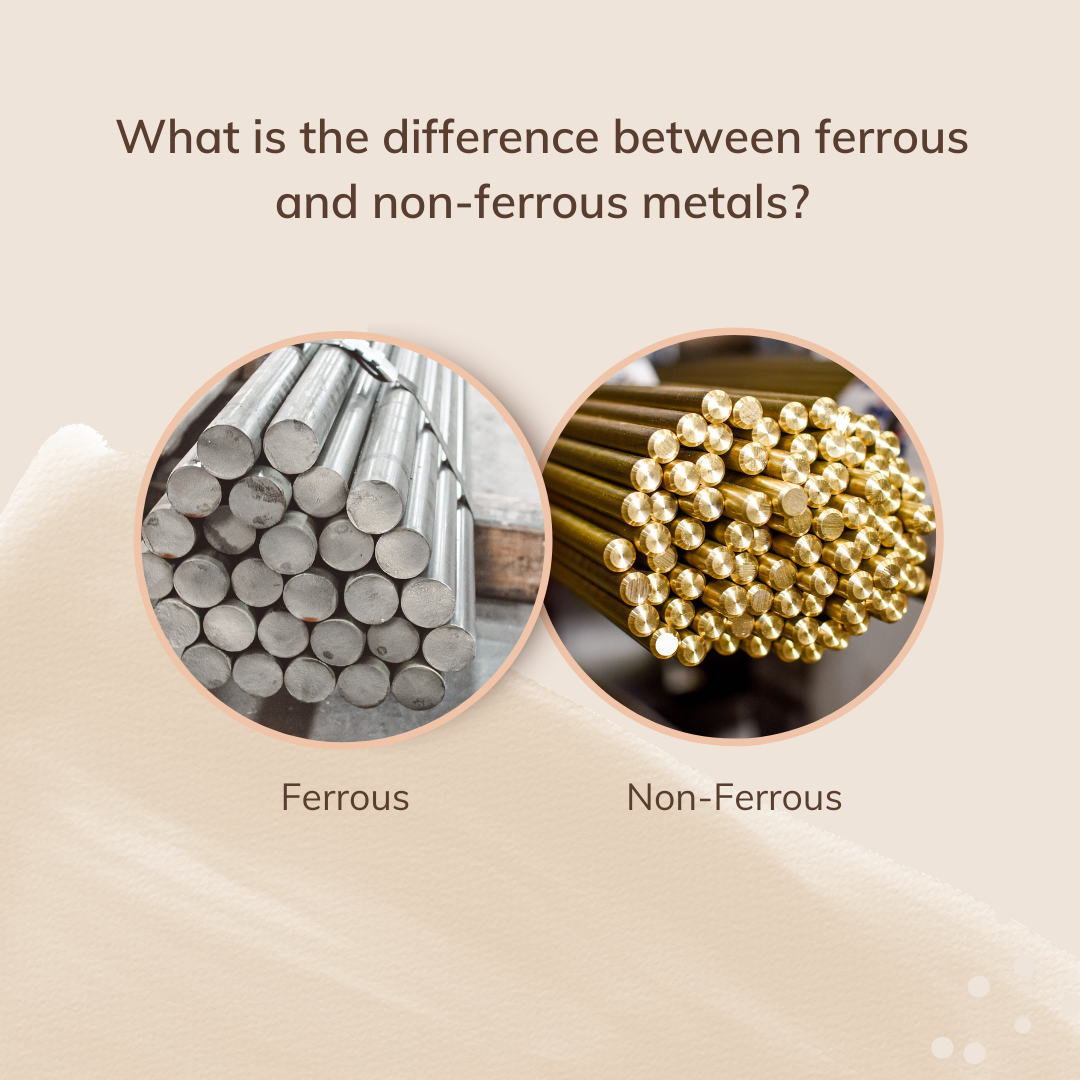
Ever stumbled across the terms "ferrous" and "nonferrous" when someone's chatting about metal? Maybe you were pricing out some new gutters, or admiring a shiny sculpture? It sounds kinda sci-fi, right? Like something out of a laboratory. But trust me, it's way simpler – and more interesting – than you think!
Basically, it all boils down to whether or not the metal contains… iron! That’s it. Seriously.
Ferrous: The Iron Clan
So, ferrous metals are those that do contain iron. Think of "ferrous" as "iron-ish." Why is this important? Well, iron gives ferrous metals some pretty distinct characteristics.
Must Read
The most obvious one? They're usually magnetic. Grab a fridge magnet and stick it to something that looks like metal. If it sticks, chances are good it's a ferrous metal. But not always! More on that later.
Another key characteristic is that they're generally prone to rust. That reddish-brown flaky stuff that appears on old cars and outdoor furniture? That’s iron oxide, AKA rust, doing its thing. Iron, when exposed to oxygen and moisture, gets a little… needy. Think of it like a celebrity craving attention!
Examples of Ferrous Metals:

- Steel: The superhero of construction! Strong, versatile, and used in everything from skyscrapers to cars. Think Superman!
- Cast Iron: Your grandma's trusty skillet? Probably cast iron. Tough as nails and retains heat like a champ. Like a wise old wizard!
- Wrought Iron: Fancy gates, decorative fences, that cool vintage furniture? Wrought iron. A little more decorative than steel. More like a skilled artist.
So, why is rust a downside? Well, it weakens the metal over time. That's why protecting ferrous metals from the elements is so important. Painting, galvanizing (coating with zinc), and powder coating are all ways to give these metals a fighting chance against the dreaded rust monster.
Nonferrous: The Iron-Free Zone
On the flip side, we have nonferrous metals. These are the rebels of the metal world – they don't contain iron. That means, for the most part, they're not magnetic and are generally more resistant to rust. Think of them as the cool, calm, and collected metals that don’t sweat the small stuff (like a little water exposure).
This resistance to corrosion makes them super valuable in applications where longevity and low maintenance are key. Imagine using a rusty metal for underwater pipes! Yikes!
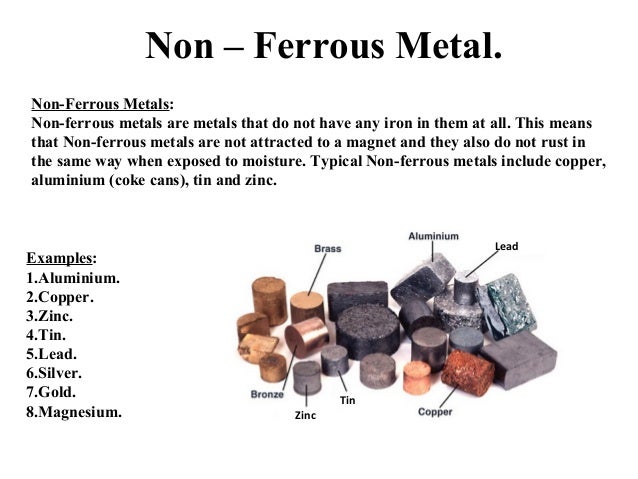
Examples of Nonferrous Metals:
- Aluminum: Lightweight, strong, and recyclable. Think soda cans, airplanes, and window frames. Like a nimble acrobat!
- Copper: Excellent conductor of electricity. Wiring, plumbing, and pennies! The reliable workhorse.
- Brass: A mix of copper and zinc. Used in musical instruments, decorative hardware, and ammunition casings. Shiny and dependable like a trusty sidekick.
- Gold: Shiny, precious, and corrosion-resistant. Jewelry, electronics, and, well, being gold! Like a flamboyant movie star.
- Silver: Another shiny and precious metal. Used in jewelry, silverware, and photography. It's more practical than gold in some ways!
Why Does It Matter?
Okay, so we've defined them. But why should you care? Well, understanding the difference between ferrous and nonferrous metals can be surprisingly helpful in a bunch of situations.
Recycling: Knowing which metals are which makes sorting and recycling much easier. Recycling saves energy and resources, so that’s a win for the planet (and your karma!).

Home Improvement: Choosing the right materials for your projects. Do you need something strong and magnetic for a structural component (ferrous)? Or something lightweight and corrosion-resistant for outdoor trim (nonferrous)?
Buying & Selling Scrap Metal: If you're into scavenging or flipping scrap, understanding the difference will help you get the best price. Nonferrous metals generally fetch a higher price than ferrous metals due to their properties and scarcity.
Creative Projects: Artists and makers can leverage the unique properties of each type of metal for sculptures, jewelry, and other amazing creations.

A Little Caveat (Because Life Isn't Always Simple)
Okay, remember when I said ferrous metals are usually magnetic? Here's the exception: Certain types of stainless steel are non-magnetic! It all depends on the specific alloy (the mix of metals used). So, don't rely solely on a magnet test. Just think, even stainless steel has its secrets!
Also, some nonferrous metals can develop a patina, a surface layer that forms over time due to oxidation. This isn't the same as rust; it's often a protective layer that actually enhances the metal's beauty and longevity. Think of the Statue of Liberty's green hue – that’s a copper patina!
So there you have it! Ferrous and nonferrous metals, demystified. Hopefully, the next time you hear these terms, you won't feel like you're eavesdropping on a secret science club. You’ll know that it is just a friendly way to classify the metals that shape our world!