What Direction Should The Fan Move In The Summer

Have you ever stood beneath a ceiling fan, tinkering with the remote, and wondered which way it should really be spinning? It's one of those little everyday mysteries that most of us don't give much thought to, but understanding the science behind fan direction can actually make a noticeable difference in your comfort and even your energy bill! So, let's dive in and explore the swirling world of ceiling fan direction, especially as the summer heat bears down.
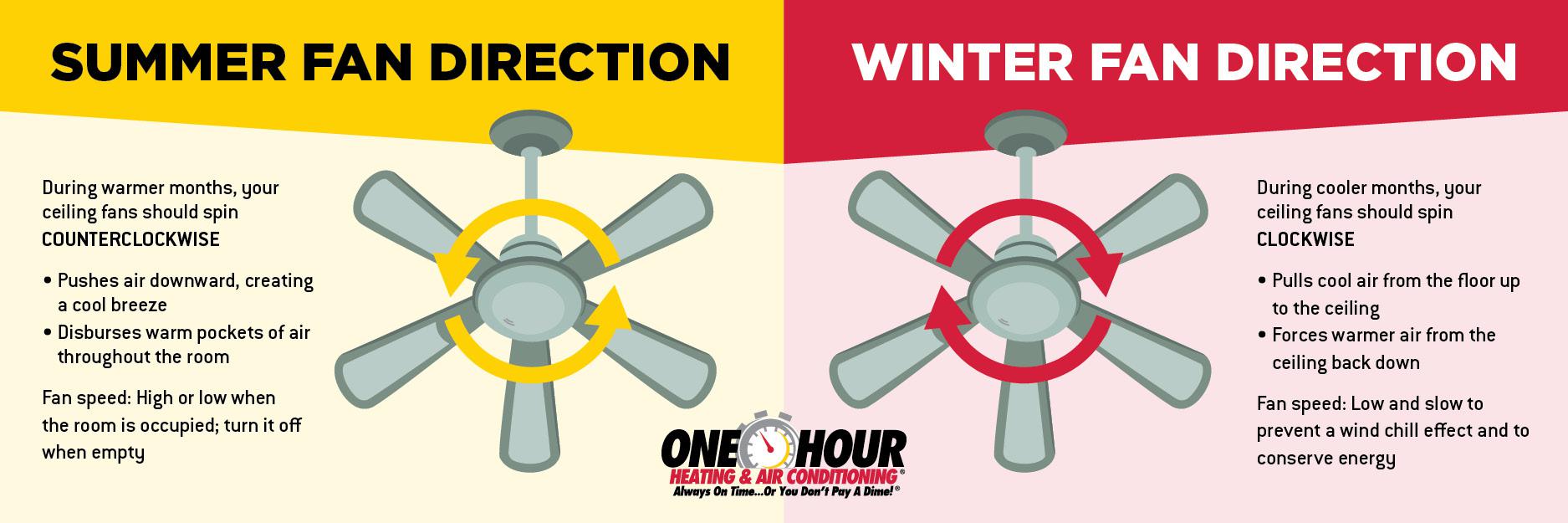
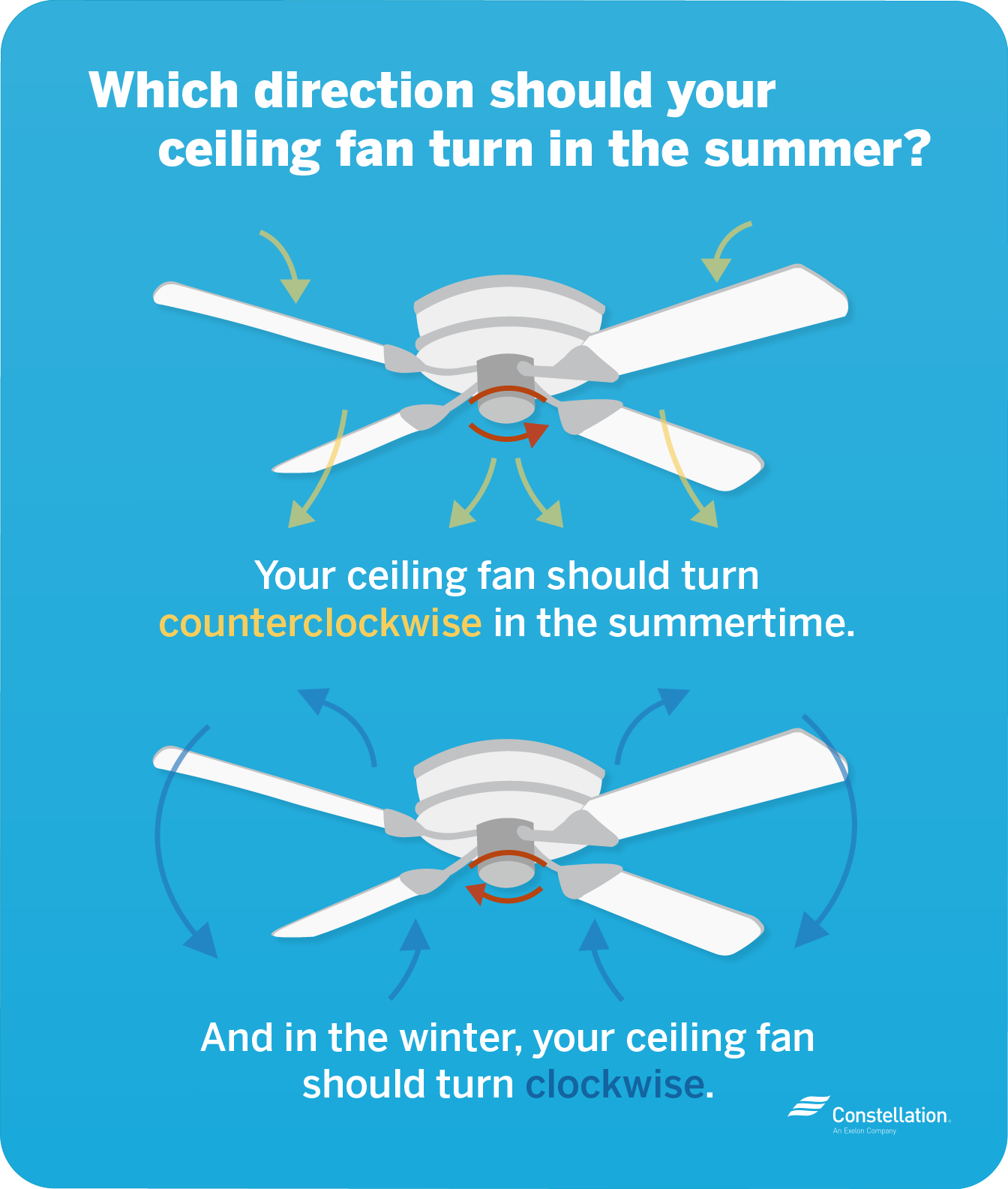
The primary purpose of a ceiling fan, no matter the season, is to circulate air. But the way it achieves this, and the effect it has, changes depending on the direction of rotation. In the summer, the goal is to create a cooling breeze. We achieve this by having the fan turn counter-clockwise (as viewed from below). This pulls air up and pushes it down, creating a downdraft. This breeze doesn't actually lower the temperature of the room, but it does cool you down. How? By aiding in the evaporation of sweat from your skin. This evaporation process requires energy, and that energy comes from your body heat, leaving you feeling cooler.
Think of it like standing near a lake on a warm day. The breeze coming off the water feels refreshing, even though the air temperature might be the same as it is further inland. The movement of the air helps evaporate moisture, providing a natural cooling effect. The counter-clockwise fan direction mimics this process within your home.
Must Read
This principle extends beyond just home comfort. Imagine a classroom setting. If the room is feeling stuffy and students are struggling to focus, a strategically placed ceiling fan set to the correct direction can improve air circulation and create a more comfortable learning environment. Similarly, in a gym, ceiling fans can help dissipate heat and moisture, making workouts more bearable.
Even in daily life, understanding fan direction can be surprisingly useful. Perhaps you're working in a garage or shed without air conditioning. By ensuring the fan is spinning counter-clockwise, you can create a more comfortable workspace. Or, consider outdoor spaces like patios. While ceiling fans are less common outdoors, portable fans can be positioned to direct a cooling breeze towards you.
![Ceiling Fan Directions for Summer vs Winter [Infographic]](https://airflowacademy.com/wp-content/uploads/2021/06/Ceiling-fan-directions-infographic-768x1425.jpg)
So, how can you explore this further? It's incredibly simple! First, locate the direction switch on your ceiling fan motor. It's usually a small slider switch. Then, turn the fan on and observe which way the blades are rotating. If it's not counter-clockwise (when viewed from below), simply switch the direction and try again. Experiment with different speeds to find the setting that provides the most comfortable breeze. You might even notice a difference in how your air conditioner performs; the improved air circulation can help it cool the room more efficiently, potentially saving you money on your energy bill!
Don't underestimate the power of a well-directed ceiling fan! It's a simple yet effective way to enhance your comfort and potentially reduce your energy consumption during the warmer months. So, go ahead, give it a whirl and experience the difference.