What Direction Should Ceiling Fan Be In Summer

Okay, picture this: It's July, you're melting faster than an ice cream cone in Arizona, and you’re convinced your AC is conspiring against you. You’re sitting directly under the ceiling fan, willing it to unleash some arctic blast, but…nothing. Just a gentle, almost mocking, breeze. Sound familiar? We’ve all been there. (Seriously, haven't we all?)
Turns out, that ceiling fan might not be failing you. It's just...misdirected. And that, my friends, is the whole point of this little chat we're about to have: What direction should your ceiling fan be spinning in during the sweltering summer months to actually cool you down? Hint: it's not random!
The Downward Draft: Your Summer BFF
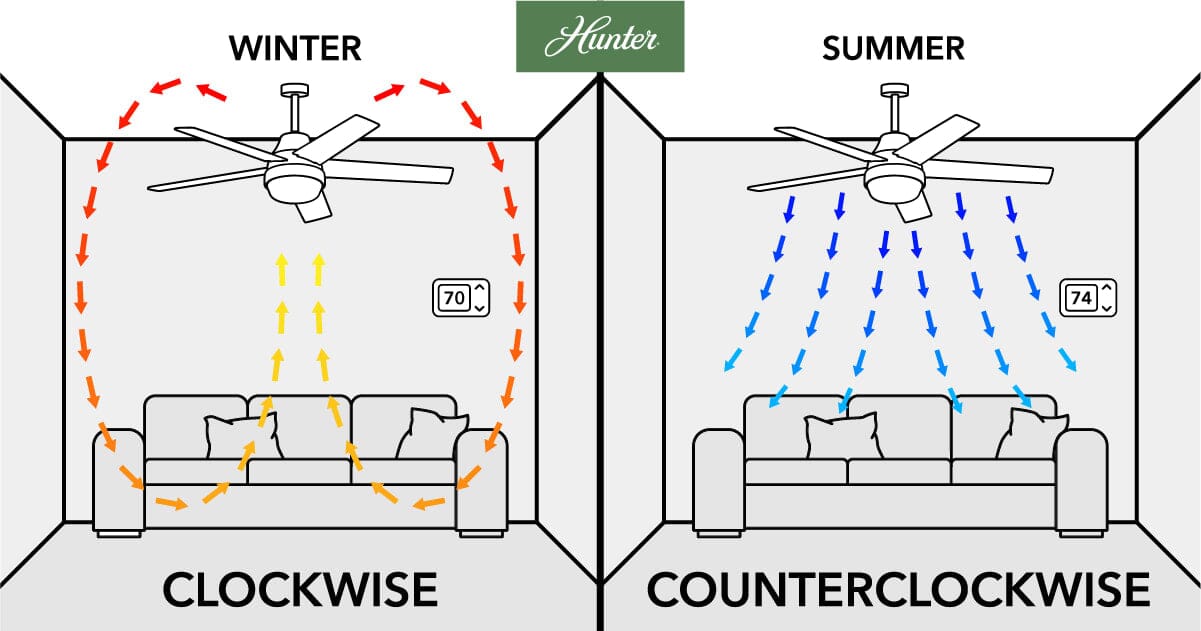
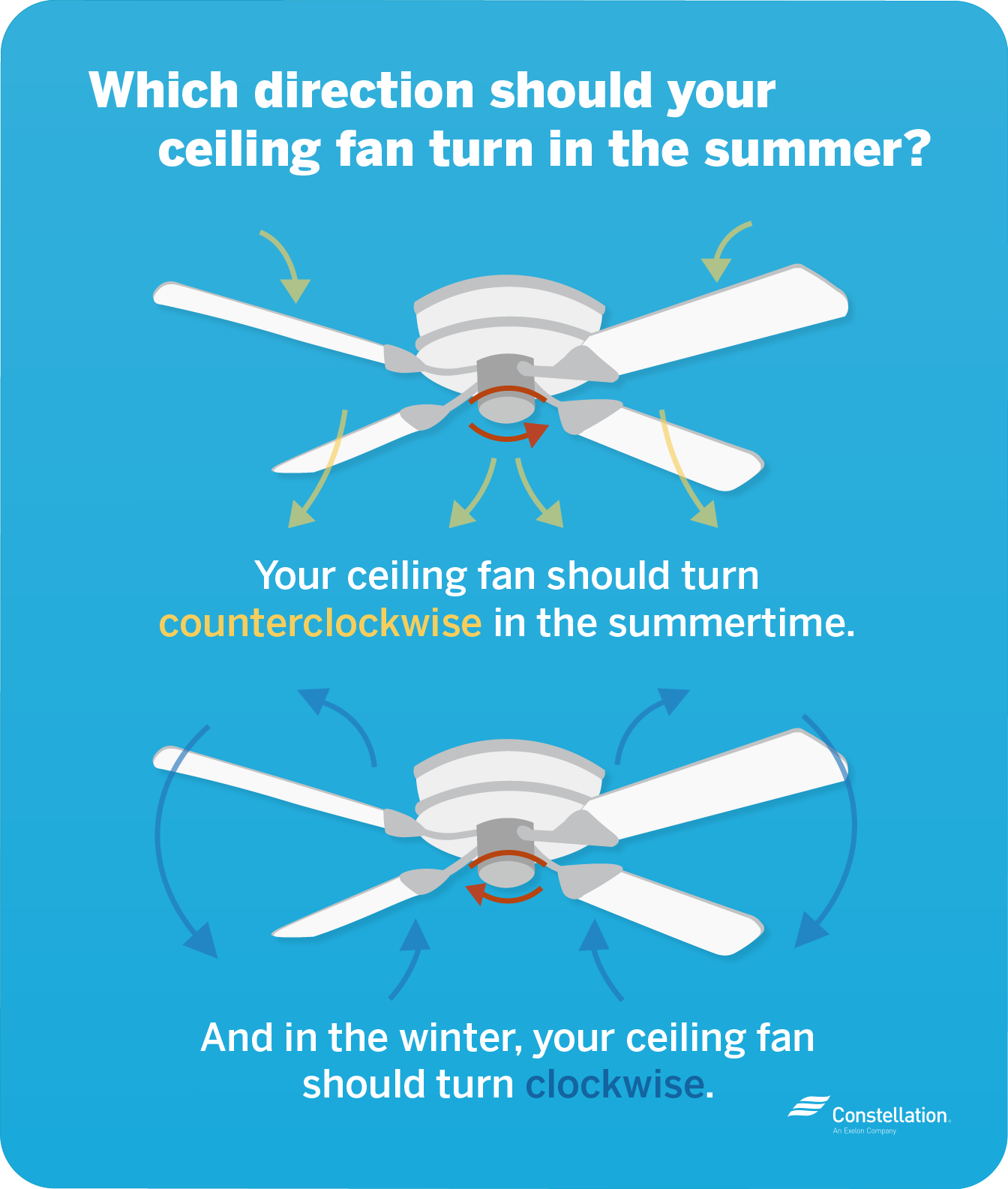
Here's the lowdown: In the summer, your ceiling fan should be spinning counter-clockwise when you're looking up at it. Why? Because this creates a downward airflow. Think of it as a gentle wind, pushing the air straight down and onto your skin.
Must Read
This downward breeze doesn't actually cool the air (sorry to burst your bubble), but it does something even better: it evaporates the moisture on your skin. And that, my friends, is what creates the cooling effect. It's like your own personal, low-tech swamp cooler. (Don’t worry, you won’t actually feel like you’re in a swamp. Hopefully.)
Think of it this way: You know how you feel cooler when there's a breeze after you get out of the shower? Same principle!

How to Tell Which Way It's Spinning (Without Getting Dizzy)
Alright, so you're convinced. Counter-clockwise is the way to go. But how do you know which way it's currently spinning? Don't just stare at it until you get dizzy (trust me, been there, done that). There are a couple of easy tricks:
- Look for a Switch: Most ceiling fans have a small switch on the motor housing. This switch controls the direction of the fan. Usually, one position is for summer (counter-clockwise) and the other is for winter (clockwise).
- Observe: If you can't find a switch (or you're not sure which way is which), just stand under the fan and observe. If you feel a breeze blowing downward, you're golden! If not, flip that switch!
(Pro tip: If you’re still unsure, consult the owner's manual. Yes, I know, who reads those things? But seriously, it might actually be helpful.)
Why Does Direction Matter? (The Science-y Bit)
Okay, let's get a little science-y for a second (but I promise, I'll keep it brief). Remember what we said about the downward draft evaporating moisture? That's key. The human body cools itself through evaporation. When you're hot and sweaty, that sweat evaporates, taking heat away from your body.
By creating a downward airflow, the ceiling fan helps accelerate this evaporation process, making you feel cooler. It's not magic, it's just good old-fashioned physics. (Don’t worry, there won't be a quiz later.)

But Wait, There's More! (Energy Savings!)
Here's the really cool part (pun intended): Using your ceiling fan correctly can actually save you money on your energy bill! By circulating the air effectively, you might be able to bump up the thermostat a few degrees without sacrificing comfort. And every degree counts! (Think of all the extra ice cream you can buy with those savings!)
So, there you have it. A (hopefully) not-too-boring explanation of why your ceiling fan direction matters in the summer. Now go forth, check that fan direction, and enjoy the cool, sweet relief of a properly directed breeze. You deserve it! (And maybe a scoop of ice cream too.)