
What Direction Should A Fan Run In The Summer

Ever stare at your ceiling fan and wonder if it's truly doing its job? Summer's here. You're hot. Your fan's spinning. But is it spinning the right way? It's a surprisingly common question. And the answer? Well, that's part of the fun!
The Great Fan Direction Debate
Okay, maybe it's not a debate on par with pineapple on pizza. But trust me, the question of fan direction gets people talking. Think about it. We all want to be cool. We spend money on fans. We deserve maximum coolness, right?
The trick lies in understanding airflow. Your ceiling fan isn't just decorative (though, some are pretty snazzy, let's be honest). It's a machine designed to move air. And how it moves that air makes all the difference. It’s kinda like figuring out how to use chopsticks!
Must Read
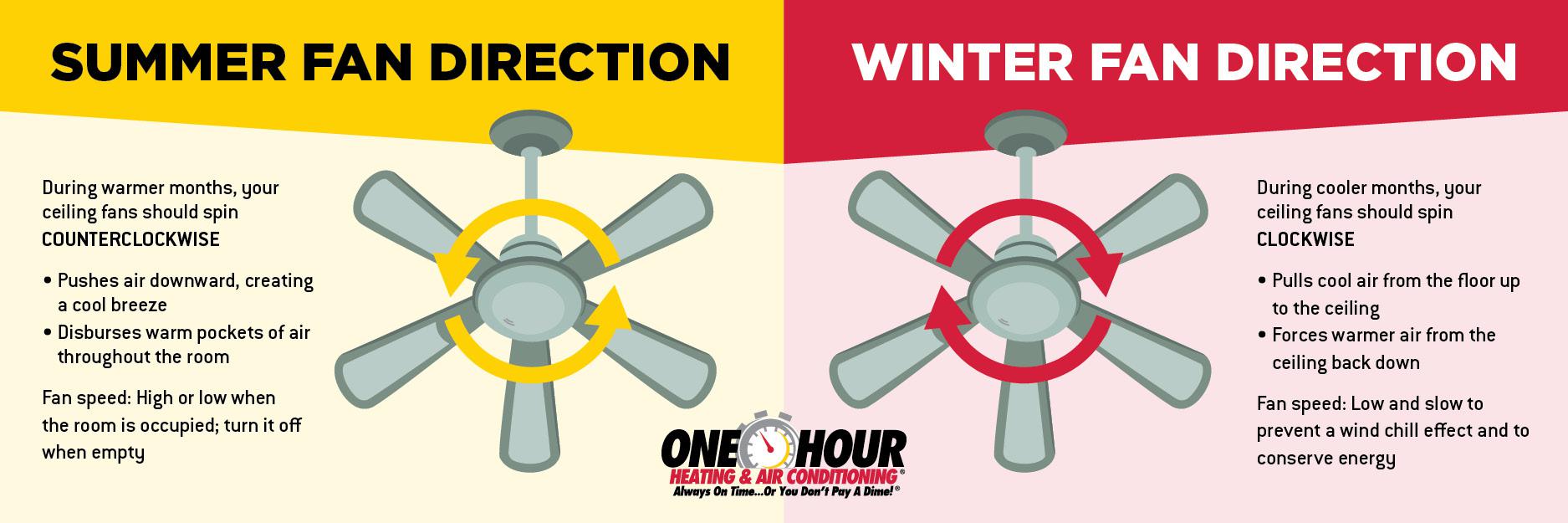
So, here's the big reveal: In the summer, your ceiling fan should be spinning counter-clockwise when you look up at it. Easy peasy, right?
But why? Why not clockwise? What magical force dictates the direction of optimal summer coolness? Stick with me!
The Science of Spinning (Sort Of)
When your fan spins counter-clockwise, it pushes air downward. This creates a lovely breeze that you feel directly. That breeze helps evaporate sweat from your skin. And evaporation? That's how your body cools down. It's like a natural air conditioner, powered by your own perspiration! Sounds gross, but it's actually pretty ingenious.
Imagine standing in front of a gentle waterfall (okay, maybe a strong sprinkler). The water hits you, and you feel cooler, right? That's the evaporation at work! Your fan is mimicking that effect. Pretty clever, huh?
Clockwise rotation, on the other hand, is typically for winter. It pulls air upward, which helps distribute warm air that's collected near the ceiling. But we'll save that discussion for another, frostier day.
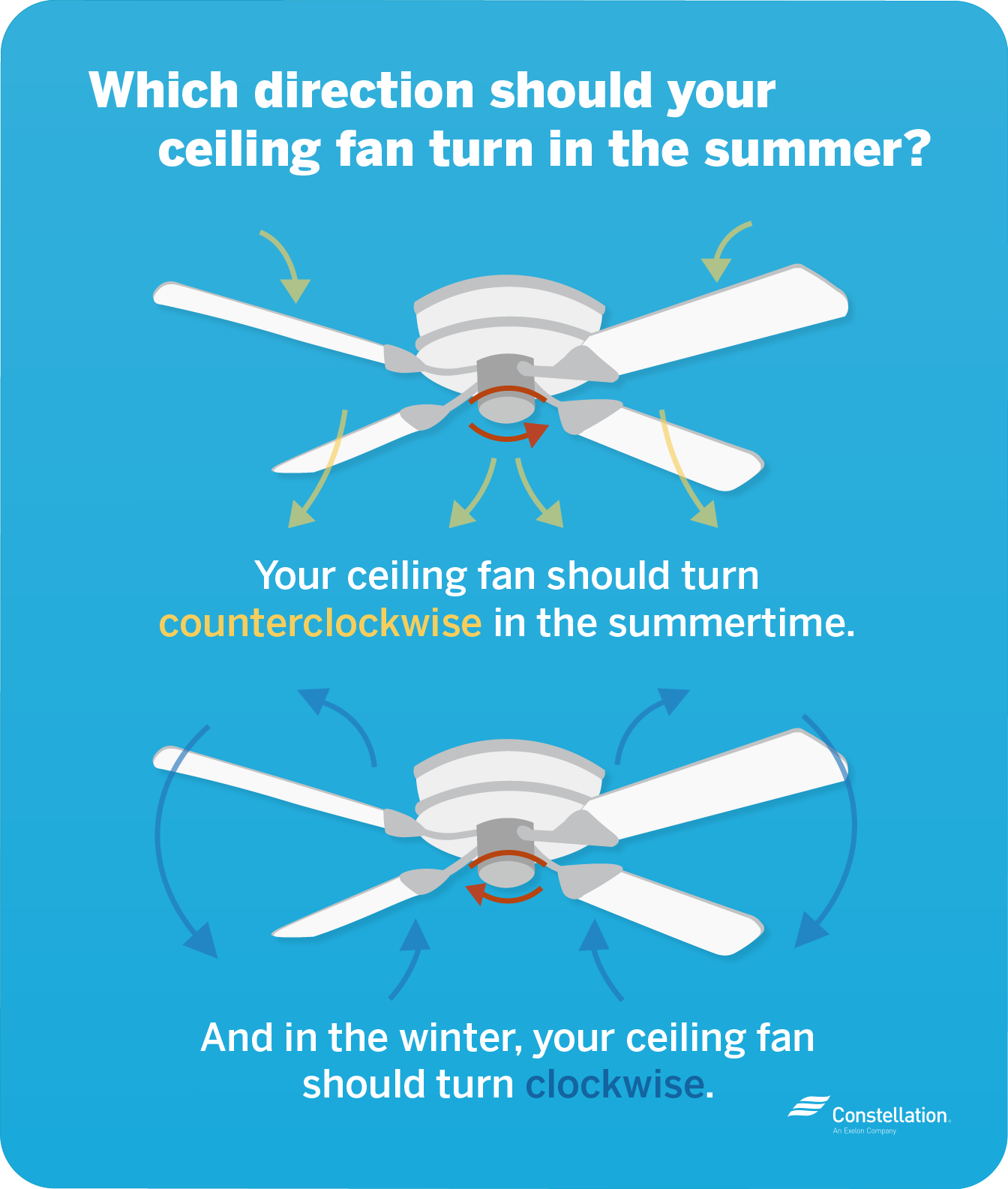
Of course, every fan is different. Some have remotes. Some have pull chains. Some even have little decorative acorns hanging down. But the principle remains the same: counter-clockwise for summer, to push air down and cool you off.
The Thrill of the Test
Here's the fun part. Don't just take my word for it. Become a fan direction detective! Look at your fan. Figure out how to change its direction (usually a switch on the motor housing). Then, run it in both directions. See which one feels better. Do you feel a more pronounced breeze? Do you feel cooler overall?

This is a scientific experiment you can conduct from the comfort of your own couch! (Or, you know, standing underneath your fan.) There’s no right or wrong, only data collection and personal preference.
"The best way to know is to try it yourself!" - Anonymous Fan Enthusiast
And hey, if you accidentally change the direction to clockwise and suddenly feel a chill in July, don't blame me! Just switch it back. It’s all part of the learning process. Think of it as a mini-adventure in home climate control.
Beyond the Breeze
The correct fan direction can also save you money. By creating a cooling effect, you might be able to bump up your thermostat a few degrees. That means less work for your air conditioner. And less work for your air conditioner means a lower energy bill. Ka-ching!

So, before you resign yourself to another sweaty summer, take a look at your ceiling fan. Is it spinning counter-clockwise? If not, make the switch! You might be surprised at the difference it makes. Plus, you'll finally know the answer to that age-old question. And knowledge is power. (Especially the power to stay cool.)
And remember, even if you don't notice a huge difference, at least you can impress your friends with your newfound knowledge of airflow dynamics. Okay, maybe not impress. But at least you'll have something to talk about at your next summer barbecue!
Happy spinning!