
What Direction Is Fan In Summer
Ah, summer! That glorious golden orb in the sky is doing its thing, turning up the heat, and sending us all in search of that sweet, sweet relief. We crank the AC, reach for an iced tea, and inevitably, we turn to our trusty fans. But pause for a moment, fellow comfort-seeker. When it comes to those ceiling stalwarts, or even your floor-standing friends, are you sure they’re blowing in the right direction?
It sounds like a small detail, but getting your fan's rotation right can make a surprisingly big difference in your home’s comfort level and even your energy bill. So, let’s demystify the breeze, shall we?
The Great Spin Debate: Up or Down?
For ceiling fans, there are two primary directions of rotation, and each serves a distinct purpose. Think of it like a seasonal wardrobe for your home appliances.
Must Read
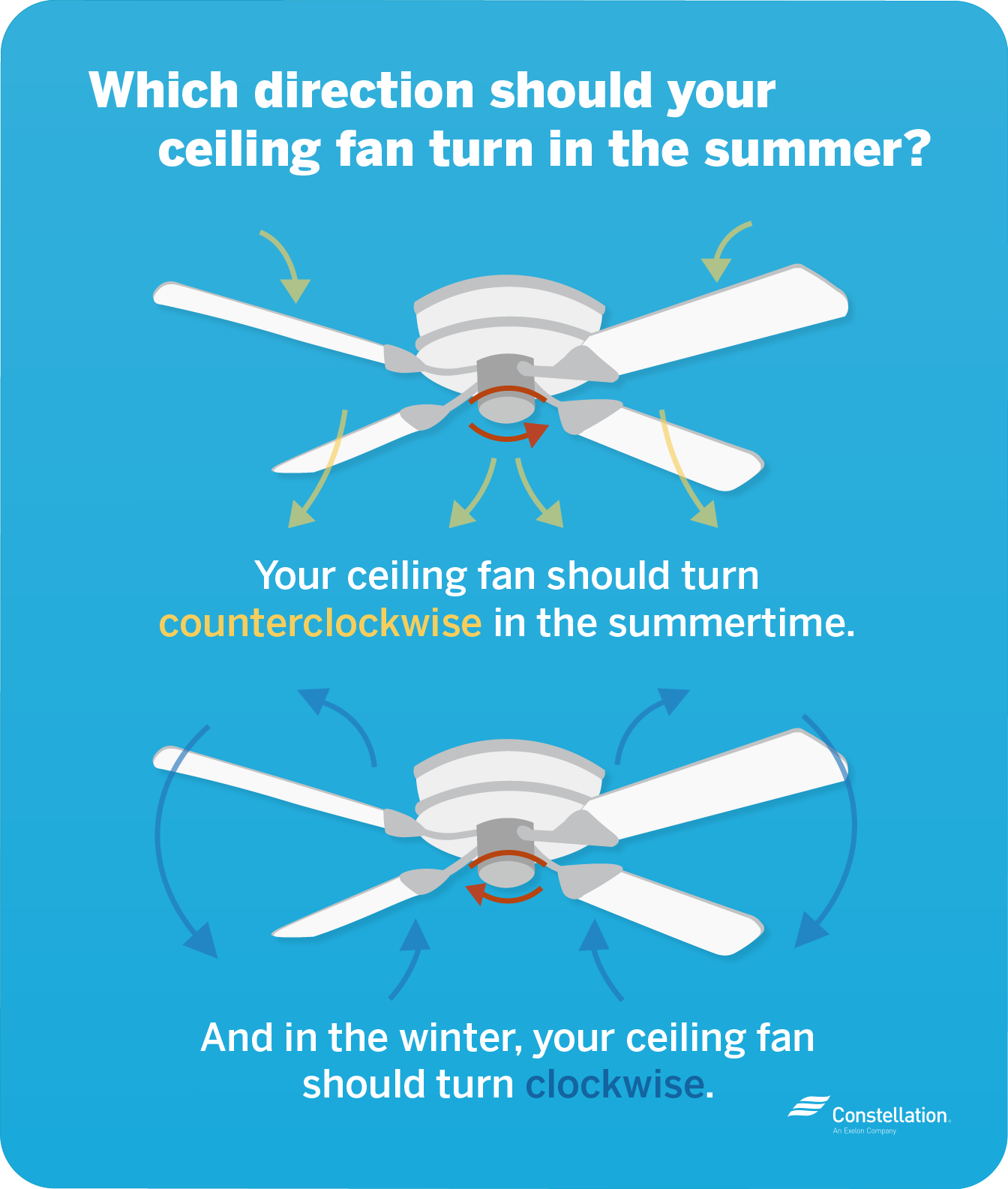
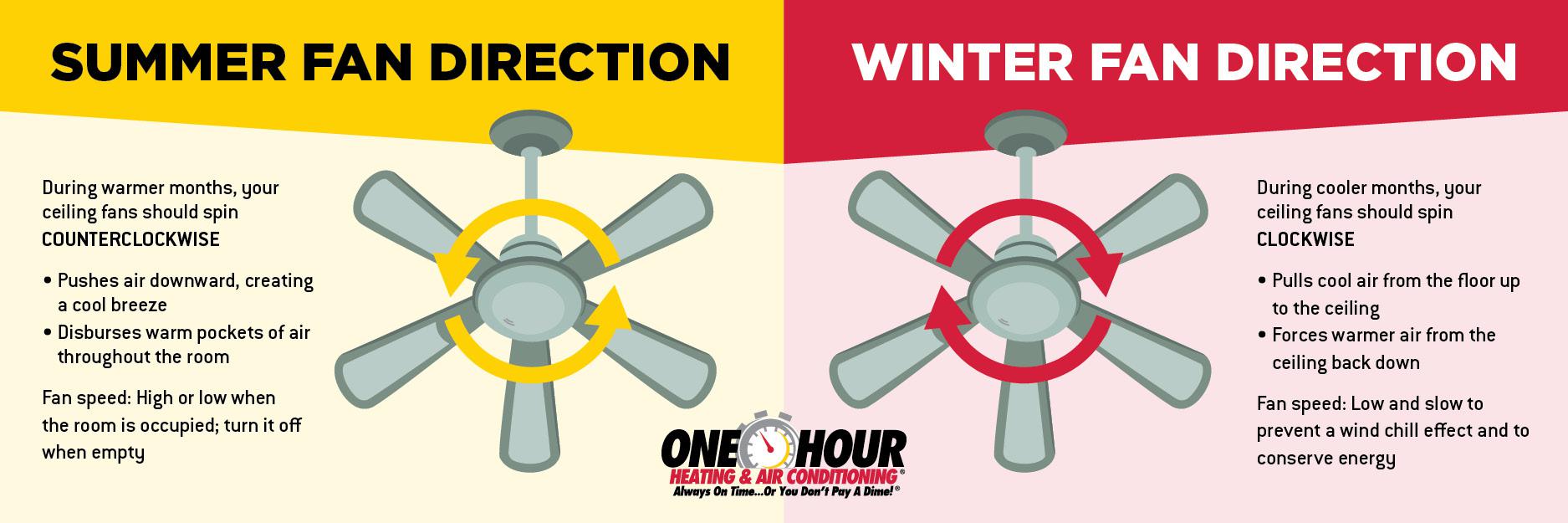
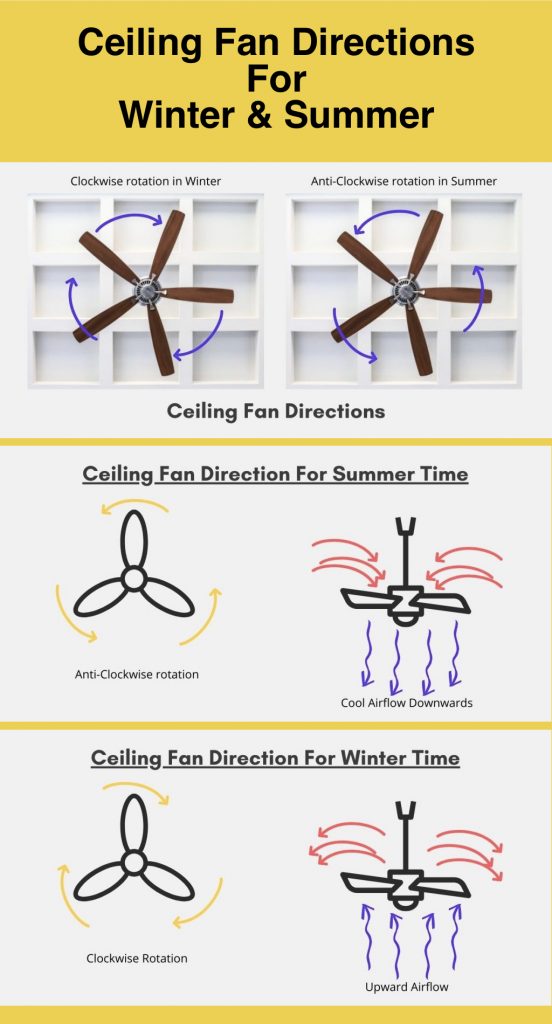
Summer Mode: Counter-Clockwise, Pushing Air DOWN
This is your golden ticket to summer serenity. When your ceiling fan blades are spinning counter-clockwise (imagine looking up at the fan and seeing the blades move left to right), they are designed to push air straight down. Why is this magic?
- The Wind-Chill Effect: It’s not actually cooling the room itself, but rather creating a breeze that makes you feel cooler. This moving air evaporates moisture from your skin, mimicking the sensation of a refreshing natural wind. It's the same principle as stepping out of a pool and feeling a chill as the water evaporates.
- Energy Savings: Because you feel cooler, you can often set your thermostat a few degrees higher (we're talking 2-4 degrees Fahrenheit!) and still feel comfortable. This seemingly small adjustment can lead to significant savings on your air conditioning bill – sometimes up to 15-20% according to energy experts. That's more money for ice cream!
Winter Mode: Clockwise, Pulling Air UP (A Quick Detour)
Just for context, when a ceiling fan spins clockwise, it pulls air up towards the ceiling. This is ideal for winter, as it helps to redistribute warm air that rises, pushing it back down along the walls. But for summer, we want that direct, downward breeze. Remember, down for summer!
How to Check and Change Your Ceiling Fan Direction
Don't worry, you don't need to be an engineer. Most ceiling fans have a small switch on the motor housing – that's the part closest to the ceiling. It’s usually a little toggle that slides left or right. Make sure the fan is turned off completely before you reach up to adjust it. Once you’ve flipped the switch, turn the fan back on and observe the blade rotation. If you're looking up, a counter-clockwise spin means the leading edge of the blade is higher than the trailing edge.
Pro Tip: If you're unsure, stand directly under the fan. If you feel a distinct downward breeze, you're in business. If not, toggle that switch!
![Ceiling Fan Directions for Summer vs Winter [Infographic]](https://airflowacademy.com/wp-content/uploads/2021/06/Ceiling-fan-direction.jpg)
Beyond the Ceiling: Floor Fans and Strategic Placement
While ceiling fans are the kings of directional cooling, let's not forget their ground-level counterparts. Pedestal, box, and tower fans also play a crucial role. For optimal summer cooling:
- Cross-Ventilation Power: Position a fan near a window or door to draw cooler air in from outside during the evening, or to push hot air out. Creating a "wind tunnel" effect can work wonders.
- The Ice Bowl Trick: A classic for a reason! Place a bowl of ice or frozen water bottles in front of your floor fan. As the ice melts, the fan will blow a mist of super-chilled air into your space. It's like DIY air conditioning for pennies.
- Smart Placement: Aim your floor fans towards seating areas or beds, rather than just randomly blowing air. You want that direct hit of cooling relief where you need it most.
Fun Facts & A Little History
Did you know the first electrically powered ceiling fan was invented way back in 1882 by Philip Diehl? He was inspired by clockwork mechanisms! Early fans were often water-powered, using belts to turn multiple blades. Fast forward to today, and fans come with smart controls, remote access, and sleek designs. From simple hand fans used in ancient Egypt to our modern marvels, humans have always sought clever ways to beat the heat.
It's also worth noting that fans are generally considered more environmentally friendly than air conditioners due to their lower energy consumption. Every little bit helps our planet!
A Breath of Fresh Air, Literally
So, the next time summer rolls around (or even right now!), take a moment to check your fan's direction. It's a small, simple adjustment, but it speaks volumes about being mindful of our environment and maximizing our comfort. Just like knowing when to wear layers or choosing the right shoes for the day, understanding your fan's purpose empowers you to create a more pleasant living space.
Sometimes, the greatest comforts in life come from making these small, informed choices. So go ahead, flip that switch, feel that breeze, and enjoy a cooler, more efficient summer. You've just mastered a subtle art of daily living.
