
What Direction For Ceiling Fans In The Summer

Hey there, cool cats! Ever feel like your ceiling fan is just… spinning? Like it's putting in the effort but not actually making a dent in that summer heat? You're not alone. Turns out, there's a right way and a wrong way to use that whirling dervish above your head, especially when the temperature is climbing. So, let's get down to brass tacks: what direction should your ceiling fan be spinning in the summer?
Think of your ceiling fan as a tiny, personal weather system. It's not just a decoration (though some are pretty snazzy!). It's a tool to help circulate air and make you feel cooler. But like any tool, you gotta use it right. Imagine using a hammer to screw in a nail – frustrating, right? The same principle applies here.
The Downward Draft: Your Summer BFF
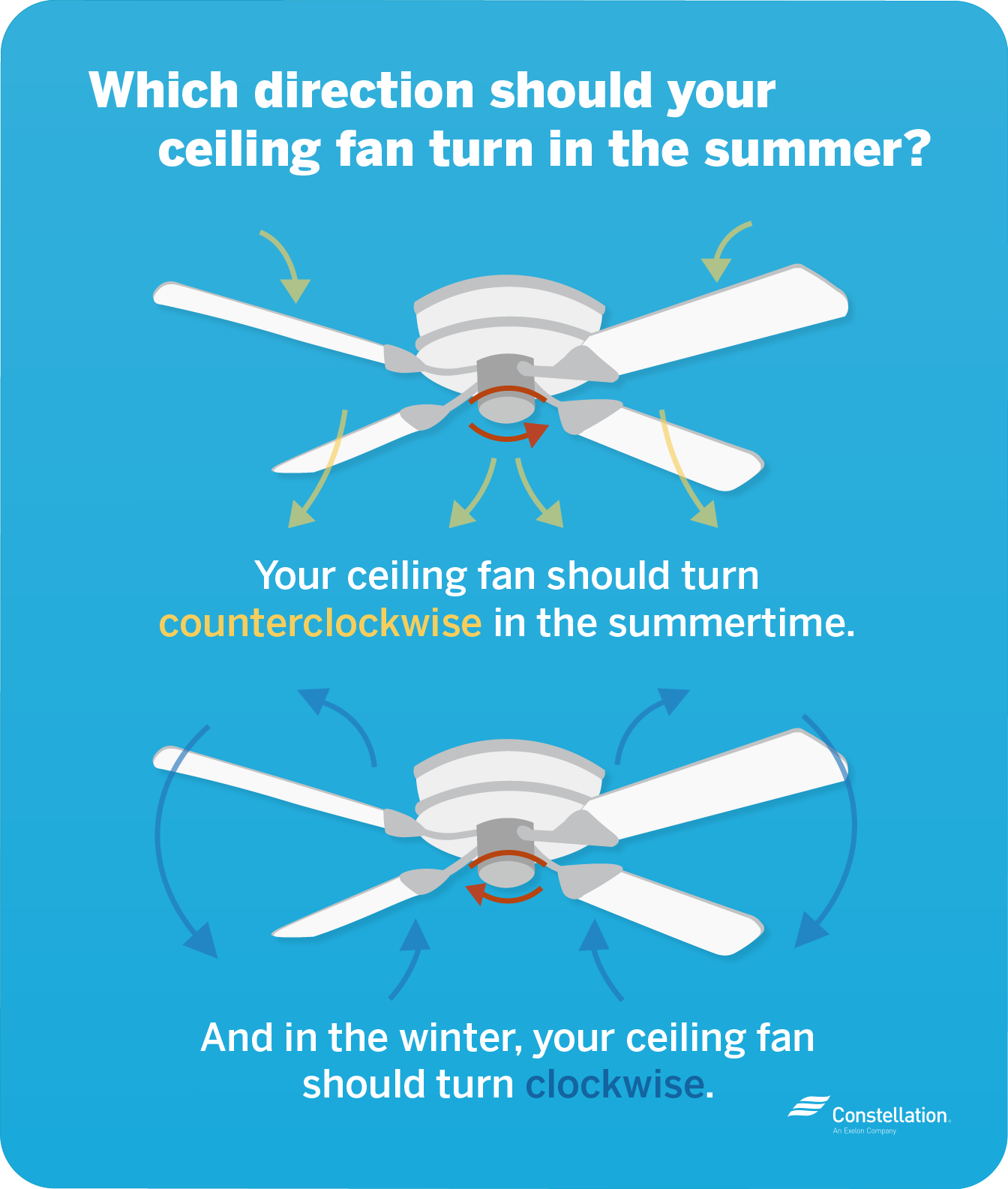
Okay, drumroll please… The correct direction for your ceiling fan in the summer is counter-clockwise. Yeah, I know, it might sound simple, but understanding why is where the magic happens.
Must Read
When your fan spins counter-clockwise, it creates a downward draft. This is key! Think of it like this: imagine you're standing under a waterfall. That rushing water feels incredibly refreshing, right? The downward draft from your ceiling fan is a similar concept. It pushes air down, creating a breeze that hits your skin.
But wait, there's more! This breeze doesn't actually cool the air. It just helps your body cool itself. It's all about the evaporative cooling process. When air moves across your skin, it helps sweat evaporate, which, in turn, lowers your body temperature. It’s like a personal, low-energy AC unit!

How To Tell If You're Doing It Wrong
So, how do you know if your fan is spinning in the right direction? Well, get up close and personal (carefully, of course!). Watch the blades as they spin. If they’re moving so that the leading edge of the blade is moving towards you, and the back of the blade is going away from you, that's counter-clockwise. You should feel a breeze if you stand directly under the fan.
If you're not feeling a breeze, or if you feel like the air is being pulled up, then your fan is likely spinning clockwise – the direction you want for winter (more on that later!).

Finding That Reverse Switch: The Quest Begins!
Most ceiling fans have a little switch located on the motor housing. It might be a slide switch or a toggle switch. This is the magic button that reverses the direction of the fan. Locate it (usually near the light fixture housing) and flip it to the other position.
Important safety tip: Make sure the fan is completely off before you flip the switch. You don't want to damage the motor or, worse, injure yourself. Safety first, my friends!
Once you've flipped the switch, turn the fan back on and check the direction of the airflow. Does it feel like a refreshing breeze? If so, congratulations! You've successfully mastered the art of the summer ceiling fan.
Why Not Just Crank Up The AC? (Good Question!)
Okay, so you might be thinking, "Why bother with all this fan direction stuff? Why not just blast the AC and be done with it?" Well, that's a valid question! But here's the thing: ceiling fans are incredibly energy-efficient. They use a fraction of the electricity that an air conditioner does.
Using your ceiling fan in conjunction with your AC can actually help you save money on your energy bill. You can set your thermostat a few degrees higher and let the fan do the work of circulating the cooled air. It’s like a tag-team effort to beat the heat!
![Ceiling Fan Directions for Summer vs Winter [Infographic]](https://airflowacademy.com/wp-content/uploads/2021/06/Ceiling-fan-directions-infographic-768x1425.jpg)
Beyond Summer: A Glimpse Into Winter Fan-atics
And speaking of winter... Did you know that ceiling fans can also be helpful in the colder months? By reversing the direction to clockwise, the fan gently pulls cool air up towards the ceiling, which then pushes the warmer air (that naturally rises) back down into the room. It's like a subtle nudge to redistribute the heat. You won't feel a direct breeze, but it can help even out the temperature and make your space feel warmer.
So, there you have it! A simple adjustment to your ceiling fan can make a big difference in your comfort level this summer. It's a small change with a significant impact, and it's a great way to stay cool and save energy. Now go forth and conquer that summer heat, one counter-clockwise rotation at a time!
Happy spinning!