
What Conditions Are Required For Nuclear Fusion

Hey, wanna chat about nuclear fusion? You know, that thing that powers the sun? Yeah, the sun! It's kinda a big deal, right?
So, what does it take to make atoms smoosh together and create a whole lotta energy? It's not as simple as giving them a pep talk and hoping for the best, sadly.
First Things First: Extreme Heat!
We're talking crazy heat. Like, millions of degrees Celsius! Imagine trying to bake a pizza in an oven hotter than the sun's surface. Your pizza would cease to exist. That's the kind of energy we're dealing with here. Why so hot? Well, atoms usually repel each other. Think of them as tiny magnets with the same poles facing each other. Super hot temperatures give them enough energy to overcome that repulsion and bam! Fusion!
Must Read
You might be thinking, "Okay, how do we even achieve that?" Good question! Scientists use things like powerful lasers and magnetic fields. It's all very high-tech and impressive (and probably involves a lot of duct tape and coffee, if we're being honest).
Next Up: Immense Pressure!
Heat isn't enough, folks. You also need intense pressure. Think about squeezing a tube of toothpaste really hard. The toothpaste gets all squished and, well, does toothpaste things. Same principle here, except instead of toothpaste, it's atoms, and instead of a tube, it's...well, some kind of fancy containment vessel. It's a bit more complicated than a tube of toothpaste, okay?
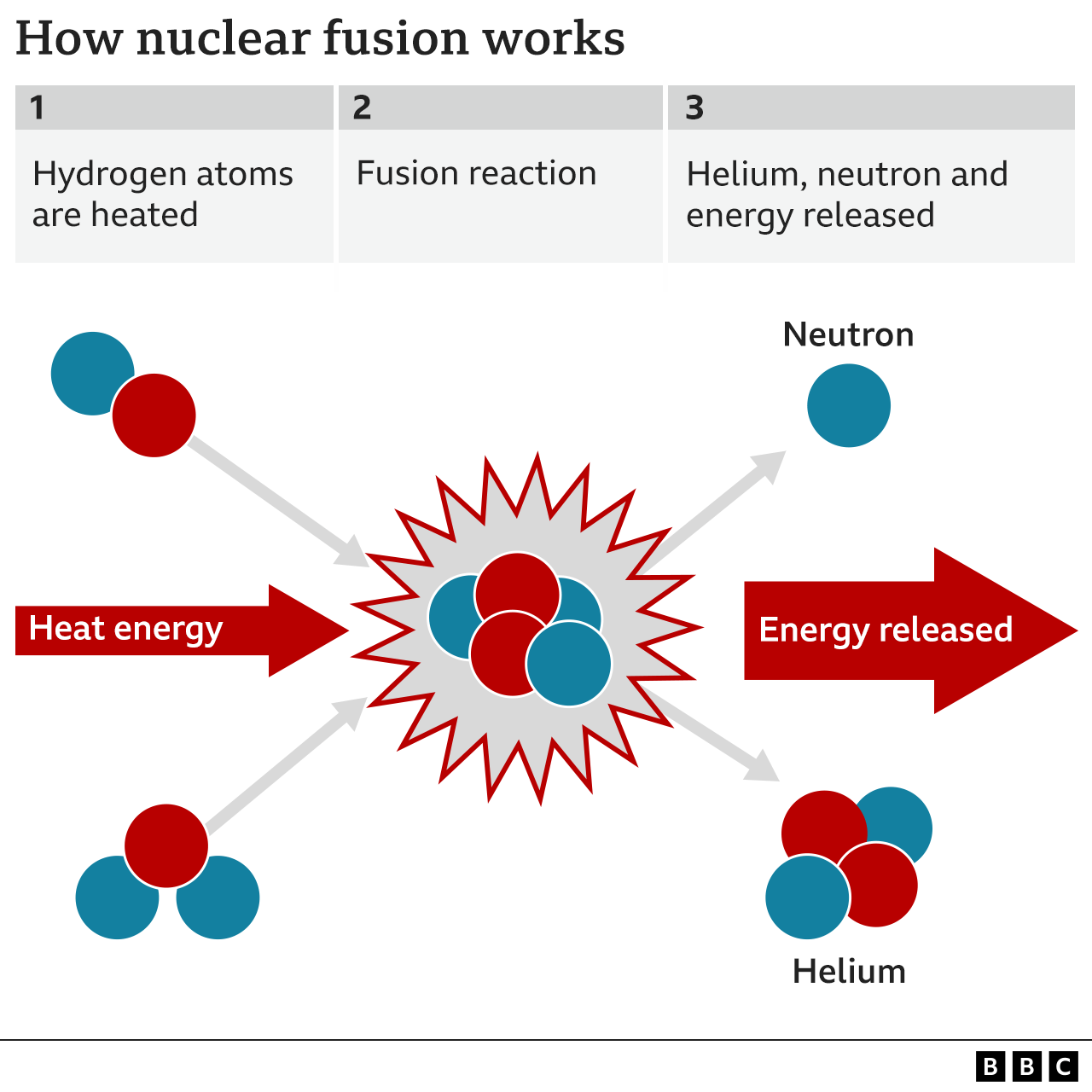
Why pressure? It forces the atoms close enough together that the strong nuclear force (the force that holds atomic nuclei together) can kick in and do its thing. Without enough pressure, they're just zooming around super fast but not actually fusing. It's like a crowded dance floor where everyone's moving, but no one's actually dancing together. You know?
Containment: Not As Easy As It Sounds
Okay, so you've got your super-hot, super-pressurized atoms. Great! Now, how do you keep them from, you know, exploding and vaporizing everything around them? That's where containment comes in. This is arguably the trickiest part. You can't just use a regular container; it would melt instantly.
One promising method uses magnetic fields. Imagine a force field made of pure magnetism. Sounds like science fiction, right? But it's totally real (well, kinda). These magnetic fields can confine the superheated plasma (that's what the atoms turn into at those temperatures) without physically touching it. It's like levitating a pizza… a really, really hot pizza.
The Right Kind of Fuel (No, Not Gasoline!)
You can't just fuse any old atoms together. The easiest and most efficient fusion reaction involves isotopes of hydrogen: deuterium and tritium. Deuterium is found in seawater (pretty cool, huh?), and tritium can be produced from lithium. So, the fuel is relatively abundant! Yay!
When deuterium and tritium fuse, they create helium (harmless!) and a neutron (a bit more energetic, but manageable). And, of course, a huge amount of energy. Like, enough to power a city. Or maybe the world someday? One can dream.
So, To Recap: The Fusion Recipe
Alright, let's break it down. To achieve nuclear fusion, you need:
- Insane heat: Millions of degrees Celsius.
- Crushing pressure: Enough to force atoms together.
- Magnetic Containment: To keep the whole thing from blowing up.
- Deuterium and Tritium: The right kind of fuel for the job.
Easy peasy, right? Just kidding! It's incredibly complex and challenging. But hey, scientists are working on it! And who knows? Maybe someday we'll have clean, virtually limitless energy from fusion power. Wouldn't that be something? Let’s keep our fingers crossed, eh?
