What Color Light Has The Highest Energy

Hey there, color enthusiast! Ever wondered what's really going on behind the dazzling spectrum of light we see every day? It’s not just pretty visuals; it's all about energy! And trust me, diving into this stuff is way more fun than it sounds. We're going on a quick, colorful journey to find out which color light packs the biggest punch.
Ready? Let’s get started!
The Rainbow Connection (and Beyond!)
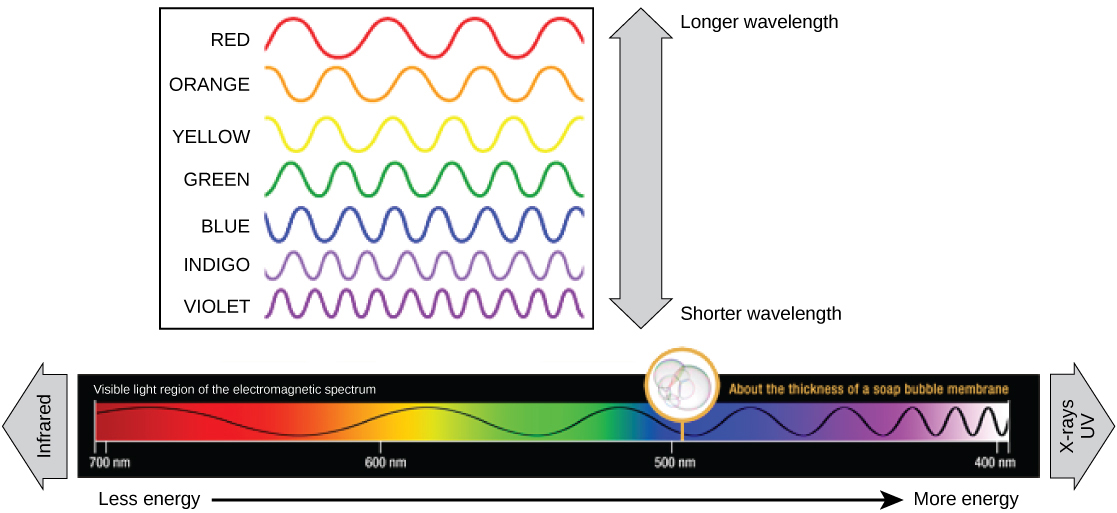
Think about a rainbow. You've got your reds, oranges, yellows, greens, blues, indigos, and violets. (Remember ROY G. BIV? Good times!) But that's just the visible part of the electromagnetic spectrum. What about all the stuff we can't see, like ultraviolet (UV) rays or infrared radiation? That stuff is still light, just at different wavelengths. Why should we care? Well, because the wavelength of light is directly related to its energy. Shorter wavelength, higher energy. Simple as that!
Must Read
Think of it like this: imagine waves in the ocean. Small, frequent waves (short wavelength) are like a hyperactive puppy constantly jumping up and down – full of energy! Long, lazy waves (long wavelength) are more like a chilled-out sloth hanging out on a tree branch – relaxed and mellow. Light waves work the same way!
Violet's Victory: The High-Energy Champion!
Okay, so back to our rainbow. Red light has the longest wavelength, meaning it has the lowest energy. As we move through the colors towards violet, the wavelength gets shorter and shorter. That means violet light has the shortest wavelength of visible light, and therefore… drumroll please… the highest energy!
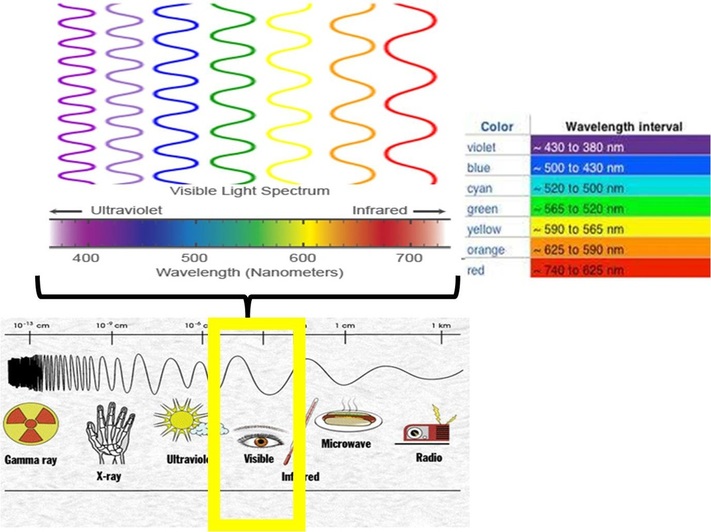
Yep, violet wins! But, and it's a big but, remember that visible light is only a tiny part of the entire electromagnetic spectrum.
Beyond Violet: The Invisible Powerhouses
If violet is the most energetic color we can see, what lies beyond? Beyond violet is ultraviolet (UV) light. You've probably heard of it in the context of sunscreen. UV light has even shorter wavelengths than violet light, which means it has even more energy! (And that's why it can be harmful to our skin in large doses. Protect yourself out there!)
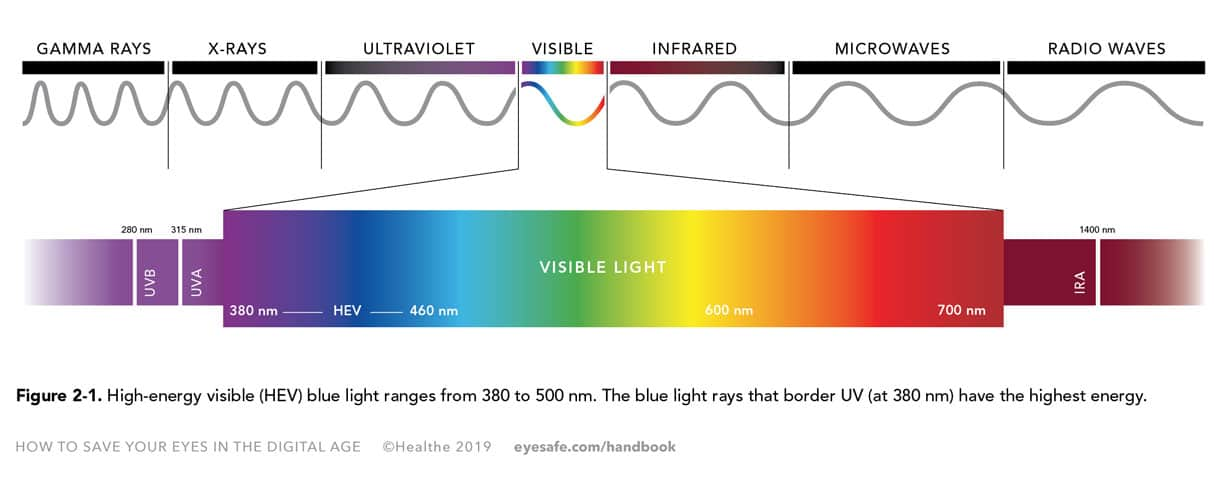
But we don't stop there! Beyond UV is X-rays and gamma rays. These have incredibly short wavelengths and therefore, mind-blowingly high energy levels. Think about it – X-rays can pass right through your soft tissues, allowing doctors to see your bones. That takes some serious power!
Why Does This Matter? Let's Get Practical!
Okay, okay, you might be thinking, "That's cool and all, but why should I care about the energy of light?" Good question! Here's why:

- Health: Understanding UV light helps us protect ourselves from sunburn and skin cancer. We use UV to sanitize surfaces!
- Technology: X-rays are crucial for medical imaging. Lasers (which use concentrated beams of light) are used in everything from barcode scanners to eye surgery.
- Astronomy: By studying the different wavelengths of light emitted by stars and galaxies, astronomers can learn about their composition, temperature, and distance. How awesome is that?
- Photography: Light is everything in Photography. Understanding light and color can enhance photos to pop!
See? Understanding the energy of light isn't just some abstract scientific concept; it has real-world applications that affect our lives every day! Plus, it's just plain fascinating to think about all the unseen energy buzzing around us all the time. Maybe next time you see a rainbow, you'll appreciate the fact that violet light is doing its energetic best to shine through!
Embrace the Light!
So, there you have it! Violet light, with its shorter wavelength, has the highest energy of all the colors we can see. But remember, the adventure doesn't stop there! The world of light and energy is vast and full of wonders. Don't be afraid to keep exploring, keep asking questions, and keep learning. The more you understand about the universe, the more amazing it becomes. You can learn about light from great free resources such as NASA, Khan Academy, and Coursera.
Go forth and illuminate your mind!