
What Causes The Power To Go Out

Ah, the sudden hush. One moment, your favorite show is on, the fridge is humming, and the lights are bright. The next, a profound darkness descends, punctuated only by the faint glow of your phone screen.
The power has gone out. It’s a universal experience, often met with a collective groan or a hurried search for flashlights. But have you ever stopped to wonder, in the eerie quiet, what grand adventure or tiny mishap caused this sudden blackout?
Turns out, the reasons our modern world goes dark are often surprisingly charming, sometimes hilarious, and occasionally even a little heartwarming. It’s not always about big, scary grid failures; sometimes, it’s just Mother Nature — or a mischievous critter — having a moment.
Must Read
Nature's Whimsical Ways
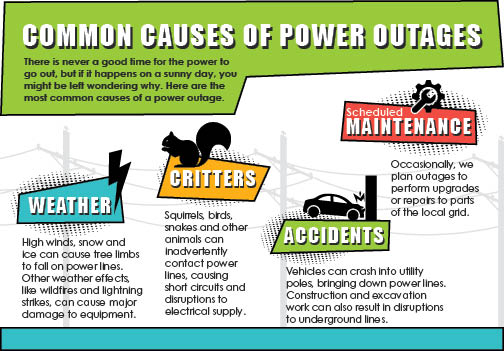
Let's start with the big one: weather. When storms rage, our power lines are truly put to the test. Strong winds can whip branches into lines, causing a sudden snap and a loss of connection.
Imagine a gust so strong it sends a rogue branch flying like a tiny, wooden missile! This isn't just about big, scary hurricanes; even a seemingly innocent breezy afternoon can cause trouble if a tree limb is just weak enough.
Then there's lightning, nature's most dramatic light show. A direct strike can overload equipment, tripping safety mechanisms designed to protect the entire grid. It's like the electrical system saying, "Whoa there, too much excitement at once!"
Ice and snow can be surprisingly heavy culprits. A thick layer of ice building up on power lines weighs them down, sometimes so much that the lines sag and touch each other, or snap entirely. It’s a beautiful, but destructive, winter wonderland.
Even intense heat can play a role. When temperatures soar, everyone cranks up their air conditioners, putting immense strain on the electrical grid. This increased demand can sometimes overwhelm transformers, causing them to overheat and trip offline.
"It's like everyone decided to throw a pool party at the same time, and the hose just couldn't keep up!"
Rain, while seemingly benign, can also contribute. Heavy downpours can soften soil around utility poles, making them unstable and prone to toppling. Water can also seep into electrical equipment, causing short circuits.
So, next time a storm rolls in and the lights flicker, remember it's not always a malfunction. Sometimes, it's just Mother Nature reminding us who's really in charge, with a dramatic flair!
The Animal Kingdom's Electrifying Antics
Squirrels, Birds, and Other Uninvited Guests
This category is where the truly humorous stories often hide. Believe it or not, some of the most common causes of localized power outages involve our furry and feathered friends.
Take the humble squirrel, for instance. These bushy-tailed acrobats are notorious for their curiosity. They love to scamper across power lines, sometimes getting into transformers or substations, creating a flash and a bang.
Utility workers affectionately call these "squirrel outages." It’s not malicious; they're just exploring their urban jungle gym, unaware of the powerful currents involved. Their adventurous spirit, unfortunately, often comes at a cost to our evening Netflix binge.
Birds, too, can cause issues. A large bird or a flock taking off from a power line might accidentally make contact between two lines or a line and a grounded pole, causing a momentary short circuit. Sometimes, they even build nests in unfortunate places.
Raccoons, snakes, and even larger animals like deer (who might rub against or knock over poles) have also been known to contribute. It’s a surprising reminder that the wilderness, even a small patch of it, is never far from our highly wired world.
One memorable story involved a particularly persistent woodpecker. It drilled so many holes into a utility pole that it weakened the structure, causing it to eventually fail. Talk about dedicated craftsmanship!
"These tiny creatures, in their innocent daily routines, can temporarily bring our modern lives to a halt. It's a humbling thought!"
Thankfully, utility companies are always working on ways to protect wildlife, with things like animal guards and insulated covers, so these curious encounters become less common.
Human "Oops!" Moments
Accidents Happen, Even to the Grid
Sometimes, the power goes out because, well, humans are just being human. Accidents happen, and our intricate power system isn't immune to them.
Car accidents are a common culprit. A vehicle swerving off the road and colliding with a utility pole can instantly sever connections and bring down lines. It's an unfortunate double whammy for everyone involved.
Construction projects, too, can inadvertently cause outages. Digging without knowing where underground utility lines are buried can lead to a sudden, spectacular — and often expensive — interruption of service. Always call before you dig!
Even something as simple as a ladder falling against a power line, or amateur tree trimming going awry, can trigger a localized blackout. These aren't malicious acts, just everyday mishaps.
Consider the unexpected. A hot air balloon once drifted into power lines, causing a significant outage and a rather dramatic rescue. Or a parade float that got a little too tall for its route.
These human-caused outages highlight our delicate reliance on the infrastructure around us. A moment of inattention, a miscalculation, and suddenly, the neighborhood is plunged into darkness.
But thankfully, utility crews are incredibly skilled at responding to these unpredictable events. They work quickly and safely to restore power, often in challenging conditions, thanks to someone's unexpected "oops."
When Technology Takes a Nap
Equipment Wear and Tear
Just like anything else, the machines and wires that deliver our electricity aren't immortal. Over time, components can simply wear out or fail.
Transformers, those big gray cans on poles, are workhorses of the electrical system. They step down high voltage to usable levels for our homes. But sometimes, after years of tireless service, they can overheat or develop internal faults and "blow."
A "blown transformer" often results in a loud pop and a flash of light, followed by darkness. It's like a small, controlled explosion, signaling that this particular piece of equipment has simply reached the end of its useful life.
Underground cables, too, can suffer from wear and tear, or be damaged by shifting earth or water intrusion. Diagnosing and repairing these can be particularly tricky, as the problem isn't visible.
Sometimes, the problem isn't a failure, but a planned shutdown. Utility companies regularly schedule maintenance to upgrade equipment, trim trees proactively, or repair aging infrastructure. These are the "spa days" for the grid.
While inconvenient, these scheduled outages are crucial for preventing more frequent and widespread failures in the future. It’s like taking your car in for an oil change; a little temporary disruption saves you from a much bigger headache later.
These outages remind us of the incredible complexity behind keeping our lights on. Thousands of components, all working in harmony, day in and day out, deserve a bit of appreciation – and occasionally, a well-deserved rest or replacement.

The Silver Lining in the Darkness
So, the next time the lights go out, take a deep breath. Instead of frustration, perhaps a small smile can creep in. Was it a mischievous squirrel on an adventure? A majestic eagle taking flight?
Maybe it was a hardworking transformer finally deciding it was time for retirement. Or perhaps Mother Nature simply put on a magnificent, stormy show that was a little too enthusiastic for the power lines.
Power outages, while disruptive, also offer a unique opportunity. They force us to slow down, to disconnect from our screens, and often, to connect with each other.
Remember the last time your neighborhood went dark? Did you see flashlights bobbing, hear neighbors calling out, or even share a candle-lit moment? These moments can surprisingly foster community spirit.
They also make us appreciate the marvel of modern electricity all the more when it returns. That first flicker, then the steady glow – it's a small miracle, delivered by dedicated crews working tirelessly behind the scenes.
So, embrace the unexpected pause. Light a candle, tell a story, or simply enjoy the quiet. The power going out isn't just an inconvenience; it's a chance to see the world, and our connection to it, in a wonderfully new light.
It's a reminder of the delicate balance between human innovation, the unpredictable forces of nature, and the surprising antics of the creatures around us. And sometimes, it's just a really good story waiting to be told.