
What Causes Car Battery Terminals To Corrode

Hey there, car enthusiast (or just someone trying to keep their ride running)! Ever popped the hood and been greeted by a fuzzy, bluish-white or greenish gunk clinging to your car battery terminals? That, my friend, is corrosion, and it's about as welcome as a flat tire on a Sunday drive. Let's dive into what causes this automotive annoyance!
The Culprit: Electrolyte Leakage (and a Little Help From Nature)
The main offender is electrolyte leakage. Your car battery is filled with a sulfuric acid solution (electrolyte) that helps it do its whole electricity-generating magic. Sometimes, this electrolyte can seep out of the battery. Think of it like your battery having a little "sweat" problem. Nobody's perfect, right?
This leakage can happen for a few reasons:
Must Read
- Overcharging: If your charging system is working overtime, it can cause the electrolyte to boil and escape. It's like your battery is saying, "Okay, okay, I'm charged already! Give me a break!"
- Vibrations: All that bouncing around on the road can loosen the seals around the terminals, creating tiny escape routes. It's a bumpy world out there!
- Age: As batteries get older, their seals can weaken, making them more prone to leaks. It happens to the best of us (and our batteries).
But that's not the whole story! Electrolyte leakage is just the first step. Then, the real fun begins.
Enter: Chemical Reactions (The Science-y Bit, Simplified!)
Once that electrolyte is out in the open, it's ready to party... chemically speaking. It reacts with the metal of the terminals (usually lead or a lead alloy) and the oxygen in the air. This creates a chemical reaction, resulting in those colorful, crusty deposits we know as corrosion. It's basically rust, but for batteries! And way more colorful, if you're into that sort of thing.
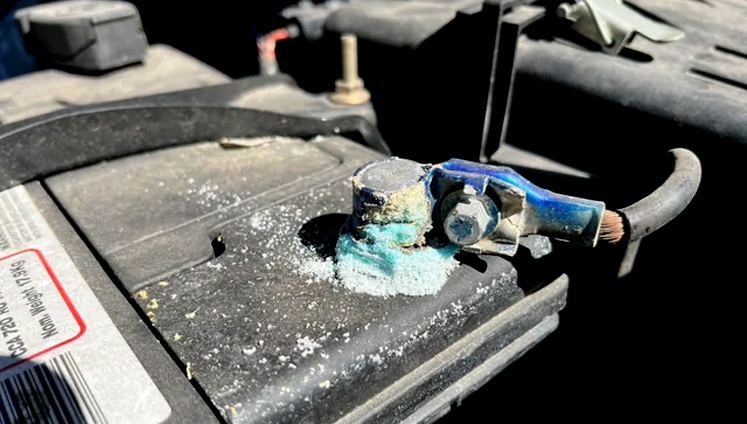
Think of it like this: the battery acid is introducing itself to the metal terminals and saying, "Hey, let's form a new compound!" And that new compound is the corrosion.
Humidity: The Corrosion Amplifier
Humidity acts like a corrosion cheerleader. It speeds up the chemical reaction, making corrosion appear faster and thicker. So, if you live in a humid climate (hello, Florida!), you might notice corrosion happening more quickly than someone living in a dry desert. It's like the humidity is whispering, "Go, corrosion, go!"

Ever wonder why batteries seem to corrode faster in the summer? It is a combination of heat speeding up chemical reactions and an increase in humidity in many areas.
Loose Connections: A Sneaky Suspect
A loose battery terminal connection can also contribute to corrosion. When the connection isn't tight, it can create small electrical arcs (tiny sparks) between the terminal and the connector. These arcs can vaporize some of the terminal material, which then reacts with the electrolyte and oxygen to form corrosion. It's like a tiny electrical fireworks show that leaves a messy aftermath.

Why Is Corrosion Bad? (Besides Being Ugly)
Okay, so corrosion looks gross, but why should you care? Well, corrosion is more than just a cosmetic issue. It can:
- Reduce electrical conductivity: Corrosion acts like an insulator, preventing the full flow of electricity. This can make it harder to start your car, especially in cold weather.
- Damage battery terminals: Over time, corrosion can eat away at the terminals, weakening them and potentially causing them to break. Nobody wants a broken terminal!
- Cause starting problems: A corroded connection can prevent your starter motor from getting enough juice, leading to frustrating "click-click-click" moments.
Basically, corrosion can leave you stranded. And that's never a good time.
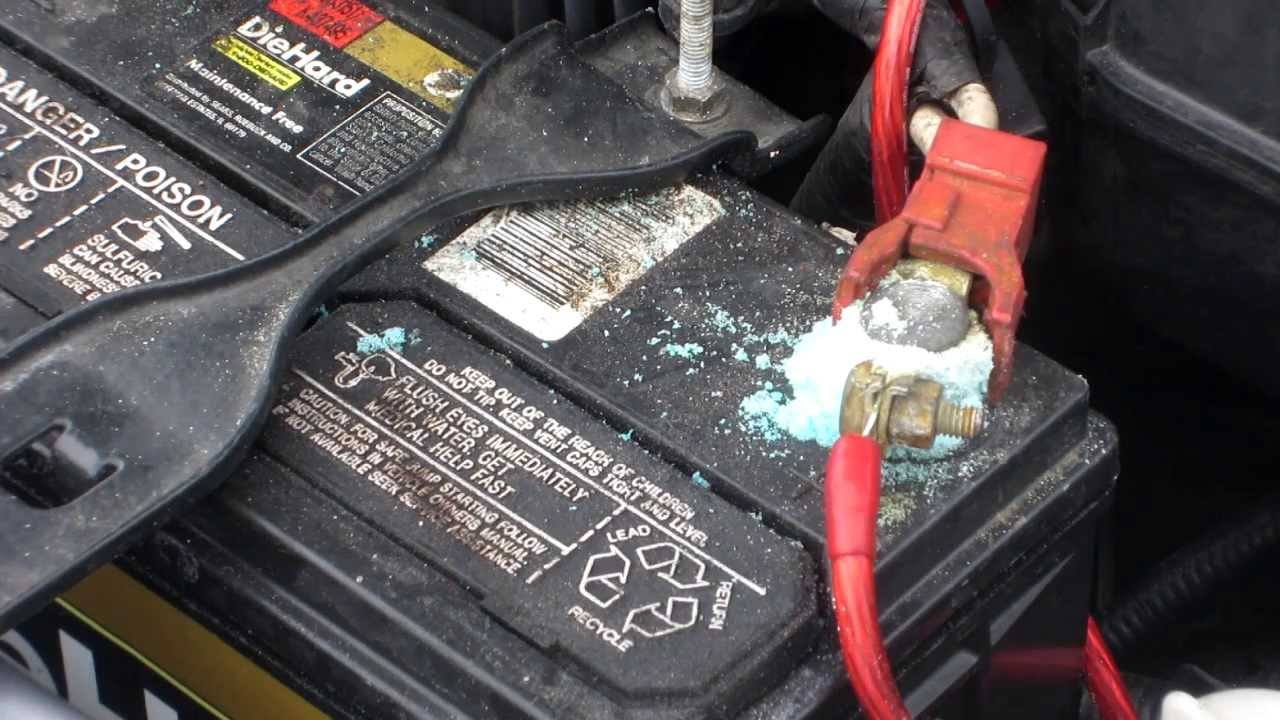
The Good News: It's Fixable!
The bright side is that cleaning corroded battery terminals is usually a pretty simple DIY job. You can use a battery terminal cleaner spray, a wire brush, or even a mixture of baking soda and water. (Just be careful and wear gloves and eye protection!)
And even better, you can take steps to prevent corrosion in the first place. Applying a thin layer of dielectric grease to your terminals after cleaning them can help protect them from moisture and prevent future corrosion. Think of it like giving your terminals a little spa treatment.
So, don't let corrosion get you down. A little knowledge and a bit of elbow grease can keep your battery terminals clean, your car starting reliably, and you cruising down the road with a smile. Happy driving!