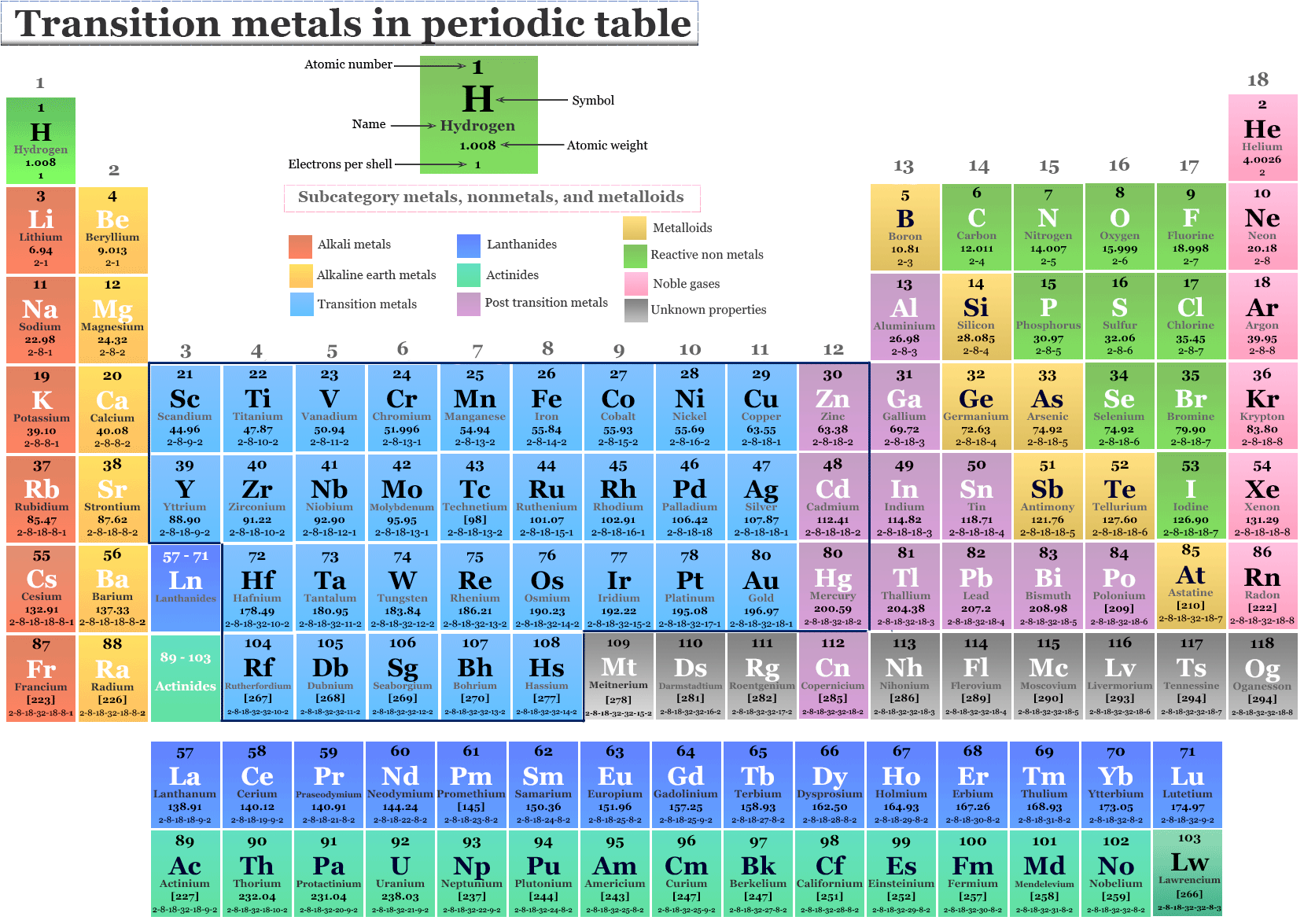
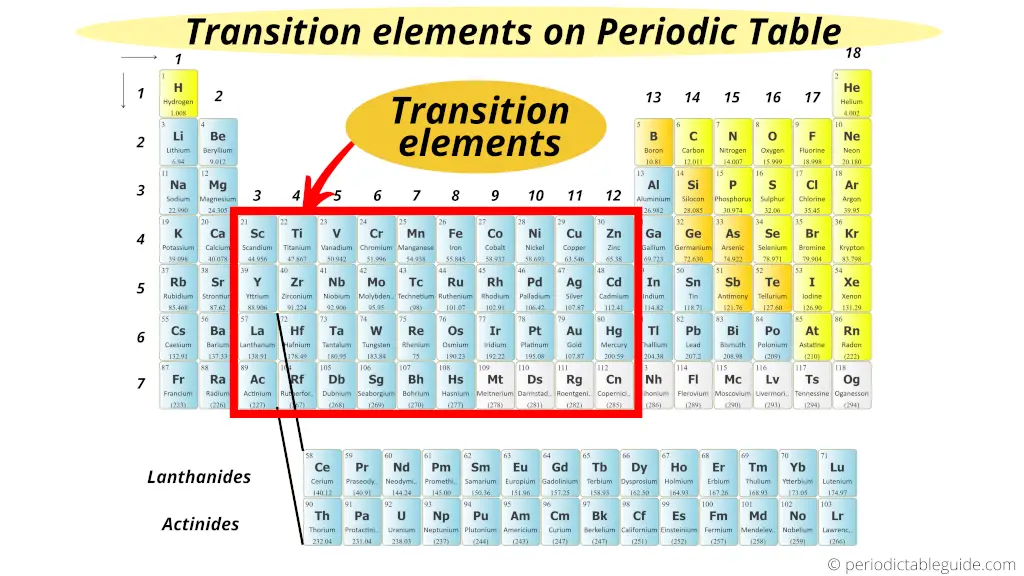
What Are Transition Metals On The Periodic Table
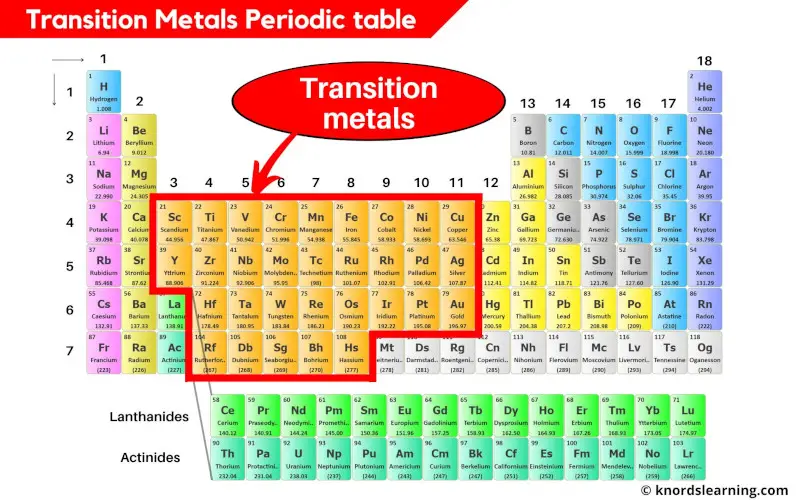
Alright, chemistry newbies and curious minds! Let's dive into a fascinating corner of the periodic table: the transition metals. Don't let the name intimidate you; they're not trying to "transition" into anything other than being awesome elements with some seriously cool properties.
Think of the periodic table as a grand orchestra. The transition metals? They're the brass section – bold, versatile, and responsible for some of the most vibrant sounds (or, in this case, vibrant colors!). They occupy that big block in the middle, bridging the gap between the super reactive alkali and alkaline earth metals on the left and the more predictable nonmetals on the right. Chemically speaking, they’re the chameleons of the element world.
What Makes Them "Transition"?
So, why the name "transition?" It's all about their electrons. Transition metals are defined by having incomplete d orbitals (or the ability to form ions with incomplete d orbitals). These partially filled d orbitals are the key to their diverse properties. This means they can form multiple positive ions (think iron being either Fe2+ or Fe3+), and they often create brightly colored compounds. It's a bit like having a diverse wardrobe - they can adapt to different chemical "occasions."
Must Read
Fun Fact: The colors we see in many gemstones, like the blue of sapphire (due to iron and titanium) and the green of emerald (due to chromium), are often thanks to transition metal ions!
Meet the Stars of the Show
Let’s introduce a few A-listers from the transition metal hall of fame:
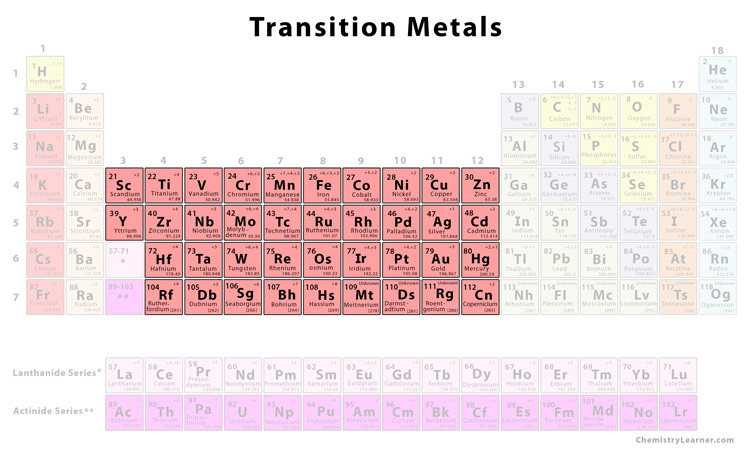
- Iron (Fe): The backbone of our modern world. It's in steel, hemoglobin (that carries oxygen in your blood), and even your cast iron skillet. Without iron, we'd be living in a very different, and likely much weaker, world.
- Copper (Cu): An electrical wizard! Think wiring in your house, plumbing, and even the Statue of Liberty's skin. It's also essential for enzymes in our bodies.
- Gold (Au): The symbol of wealth and beauty throughout history. From ancient Egyptian pharaohs to modern-day jewelry, gold has always been prized for its luster and resistance to corrosion. Plus, it’s used in electronics!
- Titanium (Ti): Light, strong, and corrosion-resistant. It’s used in everything from airplanes and spacecraft to medical implants. Think of it as the superhero of metals.
- Zinc (Zn): A vital element for our immune system and found in many supplements. It's also used to galvanize steel, protecting it from rust.
Practical Tips and Everyday Encounters
You're interacting with transition metals more than you think. Consider this:
* Cooking: Stainless steel cookware gets its corrosion resistance from chromium, a transition metal. * Jewelry: Platinum, gold, and silver are all transition metals often found in rings, necklaces, and other adornments. * Electronics: Your smartphone and computer are packed with transition metals like copper, gold, and silver, vital for conducting electricity. * Art: Many pigments used in paints and dyes owe their vibrant colors to transition metal compounds. Think about Van Gogh's use of cobalt blue!Pro Tip: When buying supplements, check the labels. Many multivitamins contain iron, zinc, manganese, and other transition metals essential for human health.

Transition Metals: More Than Just Elements
Transition metals are not just static elements on a chart; they're active players in countless chemical reactions. They often act as catalysts, speeding up reactions without being consumed themselves. This is crucial in industrial processes like the production of plastics, pharmaceuticals, and fertilizers. They are the unsung heroes driving chemical transformations at a large scale.
Cultural Connection: Alchemy, the precursor to modern chemistry, was deeply intertwined with the study of transition metals like gold and silver. Alchemists sought to transform base metals into gold, a quest that, while ultimately unsuccessful in the literal sense, spurred significant advancements in chemical knowledge.
A Reflective Thought
The next time you reach for a stainless steel spoon, admire a gold necklace, or marvel at the color of a sapphire, take a moment to appreciate the transition metals. These elements, nestled in the heart of the periodic table, are woven into the fabric of our daily lives, shaping our technologies, our cultures, and even our bodies. They remind us that the seemingly abstract world of chemistry is intimately connected to the tangible realities we experience every day. Understanding them is not just about memorizing a chart; it's about recognizing the invisible forces that shape our world.