What Are Therms On A Gas Bill
Ever found yourself staring at your gas bill, maybe after a particularly chilly month, and noticed a line item that reads "Therms"? You're not alone! It’s one of those bits of utility jargon that often gets overlooked, but understanding what therms are can actually be quite fun and incredibly insightful. Think of it as uncovering a little secret about how your home's energy works. It's not just a number; it's a window into how you're using natural gas and, ultimately, how you can be smarter about your energy consumption.
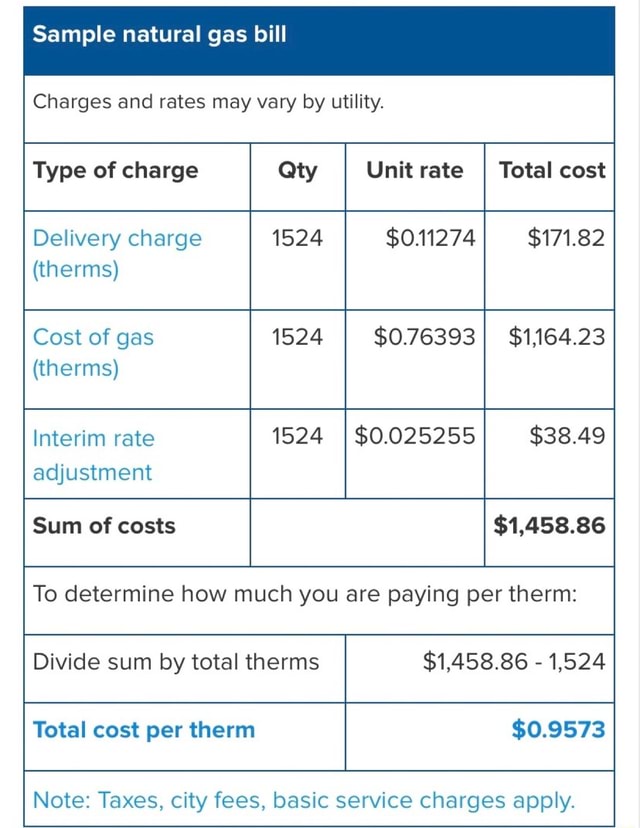
So, what exactly is a therm? In the simplest terms, a therm is a unit of heat energy. When you buy natural gas, you’re not just buying a volume of gas; you’re buying the energy contained within that gas that will heat your home, cook your food, or warm your water. While your gas meter typically measures the volume of gas flowing into your home in cubic feet, the actual energy content of that gas can vary slightly depending on factors like pressure and temperature. This is where therms come in! Your utility company converts the volume of gas (cubic feet) into therms to ensure you are billed accurately for the actual energy you receive and use. It's a fantastic system that guarantees fair billing – you pay for the power to heat your home, not just an arbitrary amount of gas volume that might contain more or less energy.
The beauty of measuring in therms extends beyond just fair billing. In daily life, every time you fire up your furnace on a cold winter morning, enjoy a hot shower, or bake a delicious meal, you are consuming therms of natural gas. For example, if your gas water heater uses 0.2 therms per hour and you take a 15-minute shower, you're looking at a small fraction of a therm. Educationally, understanding therms helps us grasp the concept of energy efficiency. When you see an appliance rated in therms per hour or per cycle, it allows you to compare its energy appetite. It also reinforces the impact of simple actions, like setting your thermostat a few degrees lower, on your overall energy footprint and, importantly, your wallet!
Must Read
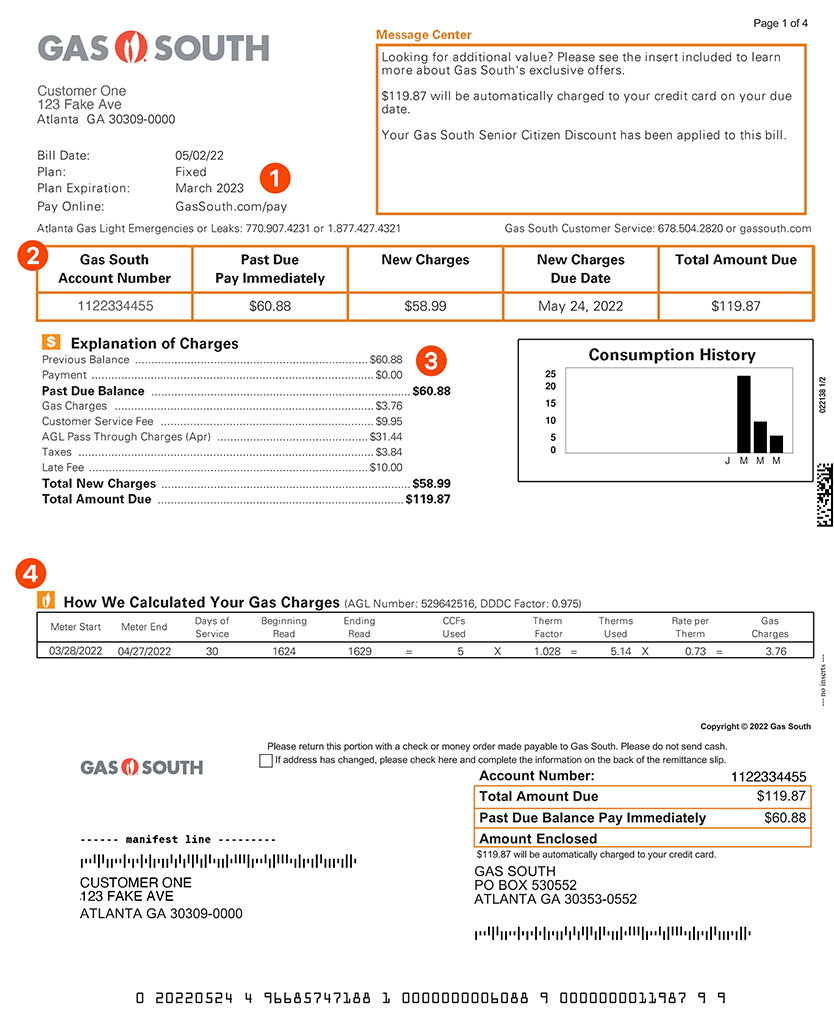
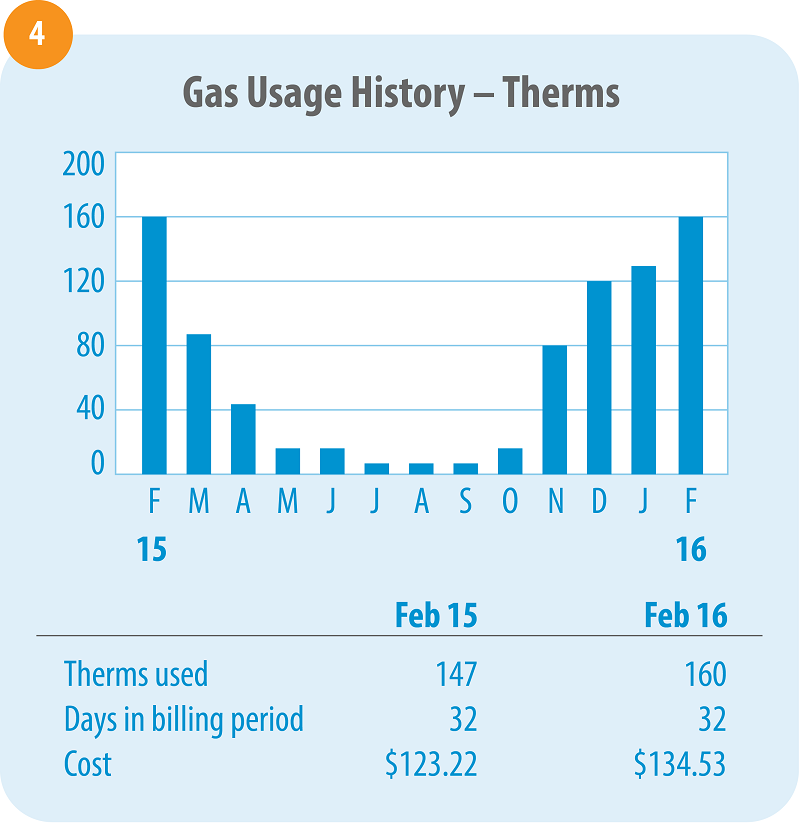
Ready to explore therms a bit more in your own life? It's super easy! First, grab your latest gas bill and locate the "Therms" section. You'll likely see your total therms used for the billing period. Try comparing this number across different months. You'll probably notice a significant jump in colder months when your heating system is working harder. This direct correlation makes therms a great way to visualize your energy usage. For a simple practical tip, think about the energy-saving actions you take: turning down the heat when you leave the house, making sure your windows are sealed, or taking shorter showers. Each of these actions directly aims to reduce the number of therms you consume, leading to a more efficient home and potentially lower bills. You can even try to estimate how many therms you might save by making a conscious effort for a week. It’s a wonderfully tangible way to connect your actions to your energy consumption!