
What Are The Wind Speeds For A Tropical Storm

Alright, friends, let’s talk tropical storms! We’ve all heard the news reports, seen the swirling images on TV, and maybe even felt a little shiver of apprehension when one’s headed our way. But what actually makes a tropical storm a tropical storm? What's the big deal about the wind?
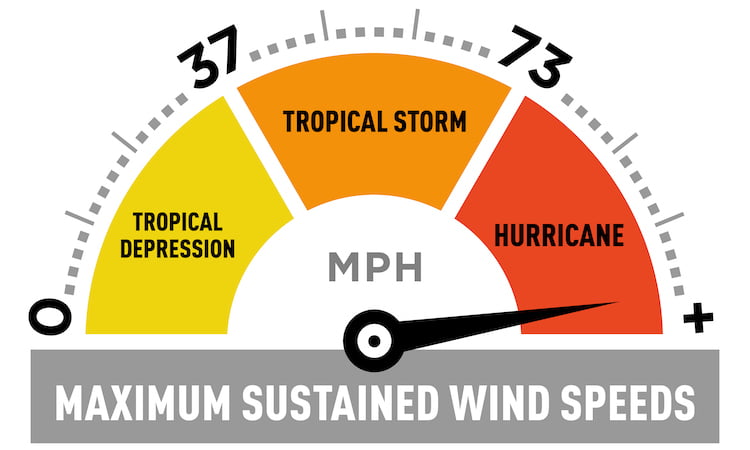
The key ingredient? Wind speed. Think of it like this: you wouldn't call a gentle breeze a hurricane, right? So, there's a specific range of wind speeds that officially earns a storm the "tropical storm" label.
The Magic Number: 39-73 mph
Here's the deal: a tropical storm needs to have sustained winds between 39 and 73 miles per hour. "Sustained" just means the wind speed is consistently within that range for about a minute. If the winds are lower, it's just a tropical depression. If they're higher... well, buckle up, because that’s when it becomes a hurricane!
Must Read
Imagine driving on the highway. 39 mph is like cruising along at a reasonable pace, windows down, hair gently blowing. 73 mph? That’s a bit more intense. You’d definitely want your windows up and maybe a tighter grip on the steering wheel! It's windy enough to feel it, and strong enough to potentially cause some trouble.
Think about it another way: have you ever been caught in a really strong thunderstorm? The kind where tree branches are swaying wildly, and you might see a trash can lid go flying? That's probably the kind of wind we're talking about. A tropical storm is essentially that thunderstorm, but bigger, more organized, and covering a much wider area.

Why Should You Care About Wind Speed?
Okay, so a storm has wind. Big deal, right? Wrong! Knowing the wind speed of a tropical storm is crucial for a few important reasons:
1. Predicting Potential Damage: Wind is a powerful force. The higher the wind speed, the more damage a storm can inflict. Think about it: a gentle breeze might rustle your leaves, but a 70 mph wind can rip shingles off your roof and knock down power lines. Knowing the wind speed helps emergency managers (and you!) estimate the potential for property damage and take appropriate precautions.

2. Gauging the Severity of the Storm: Wind speed is one of the main factors used to classify tropical storms. It gives you a quick sense of how dangerous the storm might be. If you hear the news anchor say, "Tropical Storm So-and-So is packing winds of 65 mph," you know it's a serious situation that deserves your attention.
3. Making Informed Decisions: Should you evacuate? Should you bring in your patio furniture? Should you stock up on supplies? The wind speed of a tropical storm plays a significant role in answering these questions. If the forecast calls for 70 mph winds, you'll want to take more precautions than if it's only expecting 40 mph. Your safety and the safety of your loved ones depend on making smart choices based on reliable information.
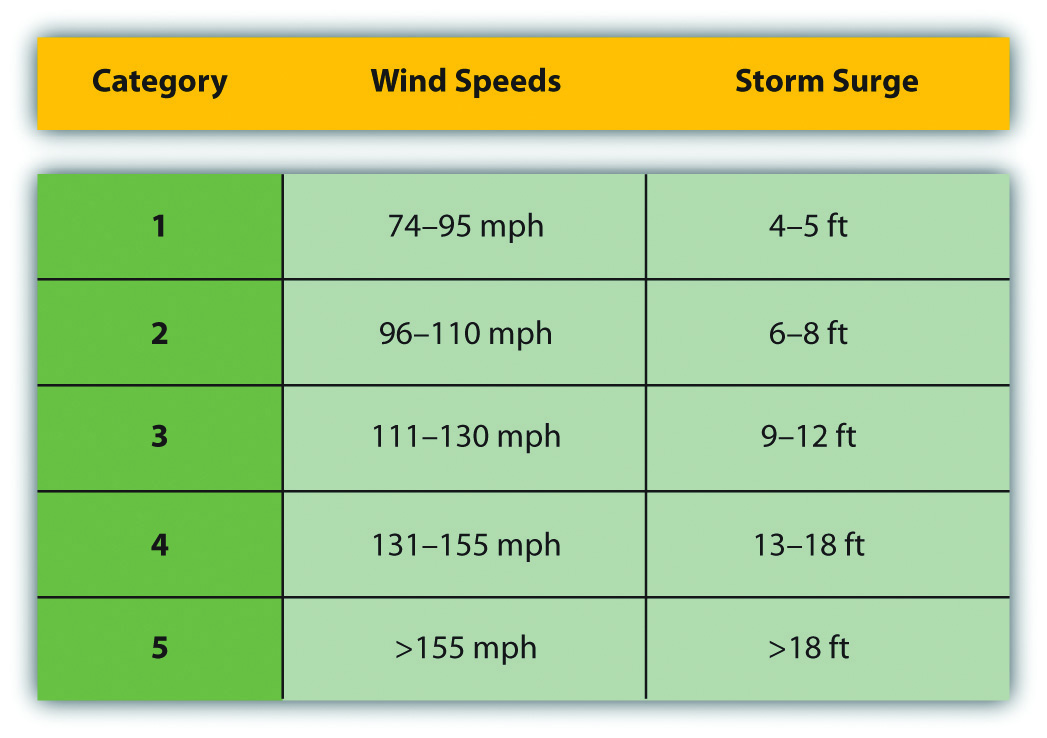
4. Understanding the Progression: Knowing that a storm is currently a tropical storm with winds of, say, 45 mph, doesn't mean it will stay that way. Meteorologists use wind speed data, among other things, to predict whether the storm will strengthen into a hurricane, weaken back into a tropical depression, or simply dissipate. Keeping an eye on the wind speeds helps you track the storm's evolution and adjust your plans accordingly.
It's Not Just About the Wind
While wind speed is important, it's not the only thing to consider when assessing a tropical storm. Storm surge (the abnormal rise of water pushed inland by the storm's winds) and heavy rainfall can be just as, if not more, dangerous. A slower-moving storm with moderate winds can still dump massive amounts of rain, leading to devastating floods. So, always pay attention to the full forecast and heed the warnings of local authorities.
Also, it is important to note that everyone's situation is different. What might be considered safe for one person might not be safe for another. Live on a coast? Got mobility issues? Plan for the worst and give yourself extra time to respond. Better safe than sorry.
Think of it like making a cup of coffee. You don't just measure the coffee grounds; you also consider the water temperature, the type of filter, and how strong you like your brew! Similarly, when it comes to tropical storms, wind speed is just one piece of the puzzle. It's important to look at the whole picture to stay safe and informed.
So, the next time you hear about a tropical storm, remember the 39-73 mph range. It's a simple number, but it carries a lot of weight when it comes to understanding the potential impact of these powerful weather systems. Stay informed, stay safe, and remember – knowledge is power (especially when it comes to Mother Nature!).