Imagine a perfect, fluffy marshmallow. You pick it up, it feels soft and yielding. Then, with a gentle tug, you stretch it.
It gets longer, thinner, and oh-so-satisfyingly elastic. You’ve just experienced something fundamental: change in shape.
We see this transformation everywhere, from a rubber band snapping back into place to the magnificent arch of a bridge subtly expanding in the summer sun.
How do we talk about this stretching, this squishing, this bending, in a way that makes sense to everyone?
Scientists and engineers have a special word for it: strain. It’s their elegant way of quantifying how much an object has deformed or changed size relative to its original self.
You might be thinking, "Aha! Another complicated measurement with fancy units I'll never understand!"
We measure length in meters or inches, weight in pounds or kilograms. So, what about strain?
What incredible, perhaps tongue-twisting, units does strain proudly display?
Is it "stre-tches per second"? Or maybe "squishes per meter"?
Prepare for a delightful surprise. The units for strain are... absolutely nothing!
Yes, you read that right. Strain has no units at all.
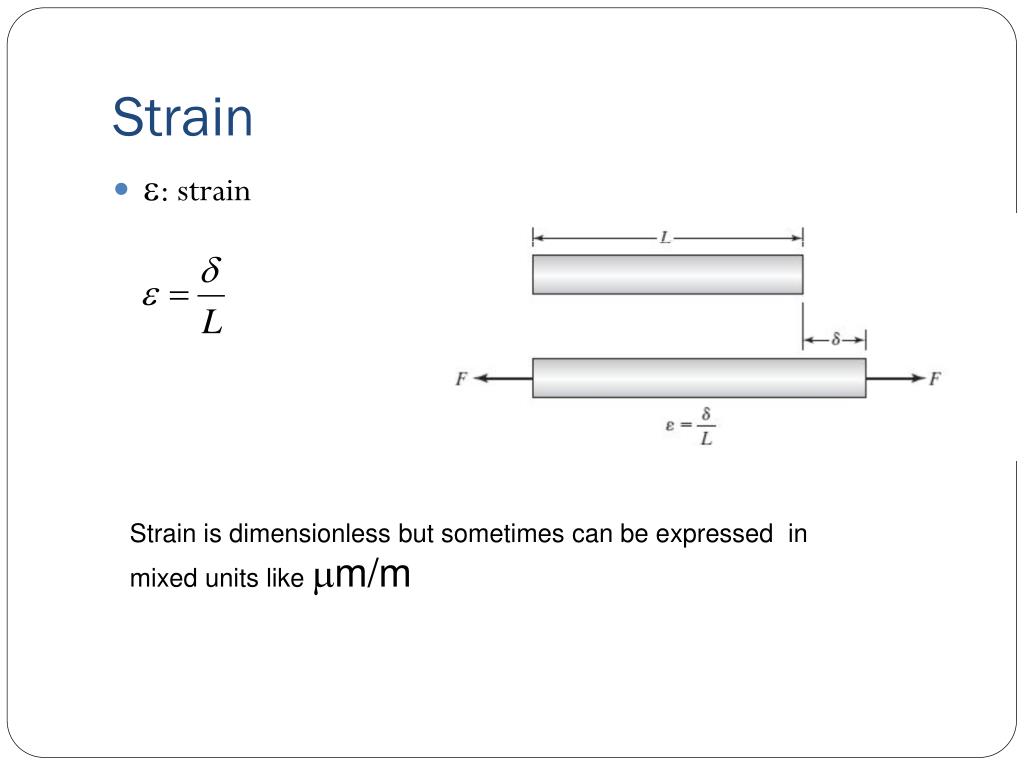
ME 322: Instrumentation Lecture 7 - ppt download
It’s like trying to measure the "happiness" of a puppy wagging its tail, or the "deliciousness" of a freshly baked cookie.
While those feelings are real and profound, they don't come with a specific label like "5 happy-units" or "10 yummy-grams."
The beauty of strain lies in its utter simplicity. It's a ratio, a comparison, a universal language of relative change.
Think of it this way: if you bake a cake and then decide to double the recipe, you don't say you made "two cake-units." You simply say you "doubled" it.
You’re comparing the new amount to the original amount, and the "cake" part cancels out.
The Magic of Ratios
Strain works much the same way. It's calculated by taking the change in an object's length and dividing it by its original length.
Imagine you have a piece of gum that’s 10 centimeters long. You stretch it, and now it’s 12 centimeters long.
The change in length is 2 centimeters (12 cm - 10 cm). The original length was 10 centimeters.
So, the strain would be 2 cm / 10 cm. See what happens there?
The "centimeters" cancel each other out, leaving you with just a number: 0.2.
This "no units" aspect is what makes strain so powerful and universally understood.
Whether you're an engineer in Tokyo working with millimeters or a builder in London using inches, a strain value of 0.01 means the exact same thing.
It means the object has stretched by one-hundredth of its original length. Simple, elegant, and perfectly clear.
Everyday Stretches, No Units Needed
Consider a child's inflatable pool toy. You pump air into it, and it swells up.
It gets bigger all over, changing its volume. You don't need "volume-units-of-strain" to understand it's expanding.
Or think about a mischievous cat stretching out after a nap, pushing its paws forward with a satisfied yawn.
That delightful, full-body stretch isn't measured in "cat-stretch units," but we instinctively understand the relative change in its posture.
Even a smile can be thought of in terms of strain. A slight smirk versus a wide, joyous grin—your facial muscles are experiencing different degrees of expansion relative to their resting state.
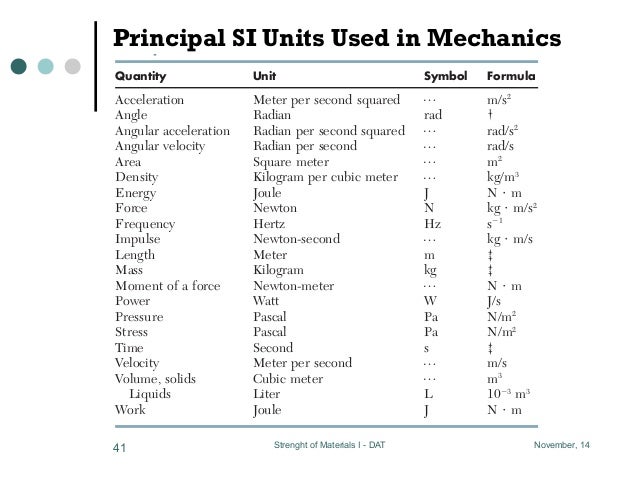
Lesson 03, simple stress and strain
Nobody measures a smile in "grin-millimeters" or "joy-inches." It's the relative change that conveys the emotion.
This "unit-less" quality allows us to appreciate the concept of deformation without getting bogged down in conversion factors or complicated jargon.
It makes strain a friendly, approachable concept, rather than a formidable scientific term.
The Zen of Measurement
There's something almost philosophical about a measurement that requires no units. It speaks to a fundamental truth of comparison.
It’s about understanding proportion, growth, and change in their purest forms. Like comparing two melodies: one might be "twice as long" as the other, without needing "melody-units."
In life, we often encounter situations that demand a similar kind of relative understanding.
When you learn a new skill, you don't measure your progress in "skill-units." You measure it by how much you've improved relative to where you started.
That journey of personal growth, the stretching of your capabilities, is a form of positive strain on your potential.
It’s about expanding beyond your original boundaries, just like a metal beam expanding ever so slightly on a hot day.
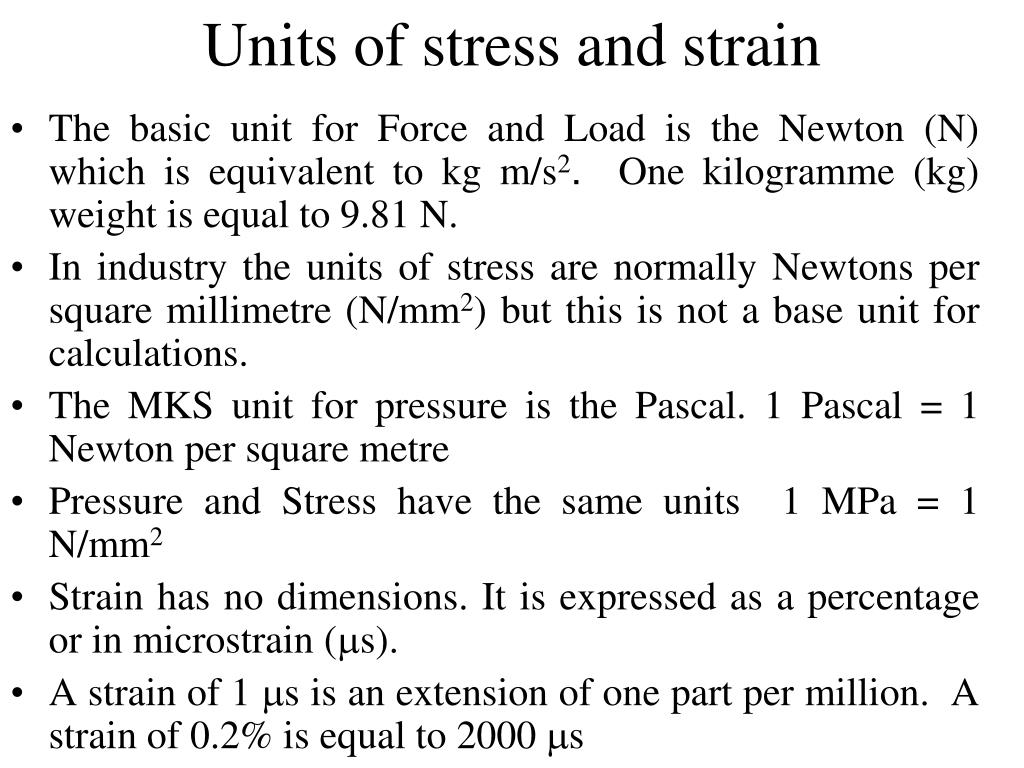
PPT - 1.2 STRENGTH OF MATERIALS PowerPoint Presentation - ID:442343
This lack of units isn't a deficiency; it's a superpower. It makes strain a universal constant, a common denominator in the world of physical changes.
It bridges the gap between different measurement systems and allows engineers, artists, and even curious observers to speak the same language of deformation.
A Heartwarming Universal Language
So, the next time you see something stretch, bend, or expand, remember the quiet hero of measurement: strain.
It’s the unassuming concept that doesn't need flashy labels or complicated conversions to make its point.
It simply tells you, in a clear, concise number, how much something has changed relative to its origin.
It’s a beautiful reminder that sometimes, the most profound and useful ideas are also the simplest.
Like a warm hug that simply feels right, without needing to be measured in "hug-units," strain communicates its truth effortlessly.
It’s a testament to the elegance of science and the surprising joy found in the unadorned truth.
So, let's raise a metaphorical toast to strain – the concept that proves you don't need a single unit to make a powerful statement.