What Are The Two Main Types Of Solar Energy
Ever felt the warm hug of the sun on a chilly day? That's solar energy at work! But did you know that this amazing energy source isn't just about feeling good? It's also a powerful tool that's reshaping our world. Learning about the two main types of solar energy is not only fascinating but also incredibly relevant as we strive for a more sustainable future. Plus, it’s surprisingly simple to understand!
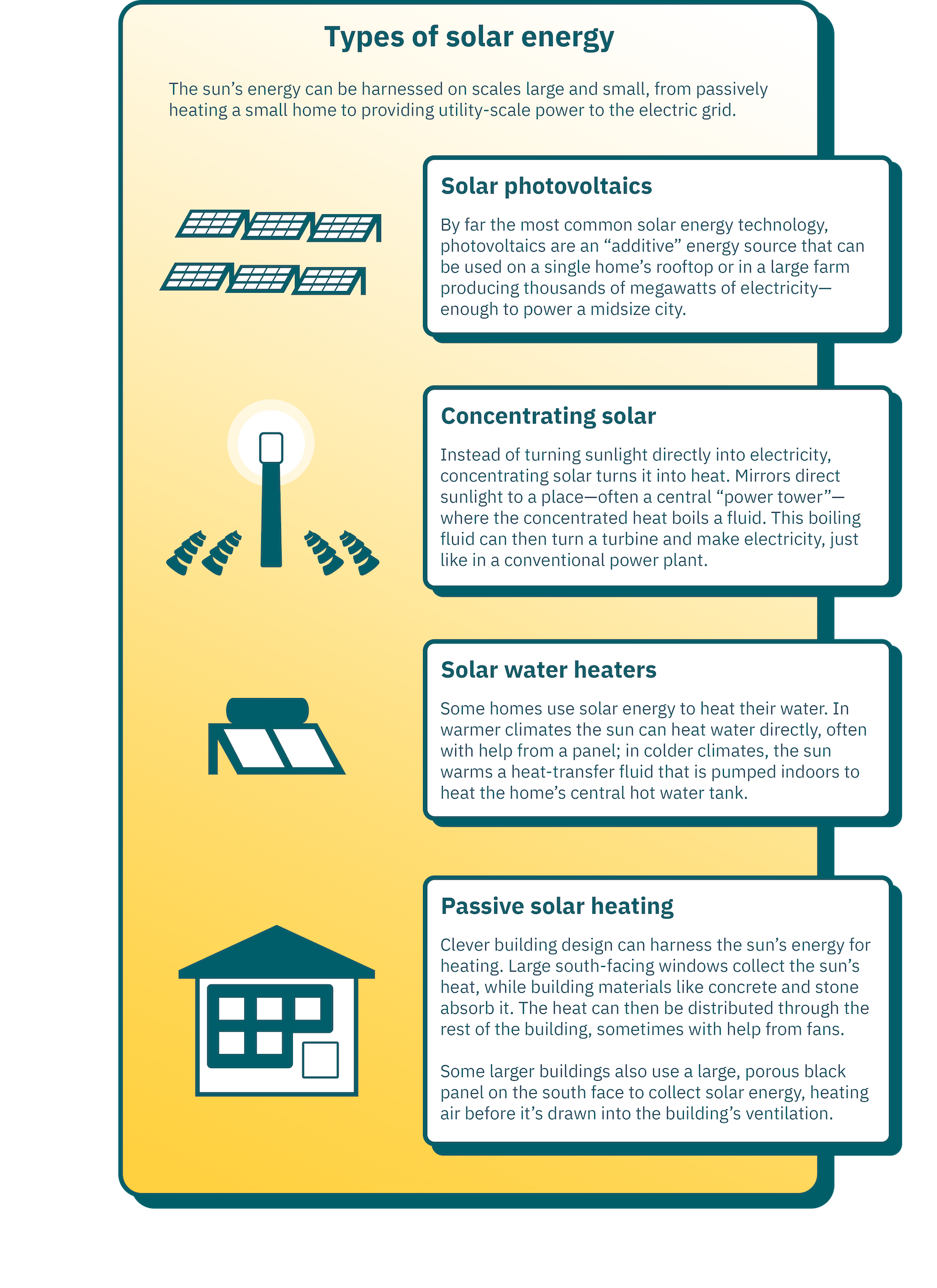
So, what are these two main types? They're called solar photovoltaic (PV) and solar thermal. Let's break them down.
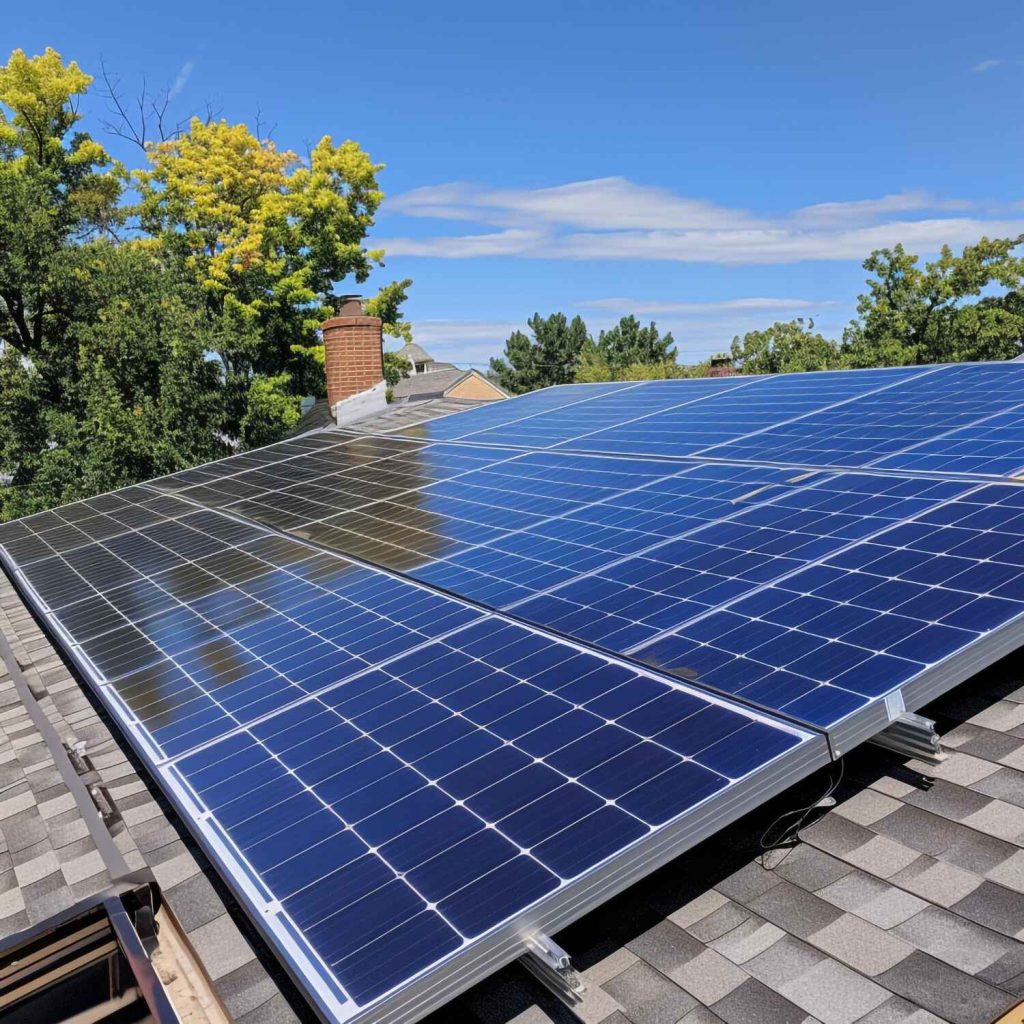
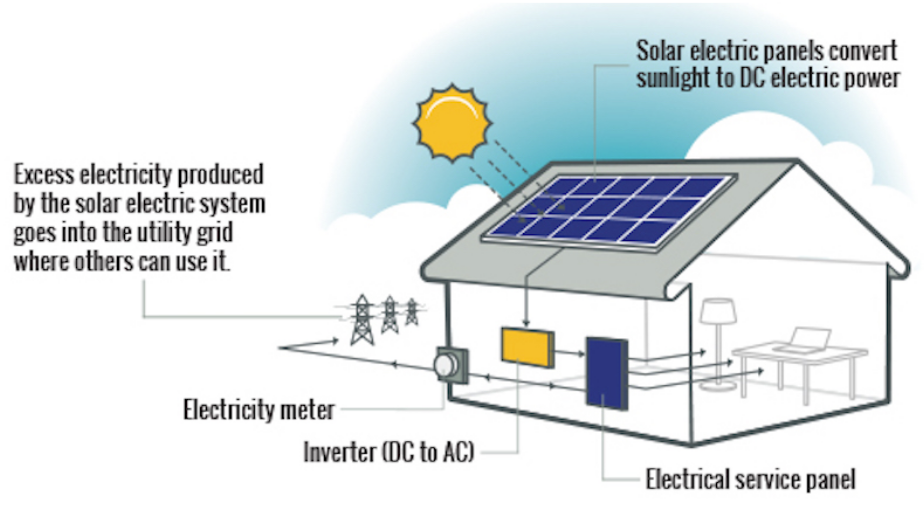
Solar photovoltaic (PV) is probably what comes to mind first when you think of solar energy. This is the technology that uses solar panels to directly convert sunlight into electricity. Think of those sleek, dark panels you see on rooftops or in solar farms. These panels are made up of many individual photovoltaic cells, which are made of semiconductor materials. When sunlight hits these cells, it knocks electrons loose, creating an electric current. This current can then be used to power homes, businesses, and even entire cities!
Must Read
The purpose of solar PV is to provide a clean, renewable source of electricity. Its benefits are numerous: it reduces our reliance on fossil fuels, decreases carbon emissions, and can even save you money on your electricity bill in the long run. In education, solar PV systems are used to power schools and provide hands-on learning opportunities for students to understand renewable energy technologies. In daily life, you see it everywhere, from rooftop solar panels to powering small devices like calculators and garden lights.
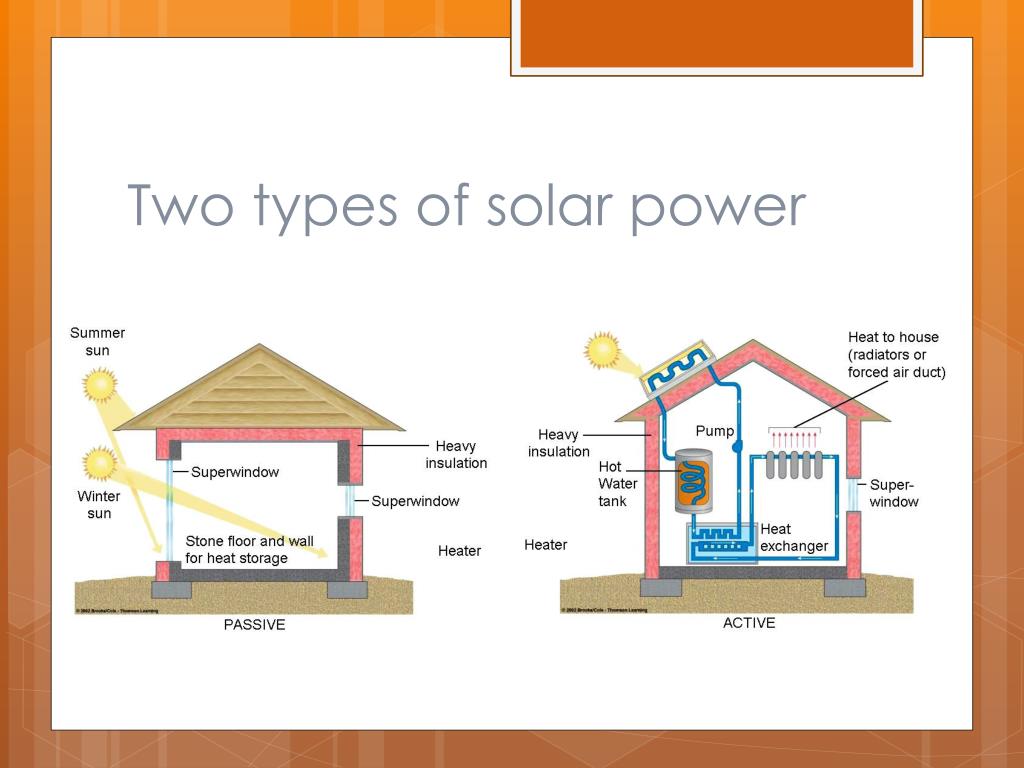
Now, let's move on to solar thermal. This type of solar energy harnesses the sun's heat to warm water or air. It doesn't directly create electricity like PV, but it uses the sun's energy for heating purposes. There are different types of solar thermal systems, but the most common are solar water heaters. These systems use solar collectors, usually mounted on rooftops, to absorb sunlight and heat water. This heated water can then be used for domestic hot water, heating swimming pools, or even for space heating.
The purpose of solar thermal is to provide a renewable source of heat, reducing our reliance on traditional heating methods like gas or electric heaters. The benefits are similar to solar PV – reduced carbon emissions and lower energy bills. In educational settings, solar thermal systems can demonstrate the principles of heat transfer and energy conservation. In daily life, you might find solar water heaters providing hot water for homes or businesses, or even in industrial applications like preheating water for boilers.
Want to explore solar energy further? Here are a few simple tips:
- Visit a local solar farm or renewable energy exhibition to see solar PV and thermal systems in action.
- Research the solar potential of your own home using online tools. Many websites allow you to estimate how much sunlight your roof receives and how much money you could save by installing solar panels.
- Build a simple solar oven using cardboard, aluminum foil, and plastic wrap to understand how the sun's energy can be used to cook food.
- Look for opportunities to use solar-powered devices in your everyday life, such as solar chargers for your phone or solar-powered garden lights.
Understanding the two main types of solar energy is a great first step towards appreciating the power and potential of this renewable resource. So, the next time you feel the warmth of the sun, remember that it's not just a pleasant sensation – it's a source of clean, sustainable energy that can help create a brighter future!