
What Are The Transition Metals On The Periodic Table

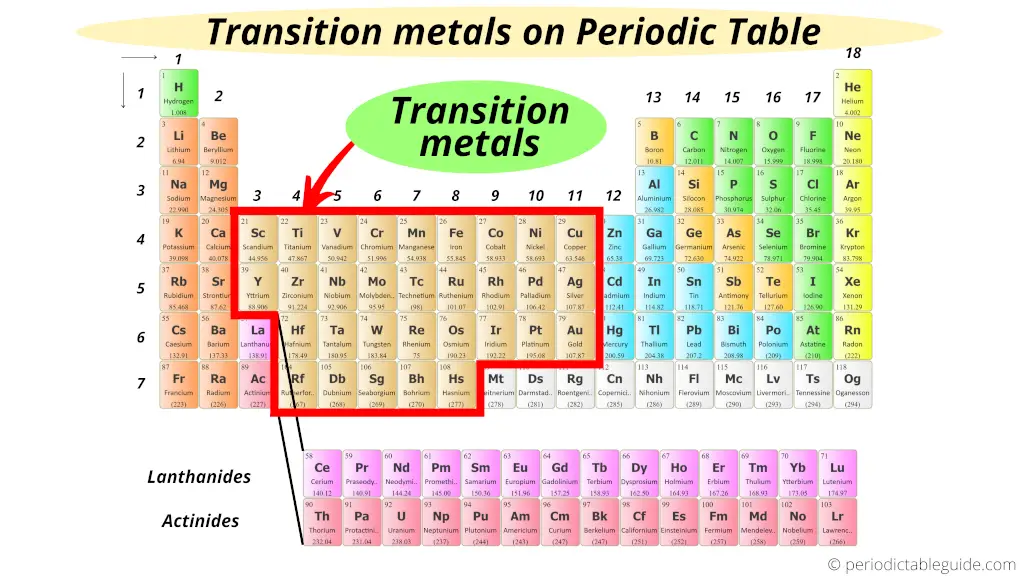
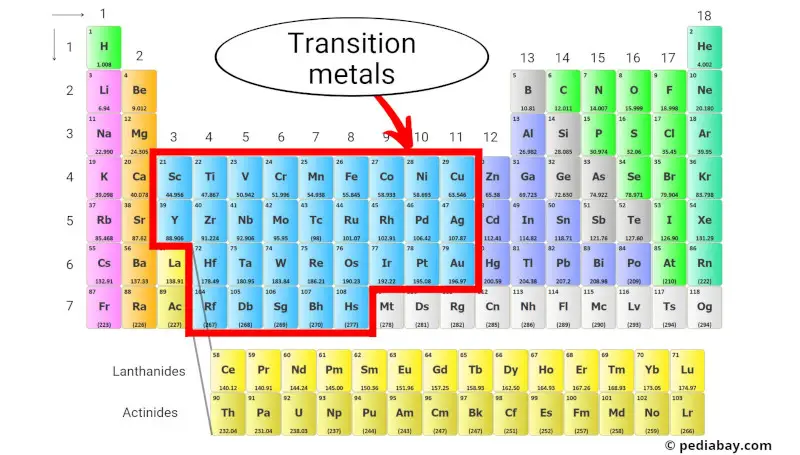
Ever looked at the periodic table and noticed that big block in the middle? That's where the transition metals live! They're the cool kids of the element world, and they're responsible for so much of the color and action we see around us.
The Middle Kids of the Periodic Table
Think of the periodic table as a school. The transition metals are like the students who are good at everything: sports, art, and even a little bit of science. They’re not stuck doing just one thing!
They bridge the gap between the super reactive elements on the left and the more predictable ones on the right. Basically, they're the glue that holds a lot of chemistry together.
Must Read
What Makes Them So Special?
So, what makes these elements so darn interesting? It all comes down to their electrons! They have a special arrangement that allows them to do some pretty neat tricks.
Unlike other elements that fill their electron shells in a straightforward way, transition metals fill their "d" orbitals. This is where the magic happens!
These "d" orbitals allow for variable oxidation states, which mean they can form different bonds with different elements.
A Riot of Colors
One of the most fun things about transition metals is their vibrant colors. Think of a rainbow, many of those hues come directly from these elements.
For example, copper compounds can be blue or green. Chromium can create colors ranging from red to yellow to green! It's like a chemical artist's palette.
Why the colors? It's all about those "d" orbitals again! They absorb certain wavelengths of light, and the colors we see are the ones that are reflected back.
Everyday Superstars
You might think these metals are only found in fancy chemistry labs, but they're actually all around us. They're in our phones, our cars, and even our bodies!
Iron, a transition metal, is vital for carrying oxygen in our blood. Without it, we wouldn't be able to breathe! That's a pretty important job.

Titanium is incredibly strong and lightweight, making it perfect for airplanes and even implants inside the human body.
Examples of Transition Metal Superpowers
Let's zoom in on a few of these amazing metals and see what they can do.
Iron (Fe)
We already mentioned iron's role in blood, but it's also the backbone of steel! Steel is used to build skyscrapers, bridges, and just about everything else that needs to be strong.
Iron is also crucial for plant growth. It’s a key component of enzymes that help plants produce chlorophyll, which is responsible for photosynthesis.
So, iron is essential for both animal and plant life!
Copper (Cu)
Copper is a fantastic conductor of electricity, that is why it’s found in electrical wiring. It helps power our homes and businesses.
It's also antimicrobial! Copper surfaces can kill bacteria, making them useful in hospitals and other places where hygiene is important.
Plus, remember those beautiful blue and green copper compounds? They're used in pigments and dyes.
Gold (Au)
Ah, gold! The classic symbol of wealth and beauty. It's prized for its resistance to corrosion, which means it stays shiny and beautiful for centuries.
Gold is also used in electronics because it's an excellent conductor and doesn't tarnish. You'll find it in your phone and computer.
Besides, gold is chemically inert and can be used in dental fillings and medical implants.
Titanium (Ti)
Titanium is super strong but also incredibly lightweight. This is why it's used in aircraft, spacecraft, and even racing bikes.
It's also biocompatible, meaning our bodies don't reject it. That makes it ideal for medical implants, like hip replacements.
Also, titanium dioxide is used as a pigment in paint, plastic and paper, for its brightness and high refractive index.
Catalytic Converters: Transition Metals in Action
Transition metals are also incredible catalysts. That means they can speed up chemical reactions without being used up themselves.
One of the most important applications of this is in catalytic converters in cars. These devices use transition metals like platinum, palladium, and rhodium to reduce harmful emissions from car exhaust.
They convert pollutants like carbon monoxide and nitrogen oxides into less harmful substances like carbon dioxide and nitrogen.
More Than Meets the Eye
The world of transition metals is full of surprises and unexpected connections. They are elements which contribute to modern society.
From the colors in our art to the technology in our gadgets, they play a vital role in shaping our world.
Hopefully, this has piqued your interest and inspired you to explore the periodic table a little further. Go ahead, take a peek! You might just discover your new favorite element!
Why Should I Care?
You might be thinking, "Okay, transition metals are interesting, but why should I care?" Well, the answer is simple: they are everywhere!
Understanding them helps you understand the world around you. From the colors in your garden to the electronics in your pocket, they are a hidden but essential part of everyday life.
Plus, learning about them is just plain fun! It's like unlocking a secret code to the universe.
Dive Deeper into the Periodic Table
So, what's next? Now that you have a basic understanding of transition metals, it's time to explore the periodic table on your own!
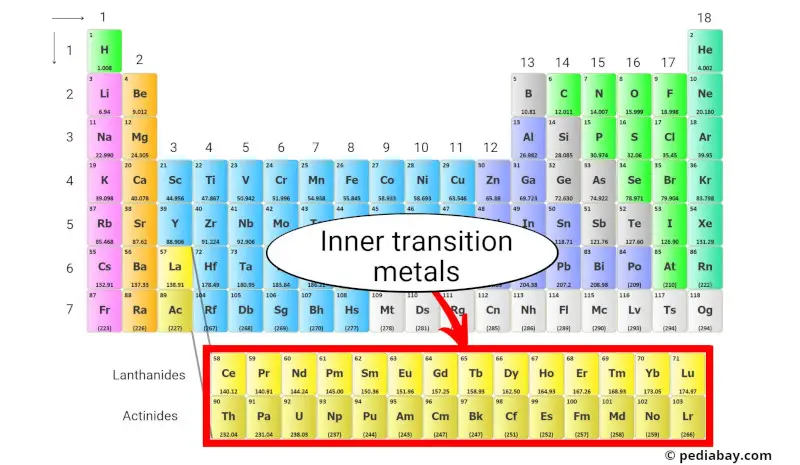
There are tons of resources available online, in libraries, and even in your local museum. Start with a specific element that interests you and see where it takes you.
Who knows, you might just become the next great chemist!
The Future of Transition Metal Research
Scientists are constantly discovering new ways to use transition metals. They’re exploring their potential in areas like energy storage, new materials, and even medicine.
For example, researchers are working on developing new catalysts that can make industrial processes more efficient and sustainable. They're also exploring transition metal complexes for use in targeted drug delivery.
The possibilities are endless, and the future of transition metal research is bright!
They're Just Plain Cool
In conclusion, transition metals are more than just a block of elements on the periodic table. They're a fascinating group of elements with unique properties and countless applications.
From their vibrant colors to their crucial roles in technology and biology, they play a vital part in our world.
So, next time you see something colorful or use a piece of technology, remember the transition metals. They're the unsung heroes of the element world!
So, go ahead and explore the periodic table. You might just find your new favorite element!