What Are The Semimetals On The Periodic Table
Okay, chemistry might sound like something you only vaguely remember from high school, involving bubbling beakers and confusing equations. But trust me, it's way more interesting than you think, especially when we're talking about these quirky elements called semimetals!
Forget everything you thought you knew about metals and nonmetals. The periodic table isn't just a black-and-white movie, it’s a dazzling technicolor extravaganza, and semimetals are the vibrant supporting cast bringing all the drama! You could say they are the 'Switzerland' of the element world.
What in the World are Semimetals?
So, what exactly are semimetals? Well, imagine a seesaw. On one side, you have metals – shiny, conductive, always ready to party and pass electrons around like free samples at Costco. On the other side, you have nonmetals – often dull, usually insulators, clinging to their electrons like a miser guarding their gold.
Must Read
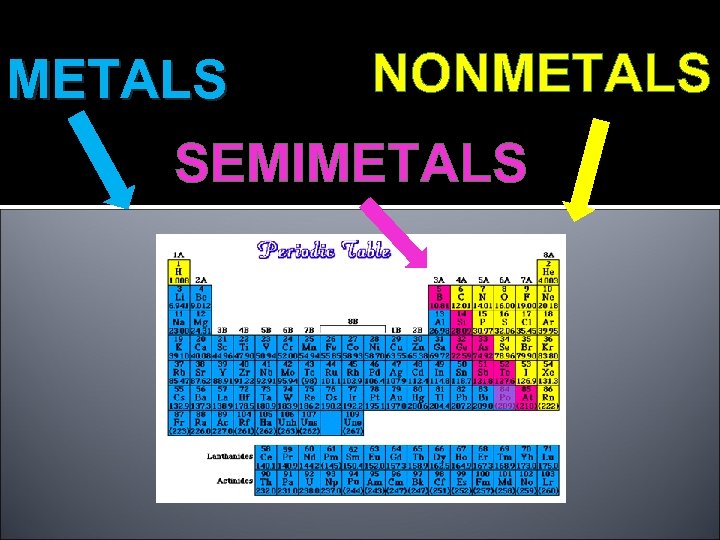
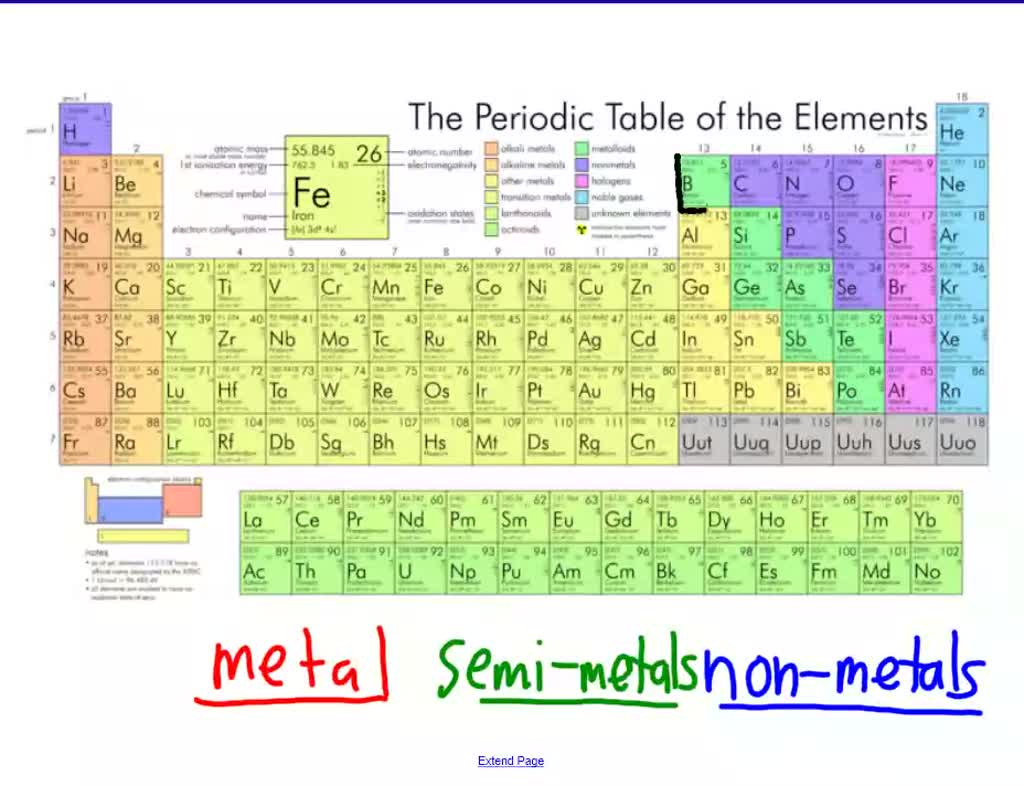
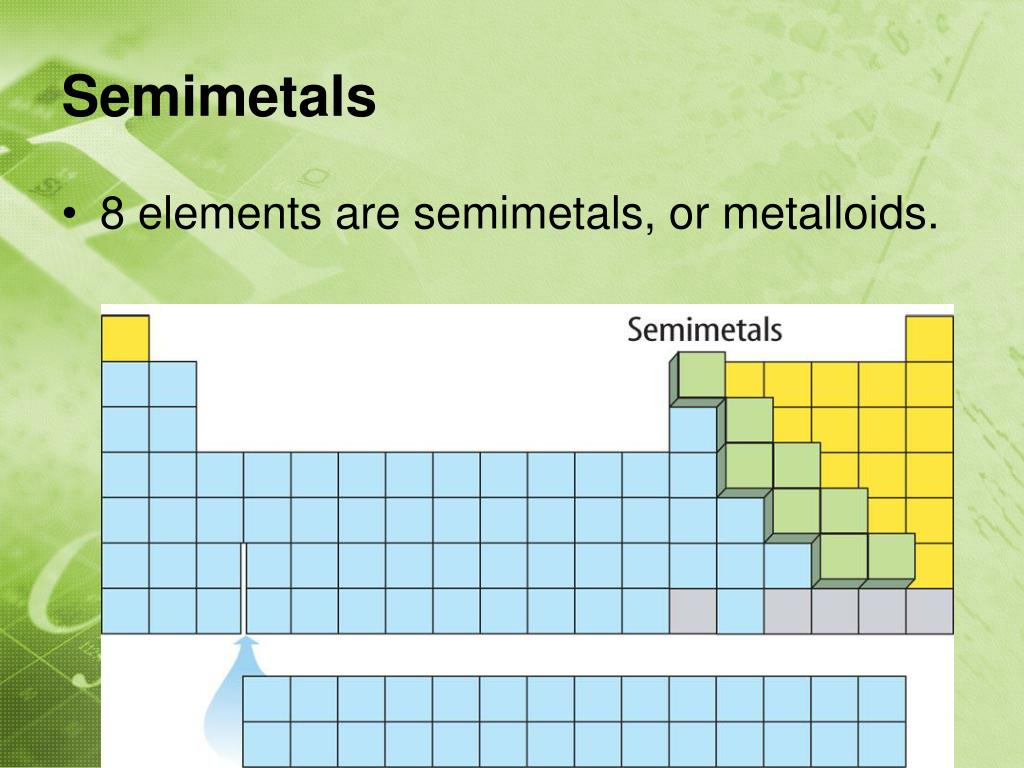
Semimetals, also known as metalloids, are right there in the middle, balancing the see-saw. They're like the indecisive friend who can't decide whether they want pizza or tacos – sometimes they act like metals, sometimes like nonmetals. That's their superpower, and honestly, it's what makes them so cool!
Think of it this way: metals are like the rockstars of the element world, always loud and flashy. Nonmetals are the quiet, bookish types in the corner. Semimetals? They're the chameleons, blending in with both crowds, playing guitar in the rock band on Friday and discussing philosophy with the bookworms on Saturday. Versatility is their middle name!
Meet the Semimetal Squad
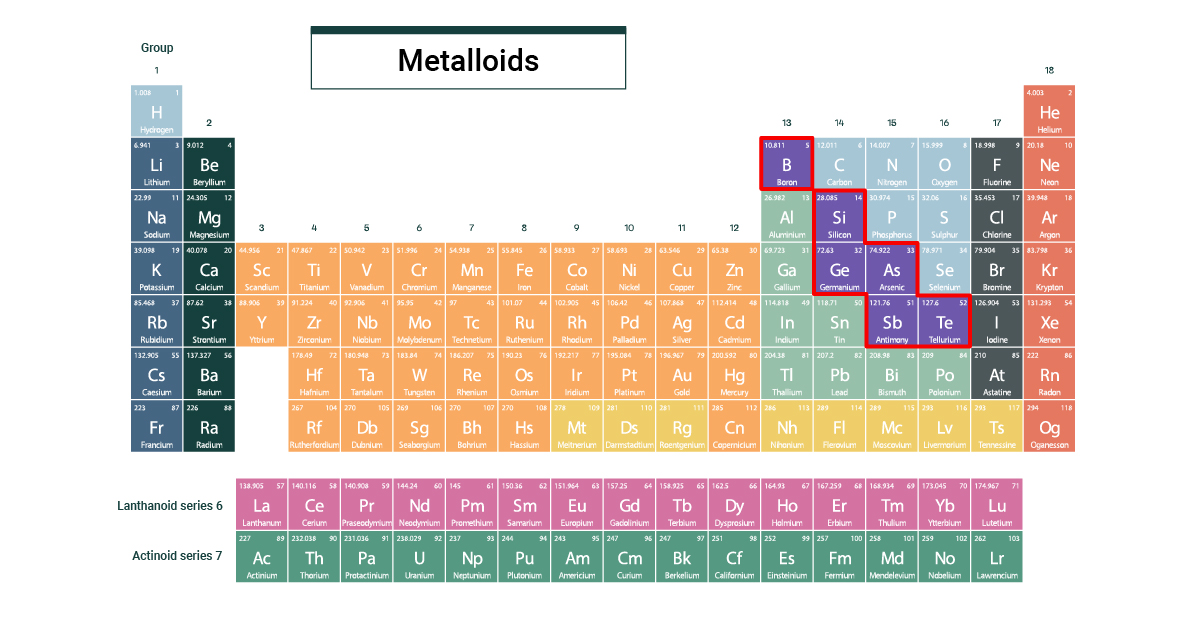
Now, let's introduce the semimetal crew. You’ve got:
- Boron (B): This element is harder than your average diamond (seriously!), and it's a crucial ingredient in everything from heat-resistant glass to rocket fuel! I am sure NASA are so happy to have it on their team.
- Silicon (Si): Ah, silicon, the darling of the tech world! This is a big name. It's the backbone of computer chips, smartphones, and basically everything that makes our modern lives possible. Without silicon, we'd still be using typewriters and carrier pigeons.
- Germanium (Ge): Another semiconductor superstar! Germanium might not be as famous as silicon, but it's still a vital component in electronics and solar cells. So, you can thank germanium for helping power the planet, one solar panel at a time.
- Arsenic (As): Okay, arsenic has a bit of a bad reputation, thanks to its history as a poison. But fear not! In small doses, and under controlled situations, it's actually used in semiconductors and even some medications. Talk about a redemption arc!
- Antimony (Sb): Antimony is used to make things fire-resistant. It’s like the superhero that prevents your curtains from going up in flames. You can find it in brake pads, too. Talk about safety first.
- Tellurium (Te): Tellurium likes to hang out with other metals, boosting their machinability. It’s used in solar panels and some types of steel.
- Polonium (Po): A rather interesting element, not always classified as a semimetal, but sometimes it sneaks in. It’s radioactive, but has industrial uses.
Why Semimetals are Super Important
So, why should you care about these semi-metallic superheroes? Because they are absolutely essential to modern technology! Their ability to conduct electricity under certain conditions (that's where the "semi" comes in) makes them indispensable for creating semiconductors.
Semiconductors: The Secret Sauce
What's a semiconductor, you ask? Well, it's a material that can act like a conductor (allowing electricity to flow) or an insulator (blocking electricity), depending on the circumstances. Think of it as a switch that can turn electricity on and off. Without semiconductors, our computers would be the size of houses and our smartphones would be… well, non-existent!
Essentially, semimetals are the unsung heroes of the digital age. They're the tiny components that power our world, from our laptops to our cars to our medical devices. Next time you're scrolling through Instagram, take a moment to thank the semimetals for making it all possible.

The Future is Semi-Metallic!
As technology continues to advance, the demand for semimetals will only continue to grow. From developing new and improved semiconductors to creating more efficient solar cells, these versatile elements are poised to play an even bigger role in shaping our future. So, keep an eye on the semimetals – they're the underdogs of the periodic table, and they're about to take center stage!
Who knew that chemistry could be so much fun? Now go forth and impress your friends with your newfound knowledge of the amazing world of semimetals!